No-pressure soaker hoses deliver steady moisture directly to plant roots while minimizing evaporation. Ideal for gardeners seeking water-efficient irrigation without high pressure requirements, especially in rain barrel setups or low-pressure systems. This guide highlights five top options, explaining who each is best for and why. The included quick-reference table helps compare key traits at a glance.
| Product | Brand | Best For |
|---|---|---|
| Good Ideas RBSOAKER50 50-Foot Rain Barrel Soaker Hose | Good Ideas Store | Rain barrel users, compact runs |
| Raindrip 015005T 50-Foot Soaker Hose Tubing | Raindrip Store | Vegetable gardens and borders |
| RTS Home Accents 50-Foot Soaker Hose | RTS Home Accents Store | Deep root irrigation, flexible layouts |
| RAINPOINT Flat Soaker Hose 100FT (two 50FT segments) | RAINPOINT Store | Extended coverage, DIY systems |
| Rocky Mountain Goods Soaker Hose 50-Feet | Mountain Goods | Durable, long-lasting garden beds |
Good Ideas RBSOAKER50 Rain Barrel Soaker Hose

Best for rain barrel setups, this 50-foot hose is designed to gradually release water to plants while minimizing evaporation. The design aims to reduce water loss in container-style or barrel-based irrigation systems. It’s a simple option for gardeners who collect rain or rely on modest water sources. The hose emphasizes low-waste watering with near-zero evaporation, making it a sensible pick for water-conscious landscapes.
Who it’s best for: homeowners with rain barrels or compact garden beds wanting a straightforward, low-waste irrigation solution. Why selected: its specialized compatibility with rain barrels and slow release helps prevent overwatering in small zones.
Caution: The product is built for rain barrel use; for long runs or large beds, consider a longer hose or supplementary lines to ensure even coverage.
Raindrip 015005T Soaker Hose Tubing, 50-Foot

Best for vegetable gardens, borders, and planters, this 50-foot soaker hose provides slow watering around the root zone. It pairs with common supply lines and can connect to 1/2″, 5/8″, or 3/4″ systems using standard fittings. The tubing design delivers moisture along the full length, supporting even soil hydration and efficient water use.
Who it’s best for: cooks and hobby gardeners with mixed plantings who want reliable, even moisture distribution. Why selected: flexibility with common fittings and its ability to keep soil consistently moist across beds.
Caution: The kit relies on compatible fittings; ensure your existing system matches the 1/4″ micro fittings or connectors included in your setup to avoid leaks.
RTS Home Accents 50-Foot Soaker Hose

Best for deep root irrigation, this hose features tiny pores that slowly release water to plant roots. A built-in water restrictor helps prevent over-watering, making it suitable for sensitive plants. The flexible design weaves around shrubs, flowers, and vegetables, and its lightweight form supports discreet installation under mulch or soil.
Who it’s best for: gardeners seeking a low-pressure, controlled irrigation option that minimizes surface wetness. Why selected: the integrated regulator helps manage moisture levels and reduces the risk of overwatering.
Caution: Like all porous hoses, avoid high-pressure shocks or rapid pressure fluctuations that could shorten life expectancy.
RAINPOINT Flat Soaker Hose 100FT
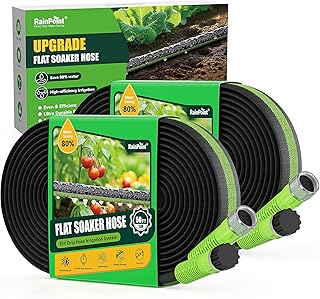
Best for broad coverage and flexible DIY setups, this 100-foot flat soaker hose consists of a thick inner rubber tube and a durable outer fabric sheath. It is designed to save water by delivering moisture directly to roots and reducing evaporation. The dual-ended design supports linking multiple hoses end-to-end for extended irrigation runs.
Who it’s best for: homeowners building custom drip systems across larger beds or multiple zones. Why selected: flat construction minimizes kinks and distributes water evenly across long runs.
Caution: The length requires steady layout planning to prevent gaps in coverage and ensure even watering along the entire path.
Rocky Mountain Goods Soaker Hose

Best for durability-focused gardens, this 50-foot soaker hose uses heavy-duty recycled rubber designed to withstand seasons of use. End caps are included for easy extension with additional hoses, making it a flexible option for expanding irrigation. It excels in garden beds and flower borders where sturdy construction matters.
Who it’s best for: gardeners needing a tougher, long-lasting hose that can be extended with minimal fittings. Why selected: robust material and quick-attach fittings support durable, expandable setups.
Caution: Some users may prefer lighter-weight hoses for small-planted areas; consider your bed size and handling effort before choosing.
Buying Guide: Key Considerations For No-Pressure Soaker Hoses
- Water source compatibility: Check whether your system is gravity-fed, rain barrel-based, or pressure-driven. Some hoses excel with low pressure, while others tolerate moderate pressure better.
- Coverage area and length: Larger beds demand longer or multiple hoses. Plan runs to avoid dry spots and ensure even moisture distribution.
- Material and durability: Rubber and reinforced fabrics offer longevity in outdoor conditions. Consider climate and ground conditions when selecting a material.
- Fittings and adapters: Ensure compatibility with your faucet, timers, and existing irrigation components. Standard thread sizes simplify expansion.
- Water efficiency: Look for features that reduce evaporation, such as slow-release pores and restrained flow. This improves root-zone hydration.
- Installation ease: Flexible hoses that lay flat, kink-resistant designs, and built-in regulators reduce setup time and maintenance.
- Maintenance needs: Porous hoses require inspections for leaks and wear. Keep spare end caps and connectors on hand for quick repairs.
Frequently Asked Questions
- What is a no-pressure soaker hose?
A no-pressure soaker hose is designed to deliver water slowly from pores along its length, suitable for low-pressure or gravity-fed irrigation systems.
- Which hose lasts longest in sandy soils?
Durable rubber or reinforced fabric hoses tend to withstand abrasion and wear better in loose soils. Look for heavier construction and reinforced fittings.
- Can these hoses work with rain barrels?
Yes. Several options are optimized for rain barrel setups, offering slow release and evaporation reduction suitable for stored water applications.
- Do I need an inline regulator?
Some hoses include built-in regulators to prevent over-watering; others may require external regulators if your supply pressure is high.
- How do I extend a soaker hose run?
End-to-end connections or quick-attach fittings allow you to extend length. Always check compatibility with your hose diameter and fittings.
- Are flat soaker hoses better than round ones?
Flat hoses can reduce kink risk and lay flatter along beds, which helps with even moisture distribution in certain layouts.