If you need effective protection for fruit trees and berry bushes, this guide highlights netting options that guard against birds and other pests while keeping air, light, and moisture flowing. The top picks are suited for homeowners with a mix of fruit trees, blueberries, citrus, and decorative shrubs. Whether you garden in a small backyard or a larger plot, these nets offer durable protection, easy installation, and practical access for watering and harvesting.
Buyer types covered: homeowners seeking simple, ready-to-use protection; gardeners needing durable, weather-resistant nets; and those prioritizing easy access for maintenance. The following table summarizes the five products chosen for this article and why they’re strong fits for common garden setups.
| Product | Best For | Key Benefit |
|---|---|---|
| 1 Pcs 20 x 16.4 ft Large Fruit Tree Netting Bags | Blueberry bushes and small fruit trees | Large coverage with drawstring and zipper for easy access |
| 10.8 x 9.8 Ft Black Netting | Smaller orchards and potted fruit plants | Breathable mesh with strong side zipper and drawstring |
| 2PCS 8×8FT Large Netting | Medium-sized fruit trees and shrubs | Thick, durable material with 60-mesh design |
| Fruit Tree Netting with Drawstring 6.9×8.5ft | Apple, peach, citrus, and berry bushes | Ultra-fine mesh with adjustable drawstring |
| Ruolan 13X20Ft Netting | Larger garden plots and mixed fruit crops | Reusable, DIY-friendly with large coverage |
1 Pcs 20 x 16.4 ft Netting

Size and design notes
This netting features a generous footprint and a drawstring plus zipper design for easy access while painting, watering, or harvesting. It is best for larger fruit trees or dense blueberry patches where birds can reach fruit quickly.
10.8 x 9.8 Ft Black Netting

Best for mid-sized yards with citrus, cherries, or blueberry plants. This breathable mesh keeps out insects and birds while allowing air and light to reach foliage, supporting healthy fruit development. The side zipper and bottom drawstring simplify removal for watering or picking.
Caution: Choose this if you need frequent access to trunks and fruit, as the zipper can wear with heavy use over time.
2PCS 8×8FT Netting

Choose this two-pack for medium-sized fruit trees or multiple shrubs. The 60-mesh design balances protection with ventilation, blocking cicadas, beetles, and small birds while letting moisture and sunlight through. It’s reusable and designed to resist punctures from branches.
Best for gardeners who want multiple units to cover several plants without buying single-use nets.
Fruit Tree Netting with Drawstring 6.9×8.5ft
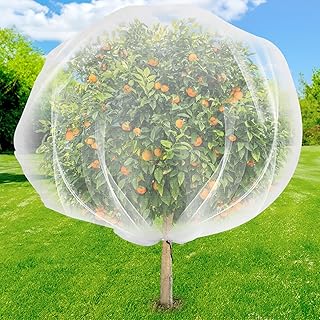
This option uses an ultra-fine mesh designed to deter tiny insects while preserving airflow and sunlight. The built-in drawstring secures the cover around trunks or branches for a tight fit, and it’s sized to cover many common fruit trees and berry bushes.
Best for fruit varieties sensitive to small pests, but avoid if you need heavy-duty protection against larger birds in windy areas.
Ruolan 13X20Ft Netting

Best for larger garden plots or mixed fruit crops. This large, reusable netting provides broad coverage and is described as DIY-friendly for shaping over raised beds or rows. It’s designed to resist tearing and maintain structure over seasons.
Limitation: The size may require staking or anchors to ensure a snug fit in windy locations.
Buying Guide
Key considerations when choosing fruit tree netting:
- Mesh size and airflow: Smaller meshes deter smaller pests but may reduce airflow. Choose a mesh that balances protection with sufficient light, air, and water.
- Access for care: Look for zippers and drawstrings to allow easy watering, pruning, and harvest without removing the netting entirely.
- Durability and reuse: Weather resistance, tear resistance, and material quality affect long-term use across seasons.
- Coverage area: Match netting size to the canopy extent of your trees or the number of plants being protected.
- Installation requirements: Some nets require staking, cords, or tying to supports; others are easier to drape as a sleeve.
- Maintenance needs: Consider nets that are easy to clean and store when not in use.
Frequently asked questions
- What mesh size is best to keep out birds but allow airflow? A 60-mesh or finer is effective for small birds and many insects while still permitting air and light.
- Can I use netting over potted fruit trees? Yes, many nets come in smaller or adjustable sizes designed for potted plants and container trees.
- Will nets interfere with watering or pruning? Select nets with side zippers and drawstrings to minimize disruption during care tasks.
- Are these nets reusable year after year? Most options described are designed for reuse with proper care and storage.
- Do nets protect against mammals like deer? Some nets deter larger pests; for deer, larger, more robust barriers may be required in addition to netting.
- How should I secure nets in windy areas? Use stakes, ties, or weighted edges to prevent wind from lifting the netting.