Fig trees need reliable protection from birds, insects, and weather without hindering growth. This guide compares top netting options designed to shield fig trees while allowing sunlight, air, and water to reach the canopy. Each option is evaluated on coverage, ease of use, durability, and overall suitability for home orchards and containers.
| Product | Size | Key Benefit | Best For |
|---|---|---|---|
| Cookmaster Large Fruit Tree Netting | 10×10 ft | Durable 60-mesh, drawstring and zipper | Medium to large fig trees, flexible installation |
| LHongL 8.2×8.2 ft Netting | 8.2×8.2 ft | Easy drape with secure drawstring and single-side zipper | Blueberry bushes and medium fig trees |
| LHongL 10×10 ft Netting | 10×10 ft | Zippers on both sides for easy access | Large fig trees with frequent harvesting |
| Garden Tailor 6.4×6.4 ft Netting | 6.4×6.4 ft | 2-way zipper plus drawstring | Compact to medium trees and bushes |
| KLEWEE 10×50 ft Netting | 10×50 ft | Ultra-fine mesh; long rolls for customization | Extensive coverage for larger plantings |
Cookmaster 10×10 Ft Insect Bird Barrier Netting

This Cookmaster netting cover offers a 10×10 ft footprint with a 60-mesh design, providing a thick yet flexible barrier against birds and insects. Made from high-quality polyethylene, it is designed to be durable and soft, suitable for various fruit trees including fig, peach, and citrus. A drawstring and zipper closure simplify placement and removal, reducing wind risk and permitting easy bottom sealing to deter pests entering from below.
LHongL 8.2×8.2 Ft Netting For Fruit Trees
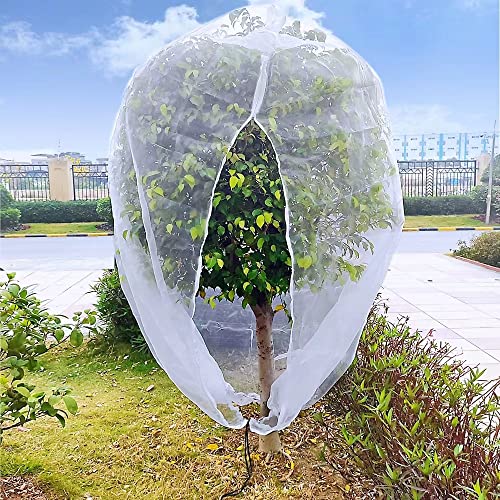
This 8.2×8.2 ft netting is designed to cover larger bushes and fruit trees, including fig trees. It features an upgraded drawstring and a single-side zipper for quick access. The material resists sun and rain while maintaining light transmission, water drainage, and ventilation. It’s easy to install by draping over the canopy and tightening the drawstring for a secure fit, even in breezy conditions.
LHongL 10×10 Ft Large Tree Netting
This extra-large 10×10 ft netting provides substantial coverage for a range of fruit trees, including fig and cherry trees. Zippers on both sides enable easy fruit access and harvest without removing the entire cover. The durable construction works against sun and rain, while the drawstring helps secure the net against wind and animal intrusion, maintaining airflow and plant health.
Garden Tailor 6.4×6.4 Ft Netting With Zipper

The Garden Tailor netting uses a two-way zipper and a drawstring closure to secure protection around fig trees and other small to medium specimens. Its 6.4×6.4 ft size is ideal for compact orchards or container setups. The material is UV-resistant and designed to maintain airflow, aiding plant health while creating a reliable barrier against birds, cicadas, and small animals.
KLEWEE 10×50 Ft Garden Mesh Netting

KLEWEE offers a long 10×50 ft roll of ultra-fine 0.8mm mesh, suitable for large plots and extended coverage. Its durable netting protects figs, blueberries, tomatoes, and other crops from birds, rabbits, cicadas, and more. The netting remains breathable and light-permitting, making it suitable for use without removing during watering. It can be cut to fit irregular shapes and garden layouts.
Buying Guide
- Coverage and fit: Choose a size that fully covers the fig canopy with some overlap. For mature trees, larger footprints (10×10 ft or longer) are often preferable to prevent gaps.
- Mesh size and material: A 40–60 mesh is common for birds and insects; HDPE-based or similar polymers provide weather resistance and durability in sun and rain.
- Access design: Zippers on one or both sides, along with a drawstring, simplify harvesting and inspection without removing the entire net.
- Ventilation and irrigation: Ensure the net allows adequate light, air movement, and water penetration to prevent plant stress during watering.
- Durability and reuse: Look for UV resistance and reinforced seams for multi-season use; consider a design that minimizes wind snagging.
- Installation ease: Designs that drape easily and fasten securely reduce setup time and improve compliance with protective measures.
- Standards and safety: Avoid nets with loose edges that can trap or entangle wildlife; ensure the mesh size prevents entry while allowing adequate growth.
- Cost vs. coverage: For larger orchards, longer nets may offer cost efficiency per square foot; for homeowners with a single fig tree, a compact model can suffice.
When choosing netting for fig trees, balance protection with accessibility and plant health. The options above cater to different tree sizes, harvest frequencies, and weather conditions, helping maintain fruit yield while deterring pests.