Managing erosion on slopes requires reliable mulch netting that stabilizes soil, promotes vegetation, and withstands weather. The following selections are dedicated erosion control blankets featuring straw, coconut fiber blends, and jute netting. Each option supports slope stabilization, reduces runoff, and biodegrades safely over time to enrich the soil.
| Product | Material | Key Benefit | Typical Use |
|---|---|---|---|
| Sandbaggy Jute Netting Roll | 100% Jute | Slope stabilization and vegetation support | |
| Farm Plastic Supply – Erosion Control Blanket (6′ x 112.5′) | 70% Straw / 30% Coconut Fiber | Biodegradable, temporary erosion control | Slope stabilization for larger areas |
| Farm Plastic Supply – Erosion Control Blanket (2′ x 112.5′) | 70% Straw / 30% Coconut Fiber | Biodegradable, photodegradable netting | Compact slope sections or narrow beds |
| Farm Plastic Supply – Erosion Control Blanket (3′ x 112.5′) | 70% Straw / 30% Coconut Fiber | Biodegradable, flexible for contours | Moderate slope stabilization projects |
| Farm Plastic Supply – Erosion Control Blanket (5′ x 112.5′) | 70% Straw / 30% Coconut Fiber | Biodegradable, durable for longer-term cover | Steeper or longer slope sections |
Sandbaggy Jute Netting Roll, 4 ft x 30ft
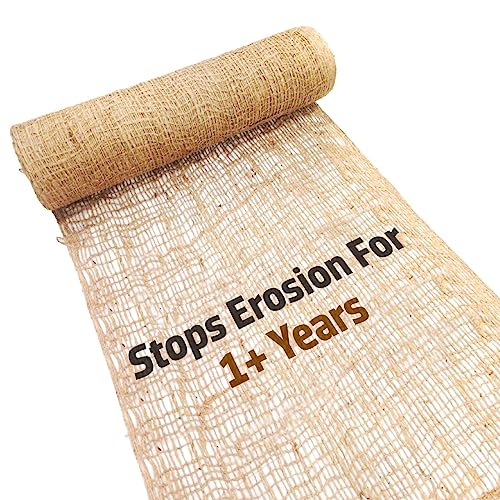
The Sandbaggy Jute Netting Roll is designed for fast erosion control on slopes, hills, and drainage areas. The product uses 100% natural jute fiber to create a breathable, biodegradable blanket that stabilizes soil and supports vegetation growth. It is suitable for residential, commercial, and construction sites where quick stabilization is needed and environmentally friendly solutions are preferred. The netting is engineered to hold soil in place during heavy rainfall and wind-driven runoff, reducing sediment loss until plants establish robust root systems. Its biodegradability means no synthetic waste remains after the cover is no longer needed, aligning with eco-conscious landscaping goals. The expected active lifespan ranges from several months to about two years, depending on weather and site conditions.
Key features include soil stabilization, erosion prevention, and compatibility with native vegetation. The product is especially effective when combined with seed mixes or hydro-seeding on slopes where quick establishing cover is beneficial. For best results, install on a prepared profile that captures runoff and supports even distribution across the slope. While durable and environmentally friendly, it is not a long-term synthetic solution, so plan for eventual replacement as the jute decomposes.
Farm Plastic Supply Erosion Control Blanket (6′ x 112.5′)

This blanket blends 70% straw with 30% coconut fiber to form a temporary rolled erosion control product. The netting is photodegradable and biodegrades after about 90 days, leaving behind a healthier soil profile. The combination of straw and coconut fiber provides a balance of stiffness and flexibility, enabling the blanket to adapt to contour lines and uneven terrain on slopes. It offers reliable cover against surface erosion while supporting moisture retention and seed germination. It is particularly well-suited for larger slope areas where rapid stabilization is needed and where a biodegradable blanket is preferred over synthetic alternatives.
Considerations include the need for consistent anchoring along the slope and ensuring edge overlap to prevent runoff gaps. The product is designed for temporary use, with site-specific planning to ensure vegetation establishes before the material degrades significantly. It works well with hydroseeding or seed blankets to accelerate revegetation and soil stabilization on challenging terrain.
Farm Plastic Supply Erosion Control Blanket (2′ x 112.5′)

The 2-foot-wide Farm Plastic Supply erosion control blanket blends 70% straw and 30% coconut fiber for a biodegradable, temporary erosion solution. Its photodegradable brown poly netting biodegrades within roughly 90 days, reducing environmental impact while still providing surface protection during the establishment phase. This compact size is ideal for narrow slopes, edge treatments, or segmented areas where a full-width blanket would be excessive. It helps minimize soil displacement and supports early root growth for effective slope stabilization.
Operational tips involve aligning seams along contour lines and anchoring edges to prevent wind uplift. Use in conjunction with appropriate seed mixes or mulch to maximize early cover coverage and soil moisture retention. As a temporary measure, plan for replacement as the vegetation takes hold.
Farm Plastic Supply Erosion Control Blanket (3′ x 112.5′)
This 3-foot-wide erosion control blanket provides a versatile solution for mid-sized slope areas, combining 70% straw with 30% coconut fiber. The netting is 100% biodegradable and photodegradable, ensuring a clear environmental benefit as it degrades after about 90 days. The blanket offers effective erosion control on curved or irregular terrain while promoting seed germination and root development. It’s suitable for engineering-grade slope stabilization projects where biodegradable materials align with environmental requirements.
When applying this blanket, ensure steady contour following and secure anchoring to minimize wind displacement. Pair with a suitable seed mix for rapid vegetative cover to prevent soil loss and maintain soil structure during the critical establishment window.
Farm Plastic Supply Erosion Control Blanket (6′ x 112.5′)
This six-foot-wide erosion control blanket is designed for larger slope areas, incorporating the same 70% straw and 30% coconut fiber composition. Its biodegradable netting provides temporary stabilization while facilitating seed establishment, moisture retention, and soil microbe activity. The product’s extended width enables faster coverage across broader slopes, reducing the number of seams and potential runoff paths. Expect a 90-day degradation timeline for the netting, with continued soil recovery once natural vegetation takes root.
Application considerations include edging along contour lines and ensuring adequate overlap between blankets to prevent gaps. For best results, install during drier periods or when slope exposure minimizes wind uplift risk, and coordinate with landscaping plans that deploy seed or mulch to accelerate stabilization.
Buying Guide: Key Considerations For Choosing Mulch Netting On Slopes
- Material composition: Jute, straw, and coconut fiber blends offer different balances of rigidity, biodegradability, moisture retention, and soil interaction. Jute nets are generally robust and suited for rapid initial stabilization, while straw and coconut fiber blends provide excellent erosion control with good seed support.
- Biodegradability timeline: Most products advertise netting that biodegrades in about 90 days to 90 days-plus, depending on weather. Consider your project’s vegetation establishment timeline and whether you prefer a quicker or longer-lasting cover before revegetation is complete.
- Site conditions: Evaluate slope gradient, soil type, rainfall intensity, and drainage patterns. Steeper or broader slopes may benefit from wider blankets and overlapping installation to minimize runoff channels.
- Installation logistics: Wider blankets reduce seam count and accelerate coverage but may be heavier to handle. Ensure proper anchoring along contours and use stakes or staples appropriate for the slope and soil.
- Ecological impact: All listed options aim to minimize environmental impact. If synthetic alternatives are undesirable, prioritize 100% biodegradable materials and netting that degrades without leaving residue.
- Vegetation support: Choose blends that promote seed germination and root establishment. Some products pair well with hydroseeding or native seed mixes for rapid ground cover and long-term stabilization.
- Durability vs. duration: Consider how long you need protection. Temporary solutions are suitable for short-term stabilization, while longer-lasting options may be preferred on disturbed sites with slower revegetation.
- Cost and availability: Availability may vary by location and season. Compare coverage area per roll, installation labor, and potential recycling or disposal needs after degradation.
When selecting mulch netting for slopes, align product choices with project goals, environmental considerations, and maintenance capabilities. The options above emphasize bio-based materials designed to stabilize soil while supporting natural vegetation, delivering effective erosion control across varied slope conditions.