When dealing with a mouse or rat problem, choosing an effective poison is essential for quick, reliable control. This guide highlights five highly regarded mouse poisons and bait stations, with a focus on indoor and outdoor effectiveness, safety considerations, and how they fit into comprehensive pest-management plans. Each product below is selected for its proven kill power, ease of use, and suitability for common US environments.
| Product | Brand | Use Area | Form |
|---|---|---|---|
| Victor Rat Poisoning for Inside & Outside Use | Victor | Indoor & Outdoor | Ready-to-use pellets |
| Tomcat Bromethalin Place Pacs | Tomcat | Agricultural Buildings & Homes | Pacs |
| Tomcat Mouse Killer Refillable Station | Tomcat | Indoor & Outdoor | Station + Refills |
| Kaput Combo Bait Pellets | Kaput | Indoor & Perimeter | Pellets |
| Kaput Mouse Blocks | Kaput | Indoor & Perimeter | Block bait |
| Victor Fast-Kill Refillable Bait Station | Victor | Indoor & Perimeter | Station + Baits |
The following sections provide concise, objective summaries of each product’s design, usage, and what to consider when selecting a solution for your space. Always follow label instructions and local regulations when using rodent poisons or bait stations.
Victor Rat Poisoning For Inside & Outside Use
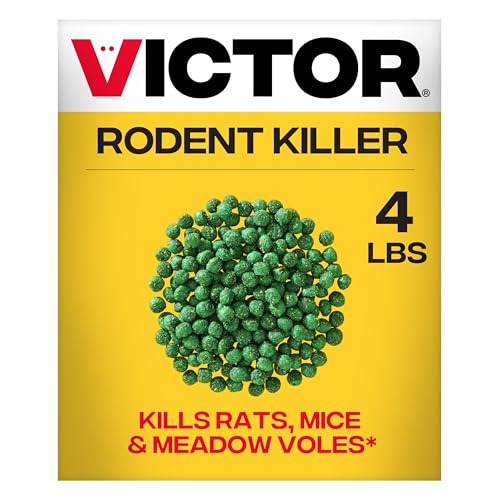
Victor’s ready-to-use bait targets both indoor and outdoor rodent activity with fish-flavored pellets designed to attract rats and mice. The formulation emphasizes weather resistance, maintaining effectiveness in varied conditions, whether used in attics, basements, garages, or exterior spaces. This product suits households and properties needing a straightforward, broad-coverage poison solution with continuous effectiveness through wet or dry spells.
Tomcat Bromethalin Place Pacs

Tomcat Place Pacs deliver a palatable bait in a compact pac form designed to appeal to mice and rats while retaining a toxic dose to stop feeding promptly. The pacs help keep bait fresh inside the station while releasing an enticing aroma to rodents. This option is suitable for use in homes and agricultural buildings where controlled placement and ease of handling are priorities.
Tomcat Mouse Killer Refillable Station

This station is designed to be weather- and child-dog resistant, making it a practical solution for homes with pets or children. It includes a reusable bait station and poison block refills, capable of killing multiple mice per refill. The clear lid allows easy bait monitoring to ensure effective ongoing control in key areas like kitchens, pantries, and garages.
Kaput Mouse Blocks For Indoor And Perimeter Use

Kaput Mouse Blocks offer a mess-free, warfarin-based block bait designed for use inside buildings or within 50 feet of structures. The blocks are designed to stay intact in high-traffic areas, making them suitable for attics, basements, garages, and perimeters where rodents hide and feed. This option emphasizes clean handling and predictable placement in residential and commercial contexts.
Kaput Combo Bait Pellets

Kaput Combo Bait Pellets combine Warfarin and Imidacloprid for dual-action pest control against rodents and fleas. Packaged as 32 two-ounce place packs, this option enables easy distribution in problem areas without direct handling of bait. It targets both mice and rats and is designed for use in indoor and perimeter zones to maintain long-term control and reduce disease risk via fleas.
Kaput Mouse Blocks (4 lbs)

Kaput Mouse Blocks provide a ready-to-use warfarin-based solution designed for indoor and perimeter use. The block format offers minimal handling and easy placement in high-risk zones such as walls, attics, and storage spaces. This option supports steady, continued feeding to achieve effective rodent control with reduced maintenance.
Victor Fast-Kill Refillable Mouse Poison Bait Station
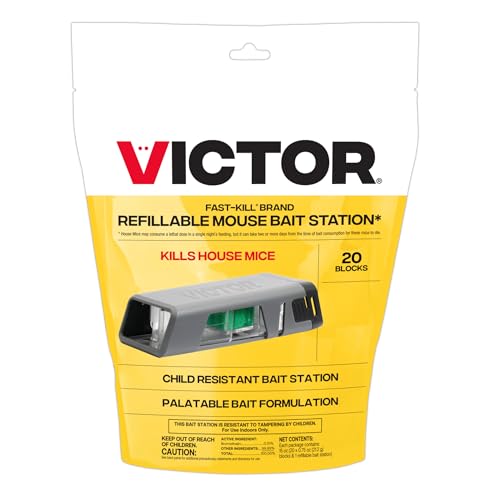
The Victor Fast-Kill station combines a dual-entry design with pre-loaded bait and a highly palatable formula. It is designed for quick rodent activity and rapid kill, while the refillable concept reduces ongoing costs and waste. This option is suitable for busy households seeking a straightforward, consumer-friendly solution that integrates with broader trapping or exclusion strategies.
Buying Guide: Key Purchase Considerations
- Target pests and environment: Indoor vs. outdoor use, perimeters, attics, basements, or garages all influence which product is most effective. Choose formulations designed for your space and for the species you’re dealing with (mice, rats, or a combination).
- Form and handling: Pellets, blocks, pacs, or bait stations each affect ease of placement, weather resistance, and safety. Stations offer tamper-resistance and pet safety, while pellets and blocks can cover larger areas with fewer placements.
- Safety and pets: Consider households with children or pets. Tamper-resistant stations and clearly labeled poison blocks help minimize accidental exposure. Always follow label directions and keep bait away from non-target animals and food areas.
- Active ingredients and resistance: Warfarin-based baits are common, often paired with insecticidal or secondary pest controls in combo products. Be mindful of resistance patterns in local rodent populations and rotate products as needed to maintain effectiveness.
- Monitoring and maintenance: Options with monitors (clear lids, visible blocks) simplify tracking bait consumption and refill needs. Regular inspection helps ensure continuous protection and reduces spill risk.
- Strategic placement: Place baits in known runways, near evidence of activity, and within secure stations where feasible. Avoid placing near water sources or food prep areas unless the label specifies safe use.
- Integrated approach: Poison baits work best when combined with sanitation, exclusion methods (sealing entry points), traps, and ongoing monitoring to prevent re-infestation.
In selecting a product, review the label for use locations, safety warnings, and any restrictions related to pets, children, or local regulations. For larger properties or commercial settings, consider combining a potent bait strategy with physical exclusion and regular inspections to maintain long-term rodent control.