The Best misting systems for plants combine cooling, efficient irrigation, and easy setup. This guide highlights five top options, suitable for gardeners, greenhouse growers, and outdoor hobbyists who want reliable misting and watering without waste. Each product is chosen for durability, ease of use, and targeted misting or drip performance. The table below summarizes key at-a-glance details to help you compare quickly.
| Product | Tubing Length | Best For | |
|---|---|---|---|
| 360° Adjustable Drip Irrigation System (Thiswing) | 50 ft | Lawn, garden beds, greenhouses | Great water flow with 5/16″ tubing |
| homenote Misting Cooling System (59 ft) | 59 ft | Patios, decks, greenhouses | Excellent cooling, brass components |
| 49.21 Ft Drip Irrigation System (Cokacot) | 49.21 ft | Greenhouses, yards, raised beds | Brass nozzles, adjustable modes |
| lifeegrn Misting Cooling System (40 ft) | 40 ft | Backyards, patios, kennels | Temperature reduction up to ~20°C |
| HIRALIY 59FT Greenhouse Misting Kit | 59 ft | Greenhouses, hanging plants | Adjustable nozzles, timer option |
360° Adjustable Drip Irrigation System

The Thiswing system uses 5/16″ tubing to deliver higher water flow than typical 1/4″ setups. It includes 50 feet of tubing, 16 adjustable 360° misting nozzles, and a complete set of fittings and fasteners. The copper, 360°-adjustable nozzles allow precise spray direction, making this kit versatile for beds, pots, and greenhouse benches. Best for gardeners who need robust flow and flexible spray coverage across larger areas. A potential limitation is the heavier tubing, which may require sturdier mounting in windy locations.
homenote Misting Cooling System 59FT

This homenote kit emphasizes outdoor cooling with 59 feet of heat-resistant tubing and 20 brass nozzles. The solid brass 3/4″ hose adapter offers a tight seal to reduce leaks and rust, and the kit is designed for easy cleaning to minimize clogs. It’s ideal for patios, decks, and greenhouses where a broad mist is desired. Use caution around livestock or delicate plants that prefer lower humidity, and ensure a secure mounting to prevent nozzle movement in wind.
49.21 Ft Drip Irrigation System (Cokacot)

The Cokacot kit features 49.21 feet of 8mm tubing with upgraded brass misting nozzles and T-joints. It highlights anti-leak design, reinforced 1/2″ and 3/4″ faucet adapters with a filter net, and 360° bendable nozzles. The system includes fix stems to secure it to ground or fencing. Best for growers needing reliable leak resistance and versatility in nozzle direction. It may be slightly more complex to assemble due to multiple adapters and fixes.
lifeegrn Misting Cooling System

The lifeegrn kit includes 40 feet of misting tubing and 10 nozzles with a 3/4″ brass adapter. It focuses on cooling and humidity improvement for patios, gardens, and greenhouses. The system claims a temperature reduction of up to 20°C and emphasizes long-term durability with brass components. It is best for outdoor spaces where even mist distribution and humidity support plant health in hot climates. A limitation is the shorter tubing length for very large areas.
HOMENOTE Misting Cooling System, 26FT
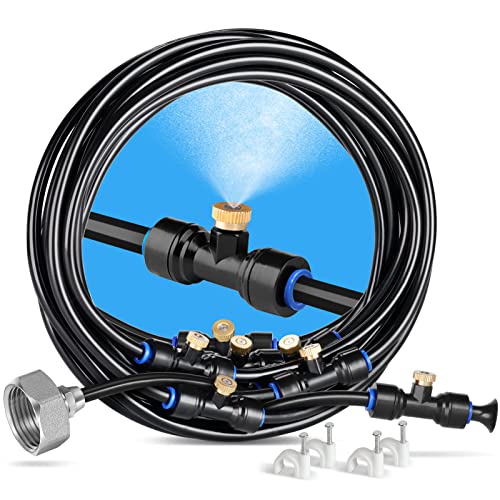
This HOMENOTE kit offers a compact 26-foot misting line with 7 brass nozzles and a 3/4″ brass adapter. It’s designed for small patios or compact greenhouse spaces and provides a reliable cooling effect while enabling precise mist positioning. Best for limited-space areas or beginners; however, shorter tubing may require additional extensions for larger zones.
Buying Guide: Key Purchase Considerations
What should you consider before buying a plant misting or drip irrigation system?
- Area coverage and tubing length: Choose tubing length that matches your space. Larger yards or greenhouses may require longer runs or expandable kits.
- Spray vs. drip emphasis: Misting is ideal for cooling and humidity, while drip irrigation focuses on direct plant watering. Some kits blend both functions—look for adjustable nozzles and modular components.
- Material quality: Brass fittings resist corrosion and leaks better than plastic, especially in hard water. Look for brass nozzles, brass adapters, and sealed connections.
- Ease of assembly and maintenance: Quick-connect fittings, clear manuals, and reusable parts reduce setup time and future maintenance. Detachable nozzles simplify cleaning to prevent clogs.
- Water pressure and flow control: Systems with multiple spray modes or adjustable pressure help tailor output to different plant needs and prevent overwatering.
- Durability and weather exposure: Outdoor kits should resist sun, heat, and UV degradation. Secure mounting hardware helps withstand wind.
- Timers and automation: For gardeners who travel or want consistent watering, a timer integration can automate misting schedules.
Installation Tips
- Plan spray coverage before mounting; avoid spraying foliage that could drip indoors onto walls or furniture.
- Test the system with the water off and gradually increase pressure to check for leaks.
- Use brackets or stakes to secure tubing and prevent movement in wind.
- Regularly inspect nozzles for mineral buildup and clean with a soft brush or vinegar solution if needed.
FAQ
- What is the best tubing size for misting plants?
– 1/4″ to 5/16″ tubing is common; 5/16″ tends to offer higher flow for larger areas and denser planting schemes. - Can I use these systems to water potted plants indoors?
– Yes, but ensure adequate drainage and avoid over-wetting leaves to prevent mold or root issues. - Will brass nozzles clog with hard water?
– Brass resists corrosion, but mineral buildup can occur. Regular cleaning helps prevent clogging. - Are timers compatible with all kits?
– Most kits are timer-friendly, but verify compatibility with your existing irrigation controller if you plan automation. - What maintenance is typical for misting systems?
– Check for leaks, clean nozzles regularly, replace worn fittings, and flush lines to clear debris. - Can misting reduce electricity or water use?
– When properly calibrated, misting can cool and hydrate efficiently, often reducing the need for overhead watering and lowering waste.