Discover top-rated microgreens grow kits designed for kitchen counter setups, soil-free and soil-friendly options, and kid-friendly learning kits. This guide highlights five versatile kits, explaining what each offers, how they grow greens indoors, and what to consider when choosing your setup. Whether you want quick harvests, easy cleanup, or the option to switch between hydroponic and soil methods, these kits cover a range of needs for American homes.
Summary of Selected Products
| Product | Brand | Type | Highlights |
|---|---|---|---|
| Self-Watering Microgreens Growing Kit | ZESTIGREENS | Soil-free hydroponic kit | Reusable tray, hydroponic insert, blackout lid, grow mats, variety pack |
| Kitmiido Seed Sprouting Kit | Kitmiido | Sprouting jars with stand | Two jars, lids, blackout sleeves, drip tray, versatile sprouts |
| Legigo Seed Sprouter Trays | Legigo | Soil-free sprouting trays | Two trays, lids, germinating paper, large capacity |
| Asphalt Rose Microgreens Growing Kit Indoor | ASPHALT ROSE | Indoors with LED light | LED grow light, three growing trays, mats, viewing features |
| FANHAO Visual Seed Sprouter Tray | FANHAO | Seed sprouter with acrylic base | Visible growing tray, two sprouting trays, stainless mesh |
The table above outlines five kits that balance ease of use, indoor compatibility, and variety of growing methods. Each kit has distinct strengths—from hydroponic options with water-based systems to traditional soil-free sprouting trays—allowing you to pick what matches your space, budget, and target greens.
Self-Watering Microgreens Growing Kit by ZESTIGREENS
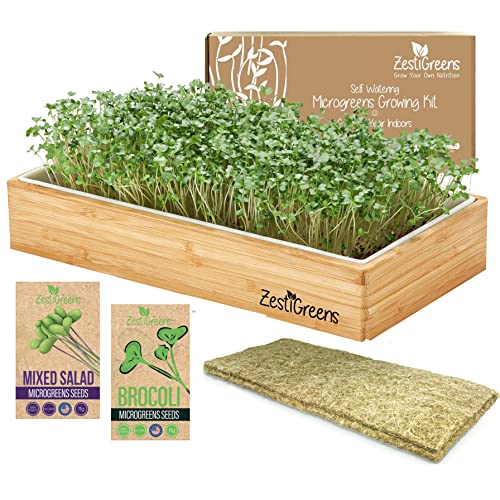
The ZestiGreens kit emphasizes soil-free cultivation on a compact 12″ x 6″ tray framed in bamboo, with a hydroponic insert and blackout lid for light control. Included grow mats support rapid germination, and the 16-page guide helps novice growers start quickly. It ships with a Red Garnet Amaranth seed pack and a mixed “Superfood” blend featuring broccoli, kale, kohlrabi, arugula, and cabbage. A key feature is the option to remove the hydroponic insert and grow in soil if preferred, expanding compatibility with varied seed types.
Growing method flexibility matters for many households. This kit works well on a kitchen counter, enabling harvests in 7–10 days with minimal mess. Users should expect ongoing water management since it is water-based; the reusable tray and materials are designed for repeated cycles, which is a practical choice for weekly greens. The kit’s design also caters to decorative spaces, offering a stylish frame that blends with home decor while delivering fresh greens.
Overall, this kit suits beginners seeking a quick-start hydroponic option with optional soil growth, plus a diverse seed selection that supports multiple microgreen varieties over time.
Kitmiido Seed Sprouting Kit with Jars and Stand

The Kitmiido sprouting kit centers on two wide-mouth mason jars, with sprout lids, blackout sleeves, a drip tray, and a stainless steel stand. It is designed for growing a variety of sprouts from broccoli and alfalfa to beans, emphasizing a compact footprint and budget-friendly setup. The system is described as high-efficiency, promoting good drainage and airflow to prevent rot. A standout feature is the blackout sleeves that help control light exposure, enabling longer or steadier sprouting cycles. This kit is suitable for beginners who want a straightforward, affordable route into home sprouting.
Usage versatility is a major plus here: you can quickly switch between different sprouts without soil, using the included components to manage daylight and drainage. The compact jars pair well with small kitchen counters or apartment spaces, and the variety of sprouts supports a broad range of meals—from sandwiches to salads. For users curious about ongoing sprout production, this kit offers a simple, repeatable process with clear setup steps.
In sum, Kitmiido’s kit is a practical starter set for those prioritizing ease of use and consistent harvests, with an emphasis on clean presentation and simple assembly.
Legigo Seed Sprouter Trays – 2 Pack

Legigo’s two-tray set focuses on soil-free cultivation with a transparent lid, inner and bottom trays, and germinating paper. The pair provides a larger germination area, offering a “no-soil, just-water” approach that supports rapid seed sprouting for beans and microgreens. The design emphasizes durability with BPA-free, food-grade PP materials, which appeals to health-conscious households. The concave-convex lid system makes removing the inner tray straightforward for inspecting progress without disturbing the entire setup.
The trays are described as having a sizable capacity, enabling faster growth and easier maintenance. The clear lid helps monitor hydration and growth, while the easy-grip layers simplify daily care. This kit is ideal for people who want to expand from a starter kit into a more robust sprouting setup while keeping costs reasonable andspace-efficiency in mind.
For households exploring persistent sprouting habits or experimenting with multiple seeds, Legigo provides a dependable, reusable framework that can scale with user experience and preferences.
Asphalt Rose Indoor Microgreens Kit with LED Light

This kit emphasizes an all-in-one indoor system with LED grow lighting and three microgreens trays, plus six jute mats. The Danish-engineered design centers on providing consistent light for year-round harvests, especially in rooms with limited natural daylight. The LED spectrum is chosen to support robust photosynthesis and healthy greens. Its educational appeal is strong, particularly for households seeking a visible, guided plant-growing experience that clarifies germination and growth processes.
Key advantages include the integrated light source and a compact footprint suitable for living spaces. The three-tray stack supports multiple harvests without reconfiguring the setup, while the jute mats offer a natural alternative to synthetic substrates. A potential consideration is electricity use and management of the LED system, which may influence long-term operating costs and heat in small spaces.
Overall, Asphalt Rose provides a premium, all-in-one setup designed for year-round microgreens growth with visible growth indicators and an emphasis on education and family-friendly learning.
FANHAO Upgraded Visual Seed Sprouter Tray

The FANHAO kit centers on a clear acrylic base that lets growers observe germination, paired with rust-resistant 304 stainless steel mesh trays. This visibility supports careful monitoring, while the two sprouting trays and two fine mesh inserts accommodate a variety of seed sizes. The setup is described as straightforward for users with any skill level, relying on routine soaking, rinsing, and draining to promote germination. The stainless components are designed for durability and repeated use, making it a long-term option for hobbyists and aspiring microgreens producers.
Because monitoring is one of the kit’s selling points, it suits people who want to learn the growth timeline of seeds and how microgreens respond to light and moisture. Its robust materials and modular design enable easy upgrades or replacement parts as needs evolve. The kit balances ease with a more premium, watchful approach to growing greens indoors.
Buying Guide: Key Purchase Considerations for Microgreens Grow Kits
- Growing Method: Decide between soil-free hydroponics and soil-based options. Hydroponic kits often offer faster cycles and cleaner setups, while soil-based kits can support larger seed varieties and a more familiar gardening experience.
- Space and Footprint: Measure your counter or shelf space. More trays and lights mean a larger footprint, but some kits offer stackable designs or compact trays that fit tight kitchens.
- Lighting: LED grow lights encourage year-round growth and consistent yields. Consider energy use, heat output, and light spectrum when evaluating kits with built-in lighting.
- Seed Variety and Expandability: Some kits include seed blends; others allow you to swap or add seeds. Look for kits that support multiple growing styles (hydroponic vs. soil) if you want flexibility over time.
- Maintenance and Cleanliness: Reusability, ease of cleaning, and the presence of drip trays or blackout lids influence daily use and long-term durability.
- Learning Curve: Kits with clear guides and visual observation features help beginners, while modular systems may appeal to experienced growers seeking customization.
- Cost of Entry: Starter kits vary in price. Assess not only the initial cost but the ongoing costs of seeds, mats, and replacement components.
- Safety and Materials: Choose BPA-free plastics and food-grade components. Durable frames and non-toxic materials contribute to long-term use in kitchens and living spaces.