Looking for the right long-handled digging fork can boost productivity and reduce strain when moving soil, mulch, manure, or compost. This guide highlights five durable options that suit different users—from casual home gardeners to professional landscapers and barn workers. Each product is chosen for long reach, sturdy construction, and comfort-focused handles. Read on to find the best pick for your needs, including who benefits most and any practical limitations to consider.
Summary table of highlighted products
| Product | Best For | Key Benefit | Potential Limitation |
|---|---|---|---|
| 5-Tine Heavy Duty Pitch Fork for Gardening | Heavy-duty tasks, rust resistance | Stainless steel head, extra-long socket | Long-term use may require maintenance to avoid rust |
| Garden Fork, 4-Tine Pitchfork | General digging and turning | Forged steel with solid wood Y-Grip | Wood handle may require care |
| Garden Fork, 5 Tine Digging Fork | Versatile digging and tilling | 5-tine design with reinforced head | Curved handle may take time to adjust |
| 65 inch Hay Fork, 10 Tine | Large-scale materials like hay, mulch, straw | Long 54-inch handle with big working area | Heavier; may be less maneuverable in tight spaces |
| 5 Tine Pitchfork with Fiberglass Handle | Budget-friendly, general gardening | Fiberglass handle; rust-resistant head | Fiberglass may feel less sturdy to some users |
5-Tine Heavy Duty Pitch Fork For Gardening

The 5-Tine Heavy Duty Pitch Fork is designed for rugged garden tasks. Its stainless steel head resists rust and reduces soil cling, making it suitable for frequent digging and turning of garden materials. An extra-long, double-riveted socket enhances strength, while a T-handle design minimizes hand and wrist stress during long sessions. Best for: hands-on gardeners tackling dense soil or compost piles who want durable construction and lower maintenance. Limitation: despite the rust-resistant head, routine cleaning after use is advised to maintain long-term performance.
Garden Fork, 4-Tine Pitchfork
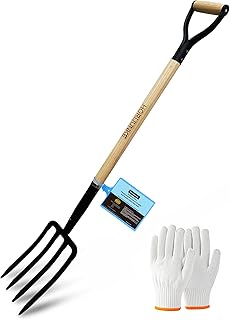
This 4-tine garden fork features a forged steel Y-Grip with a solid wood handle for a firm, comfortable hold. The total length reaches 45 inches, balancing reach with control. Best for: gardeners who need a sturdy yet lighter-weight tool for turning soil and lifting clumps without excessive bulk. The wooden handle requires care to prevent cracking with exposure to the elements. Caution: wood handles may loosen over time if not inspected and tightened as needed.
Garden Fork for Digging Composting Spading

This 5-tine digging fork emphasizes a reinforced head and a curved handle designed to save effort during prolonged digging. It includes a slip-resistant foot plate to apply downward force and ease soil penetration. Best for: heavy-duty tasks like tilling compacted soil, turning compost, and breaking up lumps. Limitation: the 45-degree tines require a bit of practice to optimize leverage for deep digs, particularly in dense material.
65 Inch Hay Fork with Long Handle, 10 Tine
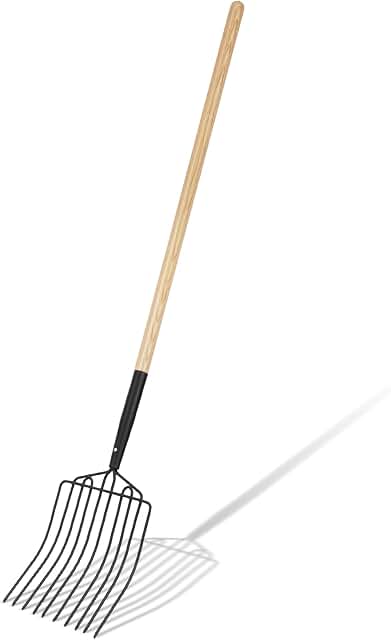
The 10-tine hay fork offers a large working area with a substantial forged steel head measuring about 11.4 x 15.7 inches. A long 54-inch hardwood handle provides excellent leverage and control for handling hay, manure, or mulch. Best for: users needing maximum reach and volume-per-dip in large-bale or barn settings. Limitation: the long handle increases overall weight and can be less maneuverable in small spaces.
5 Tine Pitchfork with Fiberglass Handle

This 58-inch, 5-tine pitchfork pairs a fiberglass handle with a carbon-steel head. The wide 8.26-inch head supports more material per lift, making it suitable for mulch and hay. Best for: budget-conscious buyers who still need a robust, weather-resistant option. Caution: fiberglass handles can feel less sturdy to some users compared to solid wood or forged steel, depending on grip preference.
Buying Guide
What should you consider when choosing a long-handled digging fork?
- Material and durability: Look for forged steel heads for strength, rust-resistant metal for longevity, and a handle material that fits your climate and grip preference (wood, fiberglass, or composite).
- Handle length and leverage: Longer handles reduce bending and back strain but can be harder to maneuver in tight spaces. Choose a length that matches your height and typical tasks.
- Number of tines: More tines offer broader lifting capacity and better soil penetration, but may increase weight and reduce precision for delicate tasks.
- Grip and comfort: Ergonomic grips, such as T-handles or Y-grips, improve control and reduce fatigue during long sessions. Check for slip-resistant features on the handle or grip.
- Maintenance needs: Wooden handles may require oiling or sealing; metal heads benefit from rust prevention and cleaning after use.
- Intended tasks: For heavy mulch and compost, a wider head and more tines can speed up work. For loose soil or precision digging, a lighter, more compact fork may be better.
FAQ
- What is the benefit of a long handle?
A longer handle increases leverage, reduces bending, and helps reach into deep piles without straining the back.
- Are wooden handles better than fiberglass?
Wood offers a traditional feel and can be comfortable, but requires more maintenance. Fiberglass handles resist weather and tend to be lighter, though some users prefer the rigidity of wood.
- How many tines should I choose?
Five tines are common for general digging and turning, while more tines (like ten) provide greater material capacity but add weight.
- Can these forks handle damp or compact soil?
Yes, many models use forged steel or reinforced heads, but expect extra effort on very compact soil and consider a fork with a slip plate or sharp tines to ease penetration.
- Is maintenance required after use?
Yes. Clean off soil, dry thoroughly, and lubricate metal parts or seal wooden handles to extend life.
- Which fork is best for barn use?
A long, heavy-duty fork with a wide head and a sturdy handle—such as the 10-tine hay fork—offers efficient lifting in barn tasks.