This guide reviews top liquid fertilizers ideal for growing tomatoes and other vegetables. It compares nutrient content, organic options, and application versatility to help you select a product that boosts yields while supporting soil health. Each choice is commonly available on Amazon and suitable for in-ground beds, raised beds, and containers.
| Product | Brand | Main Benefit | Form |
|---|---|---|---|
| True Organic Liquid Tomato & Vegetable Food | True Organic | Organic nutrient-rich formula for superior harvests | Liquid |
| Miracle-Gro Water Soluble Tomato Plant Food | Miracle-Gro | Instant feed to boost size and yield | Water-soluble liquid |
| Espoma Organic Tomato Plant Food | Espoma | Organic nutrition for all types of tomatoes | Liquid concentrate |
| Miracle-Gro LiquaFeed Tomato, Fruits and Vegetables | Miracle-Gro | Easy feeding with watering routine | Liquid concentrate |
| Dr. Earth Home Grown Tomato, Vegetable & Herb | Dr. Earth | Sustainable, multi-pack fertilizer with high NPK | Liquid concentrate |
True Organic Liquid Tomato & Vegetable Food

True Organic Liquid Tomato & Vegetable Food promotes superior harvests with a nutrient-rich formula. It features an exclusive Soy Protein Hydrolysate blend to enhance plant and soil health naturally. The product is versatile for in-ground, container, indoor, and outdoor use, delivering balanced nourishment for thriving gardens. Suitable for a wide range of tomato varieties and vegetables, it supports consistent growth throughout the growing season.
Miracle-Gro Water Soluble Tomato Plant Food
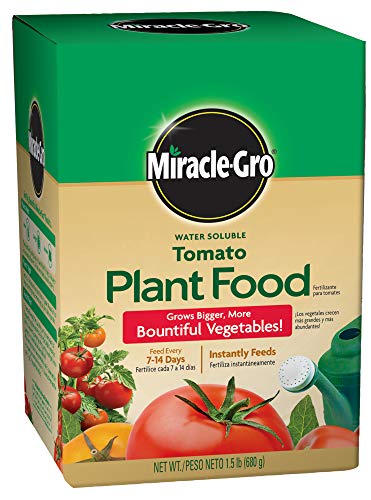
This Miracle-Gro option provides quick, visible results by feeding plants to grow bigger and more bountiful vegetables. It is designed for frequent feeding every 1–2 weeks and is well-suited for both tomato plants and a variety of vegetables. The liquid formulation makes it easy to mix and apply with routine irrigation, delivering nutrients where the roots can quickly absorb them.
Espoma Organic Tomato Plant Food

Espoma Organic Tomato Plant Food provides nutrients to support all tomato varieties and other vegetables in organic gardening. The dosing is straightforward: mix half a cap per quart of water and water regularly, ideally every 2–4 weeks. It contains essential plant nutrients and is designed to be kid- and pet-safe when used as directed, aligning with organic gardening practices.
Miracle-Gro LiquaFeed Tomato, Fruits and Vegetables
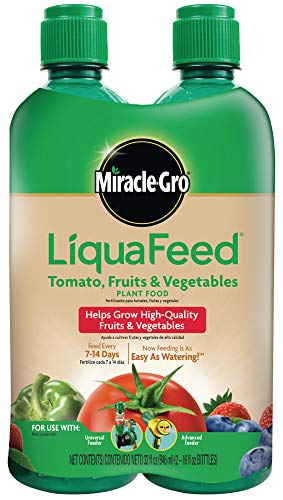
Miracle-Gro LiquaFeed simplifies feeding with a ready-to-use liquid concentrate designed for tomatoes, fruits, and vegetables. It supports both in-ground and container plants, making feeding as easy as watering. The formulation aims to deliver consistent growth and higher quality produce with a simple weekly or biweekly schedule.
Dr. Earth Home Grown Tomato, Vegetable & Herb
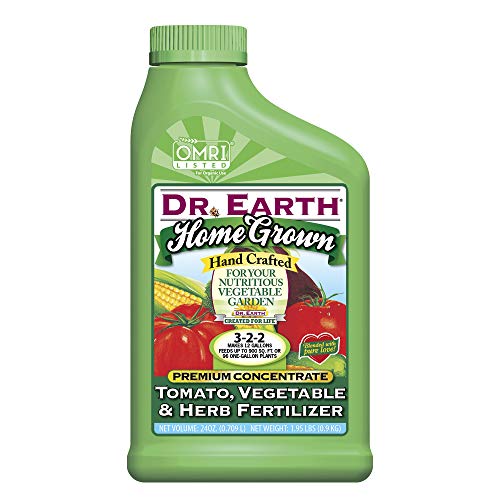
Dr. Earth Home Grown Tomato, Vegetable & Herb Liquid Fertilizer is a 24 oz concentrate with a 3-2-2 NPK ratio. It emphasizes sustainability, using recycled materials and natural ingredients to produce a larger, more robust harvest. The concentrate yields multiple gallons of fertilizer, making it cost-effective for larger gardens while providing broad coverage for tomatoes, herbs, and vegetables.
Buying Guide: Key Purchase Considerations
- Nitrogen, Phosphorus, and Potassium (NPK) balance: For tomatoes, a balanced or slightly higher phosphorus and potassium ratio supports strong fruit development. Look for labels such as 3-1-2 or 3-2-2 to promote flowering and fruiting without excessive foliage growth.
- Organic vs. synthetic: Organic options, like Espoma or True Organic, support soil microbiology and sustainable gardening. Synthetic or semi-synthetic formulas often offer faster results, which can be beneficial for quick timeline goals.
- Concentration and coverage: Concentrates yield more gallons per bottle, reducing cost per feeding. Large gardens benefit from higher-concentration formulas that still mix easily with water.
- Application method: Choose products designed for easy watering-in or foliar feeding. Liquids that mix with irrigation water simplify routine use, while ready-to-use LiquaFeed types save time for frequent feedings.
- Safety and compatibility: Consider pets and kids in households. Organic and plant-based options are generally safer for indoor use and edible gardens. Always follow label directions for dilution and frequency.
- Container vs. in-ground: Most liquid fertilizers work well in containers and raised beds. Confirm compatibility with your plant setup to maximize nutrient uptake and minimize waste.
- Frequency and seasonality: Some products recommend frequent feeding during active fruiting, while others advocate periodic maintenance. Plan your schedule around fruit set and growth stages.
- Soil health and humic content: Some blends include humic acids to improve soil structure and nutrient retention, benefiting long-term garden health, particularly in depleted soils.
- Environmental impact: Consider packaging, concentrate yield, and ingredients when evaluating sustainability. Refillable or concentrated options reduce plastic waste.