Finding the right mower for a full acre or more requires considering power, efficiency, terrain, and maintenance. This guide highlights five top options suited for approximately one acre, focusing on autonomous robots and high-capacity cordless models. Each choice balances cutting performance with ease of use, so you can keep a large grassy area neatly trimmed without excessive manual effort. Review the options below to see which mower best fits your yard’s layout, slope, and your preferred level of automation.
| Product | Type | Best For | Key Feature |
|---|---|---|---|
| BESTMOW Robot Lawn Mower — 1.5 Acre | Autonomous Robot | Large, open lawns, remote control via app | RTK+ Eye Vision, mapping, anti-theft |
| Neomow X Robot Lawn Mower (1 Acre) | Autonomous Robot | No boundary wires, complex terrains | 3D LiDAR SLAM, AI obstacle avoidance |
| Neomow X SE Robot Lawn Mower (0.75 Acre) | Autonomous Robot | Smaller lots with smart zones | 3D LiDAR SLAM, AI obstacle avoidance |
| Mammotion YUKA 2000 Robot Lawn Mower | Autonomous Robot | Multiple mowing zones, AI vision | 4G, ultra-sense AI, auto mapping |
| Greenworks 80V 21″ Self-Propelled | Cordless Push | Efficient manual mowing for medium-to-large yards | Brushless motor, LED lights, 4.0Ah battery |
BESTMOW Robot Lawn Mower — 1.5 Acre

Official features emphasize precision cutting for an even trim and stable performance on slopes up to 25–30%. The mower includes an anti-theft activation code and GPS mapping for efficient, complete lawn coverage. App control enables scheduling and monitoring from a smartphone, adding convenience for large properties with varied terrain.
Neomow X Robot Lawn Mower — 1 Acre
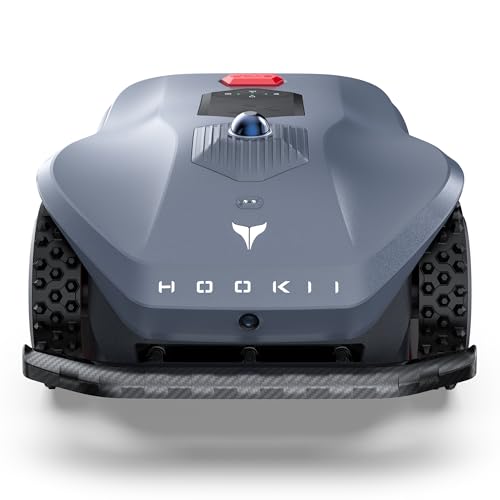
This perimeter wire-free mower uses 3D LiDAR SLAM and vision fusion to map and navigate without boundary wires or RTK stations. It supports edge mapping up to 1 acre, lets users define no-go zones via the app, and promises centimeter-accurate positioning. The AI-based obstacle avoidance protects pets and children while maintaining consistent coverage, even in shaded areas or under trees.
Neomow X SE Robot Lawn Mower — 0.75 Acre

Designed for smaller lots while still offering advanced navigation, the SE model uses 3D LiDAR SLAM but targets 0.75 acre edge mapping. It enables 40 working areas via the app and features precise positioning with no need for wall wires. Its AI obstacle avoidance mirrors the X model’s reliability, helping avoid common yard hazards during mowing.
Mammotion YUKA 2000 Robot Lawn Mower

YUKA 2000 offers AI Vision with reception up to 0.5 acre and max 0.7 acre, featuring Auto Mapping and multiple mowing zones. It supports 45% slopes, 4G connectivity, and a dedicated perimeter system. Its UltraSense AI helps it identify dynamic obstacles and maintain thorough coverage with less operator intervention.
Greenworks 80V 21″ Self-Propelled

This cordless self-propelled mower handles up to about a 1/2 acre on a single charge with an 80V 4.0Ah battery. It features a brushless motor, a durable steel deck, and rear-wheel drive for better traction. LED lights enhance visibility in low-light conditions, and the PowerShare platform supports expansion with other Greenworks tools.
WORX 40V 14″ Cordless Lawn Mower

WORX WG779 is a compact, lightweight option designed for smaller yards but scalable with 2 batteries and a charger included. It uses 40V power with IntelliCut technology that adapts to grass density to preserve battery life. This mower is suitable for tighter spaces and quick turns around garden features.
Buying Guide
When selecting a mower for about an acre, consider the following factors:
- Terrain and slopes: Robotic mowers with AI vision and LiDAR handle uneven terrain and obstacles better than basic models. If your yard includes hills, trees, or complex borders, prioritize models with adaptive mapping and obstacle avoidance.
- Coverage area: Ensure the mower’s listed capacity matches your lot size. Some robots are designed for 0.5–1 acre, while others claim larger-capacity performance; verify real-world performance for your climate and lawn shape.
- Boundary setup: Boundary-wire-free models save installation time but may require reliable app control and consistent signal. Wired boundary systems are dependable in challenging environments but require initial setup.
- Maintenance and parts: Look for readily available replacement blades, batteries, and service centers. Large robots may need periodic firmware updates and occasional parts replacements.
- Power and runtime: For cordless options, battery capacity and charging time determine how many zones can be mowed per session. Robotic mowers generally need a home base for recharge cycles.
- Safety features: Anti-theft measures, automatic shutoff on contact with obstacles, and child/pet detection can reduce risks in busy yards.
- Software and app experience: A user-friendly app with scheduling, geofencing, and remote monitoring adds significant value for ongoing lawn care.
For yards with mixed needs—large, open spaces plus occasional tight areas—a hybrid approach often works best: a capable autonomous mower for routine maintenance and a robust cordless mower for edge work or quick touch-ups. Evaluating both automation level and physical cutting power ensures you pick a system that minimizes effort while delivering a consistently clean cut.