Irrigation bags for trees provide a simple, efficient way to deliver water directly to roots, reducing evaporation and waste. This guide highlights five highly capable options and explains how to choose the right bag for new plantings, established trees, and drought-prone environments. Each product below includes key features to help you compare performance, durability, and ease of use so you can keep trees thriving with minimal effort.
Summary of chosen products
| Product | Brand | Capacity | Release Time | Key Benefit |
|---|---|---|---|---|
| PANGCH 3-Pack 20 Gallon | PANGCH | 20 gal each | 5-9 hours | |
| CLEBAY 12 Pack 20 Gallon | Clebay | 20 gal each | 5-24 hours | |
| KONIGEEHRE 5 Pack 20 Gallon | KONIGEEHRE | 20 gal each | 5-24 hours | |
| Valibe 4 Pack 20 Gallon | Valibe | 20 gal each | 5-8 hours | |
| Treegator Original 3-Pack 20 Gallon | treegator | 20 gal each | Unknown |
PANGCH 20 Gallon Tree Watering Bags — 3 Pack
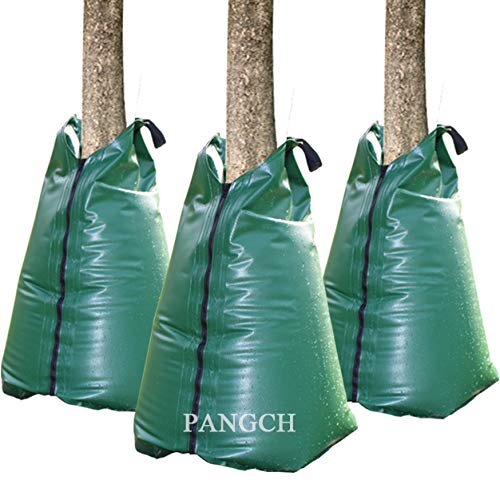
PANGCH’s 20-gallon bags are designed to saturate soil deeply, encouraging robust root growth and reducing transplant shock. The system minimizes watering frequency and can lower labor costs by eliminating frequent replacements. Each bag holds up to 20 gallons and typically empties in 5–9 hours, though exact timing varies with soil type, weather, and tree size. A commonly used guideline for new plantings is about 10 gallons per week per inch of tree caliper, adjustable by local conditions to meet drought needs.
CLEBAY 12 Pack 20 Gallon Tree Watering Bags

These heavy-duty bags are built from UV-resistant PVC tarpaulin with scrim reinforcement, designed for long-term use. Each bag holds up to 20 gallons and releases water slowly over roughly 5–24 hours, depending on soil type and tree size. They come with durable straps, zippers, and handles for easy transport and installation. The design supports slow, deep watering that can reduce water waste while maintaining consistent moisture for drought-prone areas.
KONIGEEHRE 20 Gallon Tree Watering Bags — 5 Pack
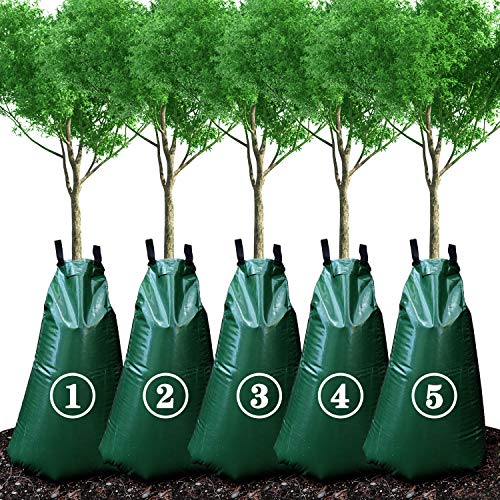
These heavy-duty PVC tarpaulin bags are UV resistant and designed for long-term outdoor use. They offer flexible installation; simply wrap around the trunk, zip, and fill. For larger trees, multiple bags can be combined to maintain consistent moisture delivery. They emphasize durability and easy maintenance, making them suitable for frequent seasonal use in hot or drought-prone climates.
Valibe Tree Watering Bag — 4 Pack

Valibe’s 20-gallon bags focus on deep root irrigation with a two-hole design that delivers water directly to deeper soil layers. The material is a UV-resistant, tear-resistant PVC that withstands harsh outdoor conditions. Installation is straightforward: wrap, zip, and fill with a large opening for quick refills. The system supports trunks up to 4 inches in diameter and can be paired to water larger trees by using multiple bags together.
Treegator Original 20 Gal — 3 Pack

Treegator is a well-known name in tree irrigation. The Original 20-gallon bags provide a reliable slow-release system in a three-pack. The design concentrates water around the trunk to promote deep penetration and steady soil moisture over several hours. This option is widely used by homeowners and professionals who value a proven, straightforward approach to tree hydration during establishment or drought periods.
Refasen Tree Watering Bag — 6 Pack

Refasen offers a six-pack of 20-gallon bags with dual release holes near the bottom corners, designed to ensure deep soil soaking without excessive evaporation. The setup is described as easy: strap and zip around the trunk, fill to a fraction of capacity to start, then top off as needed. The construction emphasizes heavy-duty seams and reinforced stitching for durability across seasons, making it a solid option for ongoing irrigation management.
Buying Guide: Key Considerations For Selecting Tree Watering Bags
- Capacity and release timing: Most bags use 20 gallons with release windows ranging from about 5 to 24 hours. Choose based on tree size, soil type, and local climate; larger trees may benefit from multiple bags or slower release.
- Materials and durability: UV-resistant PVC and reinforced seams extend life in sun, wind, and heat. Look for bags with sturdy straps, zippers, and handles for easy handling and frequent use.
- Ease of installation: Bags should be simple to wrap around the trunk, zip, and fill. Quick setup reduces labor and encourages consistent use, especially for new plantings.
- Deep watering vs. surface watering: Deep delivery reduces drought stress and supports root growth. Ensure the design targets deeper soil layers efficiently.
- Flexibility and scalability: If you have multiple trees or varying trunk diameters, consider bags that can be combined for larger targets or multiple installations.
- Maintenance and cleanup: Reusable bags should withstand seasonal storage, cleaning, and potential leaks. Look for easy-to-clean interiors and leak-proof fittings.
- Environmental conditions: In hot, dry areas, high durability and faster fill-to-release cycles can help maintain soil moisture without waste.
- Cost considerations: While not listing prices, assess total cost of ownership—durability, how long bags last, and how many trees you treat per bag will influence value.
These options cover a range of needs from small yards to larger landscapes. When selecting, prioritize deep, slow irrigation that reliably reaches the root zone, reduces water waste, and aligns with your local climate and tree species. For established trees, a steady, manageable schedule is often more important than maximum capacity alone. For newly planted trees, reliable deep saturation and protective materials that withstand sun exposure are especially valuable.