Answer: For effectively eliminating carpenter bees and protecting wood, choose products that reach deep into tunnels, expand into hard‑to‑reach spaces, and provide lasting protection. Foam aerosols and targeted dusts work well for active tunnels, while traps offer preventive control in surrounding areas. This guide highlights five effective options and explains who each is best for, plus practical limitations to consider.
| Product | Best For | Why It’s Notable |
|---|---|---|
| Spectracide Carpenter Bee And Ground-Nesting Yellowjacket Killer Foaming Aerosol | Active tunnels; hard‑to‑reach nests | Foam expands into nests and cracks; extension tube helps reach tight spots |
| Donaldson Farms Carpenter Bee Spray | Wood decks, sheds, eaves | Deep‑reach precision nozzle; subtle foam reduces mess |
| Spectracide Carpenter Bee And Ground-Nesting Yellowjacket Killer (3 Pack) | Multiple hotspots; large structures | Same foam technology in a 3‑pack for broader coverage |
| BioAdvanced Termite & Carpenter Bee Killer Plus Foam | Hidden termite and bee infestations; dense wood | Expands up to 30x to reach voids; targets multiple pests |
| RESCUE! VisiLure TrapStik for Wasps, Mud Daubers, Carpenter Bees | Preventive pest capture around structures | Odorless lure; sticky trap for continuous control |
Spectracide Carpenter Bee And Ground-Nesting Yellowjacket Killer Foaming Aerosol (16 oz)

This foam aerosol expands to reach active carpenter bee tunnels and nests. The extension tube allows spraying into cracks and hard‑to‑reach areas where carpenter bees tunnel. It also controls ground‑nesting yellowjackets by delivering insecticide directly into entry holes. Best for: homeowners with visible nests in wood siding or exposed tunnels who need targeted delivery without scouting every crevice.
Selection rationale: The product’s expanding foam is designed to distribute the insecticide inside the nest, making it effective in interior galleries. Use caution around flowering plants and beneficial insects. Do not rely on a single treatment for entrenched infestations; reapplication may be necessary if tunnels extend deeper or new activity appears.
Donaldson Farms Carpenter Bee Spray – Wood Boring Bee Spray

Designed for decks, sheds, and outdoor wood, this spray uses a deep‑reaching precision nozzle to apply formula into eaves and drilled holes from a distance. It employs a subtle foaming action to minimize mess while coating interiors and walls where carpenter bees nest. Best for: exterior wood structures where nests are accessible via holes or tunnels and close spraying is impractical.
Selection rationale: The extended sprayer helps protect siding and structural wood while reducing contact with active tunnels. Consider this option when you prefer a distance application and minimal surface residue. Limitations: Deep nests beyond reach may require additional applications or complementary methods.
Spectracide Carpenter Bee And Ground-Nesting Yellowjacket Killer (3 Pack)

This is the same foam aerosol formulation as the single can, offered in a three‑pack for larger properties or multi‑site use. Best for: larger homes, farms, or properties with several nests or yellowjacket activity points. The ability to spray into multiple holes helps standardize coverage across several problem areas.
Selection rationale: A 3‑pack reduces the need to buy replacements mid‑treatment and supports a broader, more uniform approach. Caution: Follow multiple‑step application guidelines and avoid over‑saturation in sensitive landscaping areas.
BioAdvanced Termite & Carpenter Bee Killer Plus Foam

This expanding foam formula targets hidden areas by penetrating cracks, voids, and spaces within wood. It claims to kill active termites and listed wood‑infesting pests, including carpenter bees and several wood‑boring beetles. Best for: situations where both carpenter bees and hidden termites pose a risk, or where void spaces are extensive. Limitation: not all ant or termite species are listed as covered—check product label for specifics.
Selection rationale: The foam expansion property helps reach deeply hidden nests, reducing the need for invasive drilling. Use as part of an integrated pest management plan that includes inspection and exclusion measures.
Atticus Tirade 1% Cyfluthrin Dust Insecticide

This ready‑to‑use dust delivers cyfluthrin to control a broad range of insects, including ants, bees, wasps, hornets, cockroaches, and more. Best for: indoor and outdoor use where dust application into wall voids or crevices is feasible. Limitation: dusts require careful application to avoid contamination of non‑target organisms and to ensure lingering effect without reentry hazards.
Selection rationale: The product provides residual activity and coverage across many pests, which can be beneficial in mixed‑infestation situations. Ensure proper labeling and safety precautions during application.
Spectracide Terminate Termite & Carpenter Ant Killer

This product targets termites, carpenter ants, and carpenter bees with a barrier treatment approach. It is suitable for use indoors and as a home barrier spray to slow or stop spread of infestation. Best for: those seeking a broad barrier treatment to reduce pest movement inside walls and around the home. Limitation: effectiveness depends on complete barrier coverage and thorough adherence to label directions.
RESCUE! VisiLure TrapStik For Wasps, Mud Daubers, Carpenter Bees
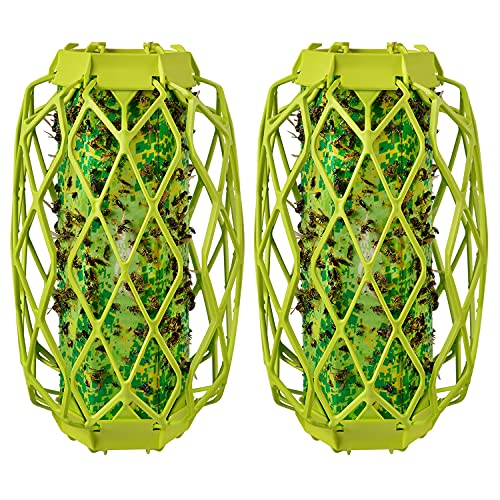
This two‑pack sticky trap lures wasps, mud daubers, and carpenter bees with color patterns and patterns designed to attract insects without scents or sprays. Best for: preventive capture around entry points and structures, especially when you want a non‑chemical approach to reducing flying insect pressure near wood. Limitation: traps do not kill insects immediately and require relocation or replacement as they fill.
Buying Guide: Key Purchase Considerations
- Target pest: Choose products that explicitly address carpenter bees and other wood‑infesting pests. Some formulas tackle termites and ants as well, which can be advantageous in multi‑infestation settings.
- Application method: Foam aerosols are good for tunnels and cracks; deep‑reach sprays are useful for eaves and nesting holes; dusts suit wall voids; traps support preventive control around structures.
- Expansion and penetration: Look for products that expand or penetrate voids effectively to reach hidden galleries where carpenter bees nest.
- Safety and environment: Consider indoor vs outdoor use; follow label instructions; protect non‑target species and people, especially in households with pets or children.
- Coverage: For large properties, multi‑pack options can reduce the need for frequent repurchases and ensure consistent application across multiple nests.
- Integration: Combine direct nest treatments with structural maintenance (sealing holes, replacing damaged wood) to reduce re‑infestation risk.
Frequently Asked Questions
- What is the best way to treat carpenter bee nests? Use a targeted foam or spray with an extension nozzle to reach nests inside holes, galleries, and voids. Reapply if new activity appears after initial treatment.
- Can I use these products indoors? Some are labeled for indoor and outdoor use. Always follow the label for safe indoor application and occupancy restrictions.
- Do traps eliminate carpenter bees? Traps help reduce adult activity around structures but are usually part of an integrated plan rather than a standalone solution.
- Should I hire a professional? For large infestations, hidden nests, or structural wood damage, professional pest control advice is recommended.
- Are there precautions to protect wood long-term? Seal cracks, repair damaged wood, stain or paint surfaces, and maintain wood‑based structures to deter future nesting.
- How often should I reapply treatments? Reapplication depends on the product, exposure, and ongoing activity. Follow label directions and monitor nests for continued activity.