Answering your search for reliable bean and pea inoculants, this guide highlights five top options. Each product is chosen for different growing needs—from home gardens to mid-size plots—so you can select the best fit for your beans, peas, and other legumes. The best picks are intended for buyers seeking to improve nitrogen fixation, root health, and overall yields without synthetic fertilizers. The table below provides quick comparisons to help you decide which product to buy first.
| Product | Best For | Key Benefit |
|---|---|---|
| PAPAW’S Garden Inoculant (Peas & Beans) | Home gardeners growing peas and beans | Attaches to roots for free nitrogen; simple 1.5 oz packet |
| Park Seed Nature’s Aid | Legume crops including beans, peas, vetch | Live nitrogen-fixing bacteria; granular and easy to apply |
| Micronoc Mycorrhizal & Beneficial Microbes | Seed coating for diverse crops | Balanced microbial blend enhances nutrient uptake |
| Dirty Green Microbe Blend | Root health boost for many plants | High spore and CFU counts; no fillers |
| Mountain Valley Soybean Inoculants | Soybeans and cover crops | Rhizobia-focused for nitrogen fixation in soy-related crops |
PAPAW’S Garden Inoculant for Peas and Beans

PAPAW’S Garden Supply LLC offers a straightforward inoculant designed to attach to bean and pea roots, enabling free nitrogen production for the plant. Best for home gardeners who plant small batches and want a simple, one-step treatment. The 1.5 oz packet covers up to 8 pounds of seed, making it suitable for starter rows or raised beds. A practical choice when you want a quick nitrogen boost without complex mixing.
Who it’s best for: novice to intermediate gardeners seeking easy application and visible nitrogen support at planting. Why selected: compact packaging and direct root association deliver a targeted benefit for peas and beans.
Caution: effectiveness depends on soil conditions and seed contact; ensure seeds are coated evenly for best results.
Park Seed Nature’s Aid Garden Soil Inoculant
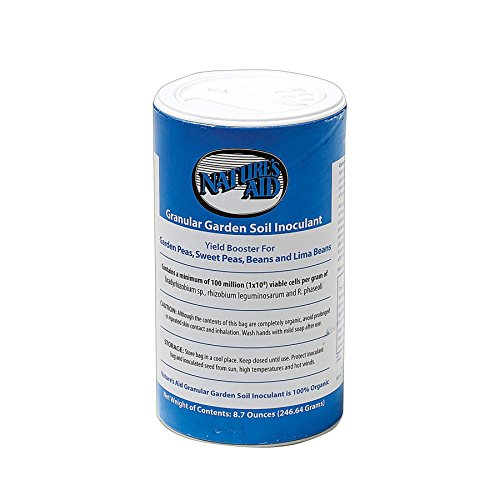
Park Seed Nature’s Aid is a granular soil inoculant designed to enhance nitrogen fixation for beans, peas, lima beans, and vetch. It introduces live nitrogen-fixing bacteria directly into the soil, supporting robust root development and foliage. The granular format makes it easy to apply during sowing, and the blend includes multiple bacterial strains to optimize nutrient uptake. This option is ideal for gardeners aiming to reduce synthetic fertilizer reliance and improve long-term soil health.
Who it’s best for: growers wanting a natural, soil-based approach to nitrogen enhancement with a focus on legumes. Why selected: broad legume compatibility and straightforward granular application.
Caution: excludes soybeans; not a universal solution for all legume varieties.
Micronoc Mycorrhizal Fungi + Beneficial Microbial Blend

Micronoc combines mycorrhizal fungi with a curated mix of nitrogen-fixing bacteria and phosphate solubilizers. This seed inoculant is designed to coat seeds before planting, creating a thriving soil ecosystem that supports robust root formation and nutrient availability. It is a strong choice for gardeners who want a broader soil-health boost beyond nitrogen fixation alone. The blend is OMRI-listed, offering an additional level of assurance for organic-minded growers.
Who it’s best for: gardeners seeking a balanced microbial approach that improves nutrient access and root structure. Why selected: seed coating and a diverse microbial mix provide multiple growth benefits.
Caution: some soils may already have established microbial communities, so the marginal gains could be variable depending on soil history.
Dirty Green Microbe Blend

Dirty Green’s Microbe Blend is a powder inoculant formulated with endomycorrhizal fungi and multiple beneficial bacteria. It emphasizes a robust root system with a focus on endomycorrhizal associations that enhance water and nutrient uptake. The product claims a high spore count and 12-strain bacteria per gram, delivering a strong soil biology boost for many plant types, including legumes. It is pitched as a no-fillers formula—intended for growers who want potent microbial activity without extraneous additives.
Who it’s best for: experienced gardeners who want a powerful, full-spectrum microbial boost. Why selected: high microbial load and emphasis on comprehensive root health.
Caution: the strength of spores and CFU means use as directed to avoid over-inoculation in very nutrient-rich soils.
Exceed Soybeans Peat Legume Inoculant

Exceed Inoculant for soybeans is a peat-based inoculant that focuses on nitrogen fixation and root formation. While marketed for soybeans, many gardeners apply such inoculants to related legumes and cover crops to boost early growth and overall vigor. It promises simple one-step application and can treat substantial seed amounts per package. This option is best for users planning larger soybean or legume plantings who want an efficient, easy-to-apply product.
Who it’s best for: larger plantings or gardeners who prefer peat-based formulations with clear, straightforward use. Why selected: strong emphasis on ease of application and nitrogen-focused growth.
Caution: verify crop compatibility if growing non-soy legumes to avoid suboptimal results.
Mountain Valley Soybean Inoculant (1 Oz)

This powder rhizobia inoculant targets soybean seeds and cover crops to promote nitrogen fixation and nodulation. It is a compact option for growers focusing on soybeans, with clear benefits for future harvests and soil nitrogen replenishment. The product is positioned as a custom inoculant for soybean cover crops, helping rebuild soil before the next planting cycle.
Who it’s best for: soybean growers and cover crop planners seeking a seed-specific inoculant. Why selected: targeted rhizobia blend supports nodulation and soil nitrogen cycling.
Caution: designed for soybeans and similar legumes; applicability to non-soy beans may vary in effectiveness.
Mountain Valley Soybean Inoculant (2.5 Oz)
This 2.5 oz version of the Mountain Valley soybean inoculant provides a larger quantity for bigger plantings or extended planting windows. It shares the same rhizobia-focused approach designed to maximize root nodulation and nitrogen fixation in soybean crops and related cover crops. Best for gardeners who plan multiple sowings or larger plots that require more inoculant per batch.
Who it’s best for: growers with larger soybean planting areas or repeated sowings. Why selected: higher quantity per bag gives better value for larger operations.
Caution: ensure proper coating and seed-to-inoculant contact to avoid under-inoculation in dense plantings.
Buying Guide
What should I consider when choosing a bean and pea inoculant?
- Legume compatibility: check whether the product targets beans, peas, soybeans, or broader legumes. Some formulations exclude certain crops.
- Application method: seed coatings, granular soil inoculants, and peat-based formats require different handling. Choose what aligns with your planting method.
- Nitrogen fixation focus: some products emphasize nitrogen fixation, others improve root health or soil biology. Decide which outcome matters most for your crop and soil history.
- Soil and climate conditions: sandy soils, poor soils, or organic setups may benefit more from certain microbial blends. Consider local conditions and crop rotation plans.
- Format and storage: powders, granules, and liquids have different shelf lives and storage needs. Ensure you can store the product properly.
How do I apply inoculants correctly?
- Follow label instructions for seed coating or soil mixing. Even contact with seeds improves effectiveness.
- Apply inoculants at sowing time for best nodulation results. Avoid applying long before planting when possible.
- Water properly after planting if the product requires moisture for activation, but avoid overwatering that could wash away the inoculant.
- Rotate crops to maintain soil health and avoid dependence on a single inoculant product.
What are common limitations?
- Effectiveness varies with soil chemistry, moisture, and existing microbial communities.
- Some products are crop-specific; using a non-target crop may yield limited benefits.
- Too high inoculant dosage can be wasteful or potentially disruptive to native soil biology.
FAQ
- Q: Are inoculants safe for organic gardens? A: Many inoculants are OMRI-listed or designed for organic gardening; check the label to confirm.
- Q: Can I use inoculants on stored seeds? A: Inoculants are generally for freshly sown seeds; store seeds as recommended and inoculate at planting.
- Q: Do inoculants replace fertilizer? A: They support nitrogen fixation and soil health, but may complement fertilizer programs as needed.
- Q: How soon will I see benefits? A: Benefits often appear in early growth and vigor, especially in nodulation and root development.
- Q: Should I apply inoculants to all crops? A: Use products formulated for your crop type; some are designed for specific legumes only.