Answering the common question “which indoor grow light is best for my plants?” this guide highlights five dependable options that balance spectrum coverage, ease of use, and adjustable features. Each pick is suited to different buyers: home gardeners, busy professionals, small-space growers, and anyone needing reliable auto-timing. Below you’ll find quick profiles, a buyer’s overview, and a practical buying guide to compare performance, setup, and price considerations.
| Product | Best For | Key Benefit | Limitations |
|---|---|---|---|
| LEOTER Grow Light for Indoor Plants | All growth stages; beginners to intermediate | Full spectrum with 80 LEDs and a memory timer | Timer resets if power is interrupted |
| GooingTop LED Grow Light | Desk setups, readers, and budding gardeners | High CRI 95; flexible clamp with gooseneck | USB power option may limit location flexibility |
| Grow Lights for Indoor Plants (Dsektop/Standing) | Tall plants and varied spaces | Adjustable height; full spectrum for all stages | May require more space for tall setups |
| RWNTAO Upgrade 168 LEDs Clip Lights | Two-head, compact setups | Two heads; three spectrum modes; strong timers | Two-head design may limit coverage for larger plants |
| LBW Desk Grow Light | Windowsill gardeners and desktop farmers | 214 LEDs; substantial coverage and dimming | May feel bulky for tiny desks |
LEOTER Grow Light for Indoor Plants
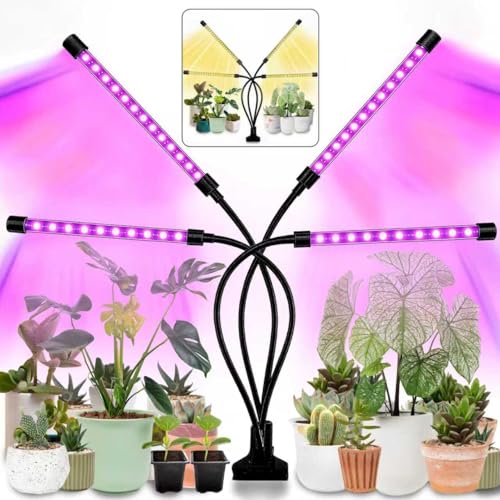
Best for all stages of plant growth, this LEOTER model uses 80 LEDs to deliver full spectrum light (380nm-800nm) with targeted red and blue wavelengths for flowering and fruiting. The 3/9/12-hour circular timer helps growers automate light cycles while the 10 dimmable levels provide precise intensity control. Three spectral modes—Red, Blue, and Full Spectrum—allow a flexible setup for seedlings, vegetative growth, and fruiting. This is a solid fit for busy households or homes with varying plant types that need consistent lighting without daily manual adjustments.
Best for: beginners and intermediate indoor gardeners who want a versatile, adjustable light that covers germination through fruiting. Why selected: strong spectrum options, reliable auto-timer, and multiple dimming levels support diverse plant needs without changing fixtures.
Caution: The timer memory is affected by power loss; you may need to reset after a power outage to maintain the same schedule.
GooingTop LED Grow Light
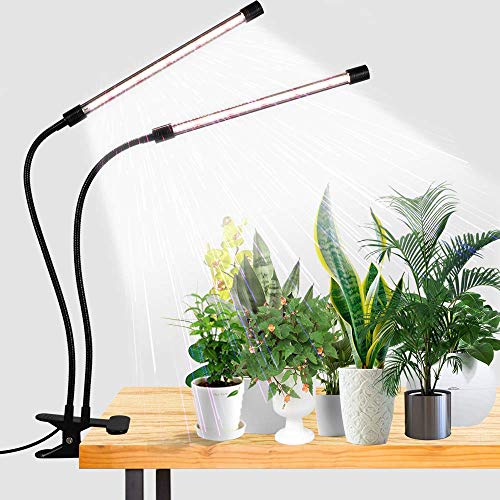
This 6000K full-spectrum clip light blends red and white LEDs to resemble bright noon sunlight. Its high color rendering index (around 95) makes it suitable for reading or desk work alongside plant care. The built-in timer supports 4H/8H/12H cycles, and the flexible gooseneck plus clamp enable easy angle adjustments for compact spaces. Powered by USB or a wall plug, it’s well-suited for tabletops, shelves, or small desks where space is at a premium.
Best for: urban apartment gardeners who need a versatile, easy-to-position light with a high color fidelity for both plant care and day-to-day tasks. Why selected: strong spectrum, adjustable clamp, and simple power options for quick setup.
Caution: USB power may limit use with distant outlets; consider a USB power adapter with enough current for consistent operation.
Grow Lights for Indoor Plants (Detachable Tripod)

This model emphasizes height versatility with a detachable tripod stand, letting users extend from 15″ to 62″ to cover everything from seedlings to tall plants. It provides a true full spectrum (380-800nm) for steady photosynthesis and plant growth across stages. The adjustable height and rotating gooseneck enable precise positioning for uneven canopies or multi-plant arrangements. A practical choice for mixed-height indoor gardens that require flexible positioning and consistent light.
Best for: households growing a mix of small herbs and tall houseplants. Why selected: adaptable height, full spectrum, and the convenient tripod option enhances coverage and stability.
Caution: Assembly and height adjustments may require more setup time compared to compact clip-on models.
RWNTAO Upgrade 168 LEDs Clip Lights
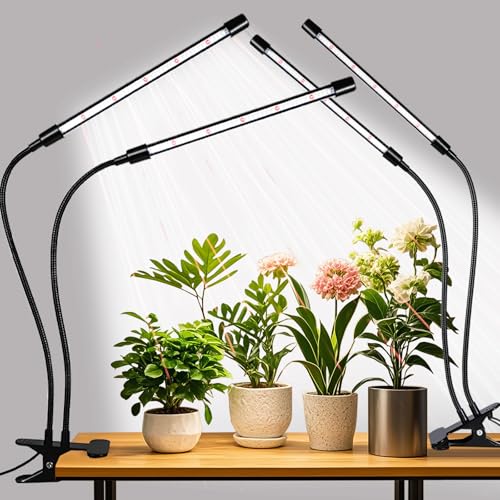
These two-clip grow lights deliver a compact, dual-head option with three spectral modes and 10 dimmable levels. The 168 LED configuration emphasizes a blend of red and white light to support flowering, foliage, and vegetative growth. The cycle memory timer keeps lighting on a consistent schedule—3/9/12 hours—without daily manual input. This setup is ideal for small desks, shelves, or window sills needing intensified light coverage.
Best for: double-clip setups that need targeted coverage for multiple plants in closer quarters. Why selected: dual-head design increases coverage without bulk, while the timer and dimming offer precise control.
Caution: Two-head lighting may not fully cover larger plants or taller arrangements in a single focal area.
LBW Desk Grow Light

The LBW desk unit packs 214 full-spectrum LEDs, covering a broad 380nm-780nm range. It offers 3 timing settings (3/6/12 hours) and 6 dimming levels, plus a modular light panel with improved heat dissipation for longer lifespan. The design supports flexible use on desks, shelves, or small work areas, with individual light control options via three switching modes. This model balances broad spectrum with robust control for year-round indoor gardening on a budget.
Best for: desk gardeners who want strong coverage and reliable automation in a compact footprint. Why selected: high LED count for even coverage, multiple timing options, and strong heat management.
Caution: Larger panels can be bulky for very tight desk spaces; ensure adequate clearance for best angle and shadows.
Buying Guide
What growth stage do you want to support?
For seedling and vegetative stages, look for a light with high blue content and a balanced full spectrum. For flowering and fruiting, a red-rich or full-spectrum with red accents is beneficial. Many models combine multiple spectrum modes to cover all stages with one fixture.
How important is height and reach?
Adjustable height, tilt, and gooseneck flexibility help target plant canopies and prevent light burn. If you are growing tall plants or multiple heights, prefer options with extendable stands or tall mounting arms.
How should you power the light?
USB-powered lights offer convenience for desk setups but may limit placement. AC-powered options with wall adapters provide more placement freedom. Check if the unit supports multitier power sources if you have several fixtures.
Timer and automation considerations
Auto ON/OFF timers simplify care when you’re away. Look for cycle options (3/6/9/12/16 hours, etc.) and whether the timer resets after power interruptions. A memory timer helps maintain consistent schedules day after day.
Durability, heat management, and lifespan
Good heat dissipation extends LED life and reduces dimming over time. Look for dedicated heat sinks or venting patterns and a modular panel design if you plan long hours of operation.
Value and space considerations
For small spaces, compact clip-on lights or desk-based units are ideal. For larger plant collections, consider a taller standing lamp or a dual-head design to increase light coverage without crowding the space.
FAQ
- What spectrum is best for general houseplants? A full-spectrum LED that covers 380–800 nm supports all growth stages, with added red and blue channels for flowering and vegetative growth.
- Do grow lights require frequent replacements? Quality LEDs typically last many thousands of hours; ensure proper heat management to maximize lifespan.
- Can I use grow lights for herbs on a windowsill? Yes, especially compact desk or clip-on lights with adjustable brightness and a timer, to keep herbs healthy year-round.
- Is a higher LED count always better? Not necessarily. Coverage, intensity, and placement matter more for uniformity; more LEDs help with spread but can raise cost and heat.
- Should I prefer a clip light or a stand-alone unit? Clip lights save space and are portable; stands offer taller reach and more even coverage for varied plant heights.
- How do I avoid light burn? Start with lower brightness, increase gradually, and position lights at an appropriate distance from plant canopies.