The right hydroponic water chiller helps maintain stable temperatures for robust root development and steady nutrient uptake. This guide highlights five top options, summarizing their capacities, cooling ranges, and standout features. Each product is suitable for hydroponic systems, axolotl setups, and aquariums that benefit from reliable chilling. Read on to compare performance, installation requirements, and practical considerations for choosing the best fit for your grow space.
| Product | Brand | Capacity | Temperature Range | Notable Feature |
|---|---|---|---|---|
| BAOSHISHAN Aquarium Chiller 42gal | BAOSHISHAN | 42 gal (160 L) | 68–78°F (20–26°C) | Stainless steel pump, quiet operation, freon-free compressor |
| VEVOR Aquarium Chiller 110 Gal | VEVOR | 110 gal (416 L) | 65–80°F (18–27°C) | R290 refrigerant, titanium evaporator |
| VEVOR Aquarium Chiller 110 Gal (Second Model) | VEVOR | 110 gal (416 L) | 65–80°F (18–27°C) | Quiet refrigeration, complete fittings |
| Fitnet 79 Gal Aquarium Chiller | Fitnet | 79 gal (300 L) | 68–79°F (20–26°C) | Efficient cooling, multiple fans for heat dissipation |
| Poafamx Aquarium Chiller 42Gal | Poafamx | 42 gal (160 L) | Lower than ambient by 5–10°C (typical) | Fast, stable refrigeration with dual fans |
| SDLOOL Aquarium Chiller 42gal | SDLOOL | 42 gal (160 L) | Not specified (typical range 68–78°F) | Low-noise design, freon-free cooling |
BAOSHISHAN 42 Gal Aquarium Chiller For Hydroponics

The BAOSHISHAN chiller is designed for medium-sized tanks and hydroponic reservoirs. It features a freon-free compressor using R290 refrigerant, delivering rapid and stable cooling. Temperature control is suitable for maintaining 68–78°F, helping roots stay healthy and encouraging steady growth. An upgraded pump with a stainless steel shaft and secure clamps supports reliable operation with reduced sediment buildup. This model emphasizes quieter performance suitable for home and office environments.
VEVOR 110 Gallon Hydroponic Chiller
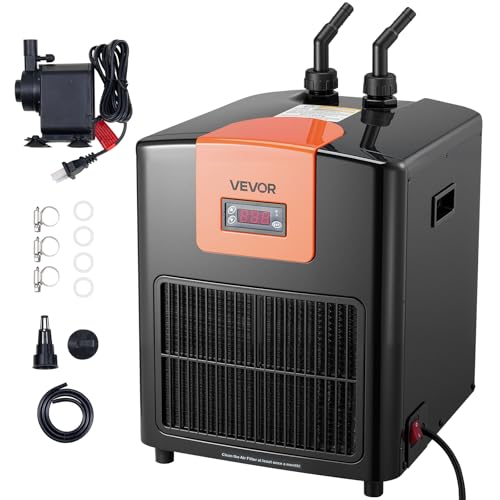
This 110-gallon chiller from VEVOR is built for larger hydroponic setups and aquariums. It uses a fluorine-free compressor with R290 refrigerant, providing a broad cooling range of 65–80°F. A high circulation rate helps stabilize temperatures quickly, with a titanium evaporator providing corrosion resistance for both fresh and saltwater environments. Users should confirm tank capacity, voltage, and cooling needs prior to purchase to ensure optimal performance.
VEVOR 110 Gal Hydroponic Chiller (Second Model)

This VEVOR model emphasizes quiet refrigeration and complete fittings for a straightforward install in larger hydroponic systems. The 110-gallon capacity supports sizable reservoirs, and the unit maintains water within a stable range to help fish and roots tolerate higher ambient temperatures. As with larger chillers, verify dimensions and ventilation to avoid overheating in enclosed spaces.
Fitnet 79 Gal Chiller For Hydroponics

Fitnet’s 79-gallon chiller targets mid-to-large hydroponic systems with a focus on precision cooling. It maintains 68–79°F using a high-efficiency compressor and R134a refrigerant. The design includes multiple fans and vents to optimize heat dissipation, and it emphasizes space around the unit for best performance. It’s well-suited for environments where stable temperatures are critical to root health and nutrient uptake.
Poafamx 42Gal Chiller For Hydroponics

Poafamx offers a compact 42-gallon chiller suitable for smaller hydroponic tanks. It uses R290 refrigerant for fast cooling and features dual silent fans with copper heat sinks for effective heat dissipation. A recommended spacing of about 6 inches around the unit supports adequate ventilation. The model typically achieves a noticeable temperature drop relative to ambient, benefiting plant roots and overall system stability.
SDLOOL 42 Gal Aquarium Chiller

SDLOOL’s 42-gallon chiller emphasizes rapid cooling with a robust compressor and extensive heat dissipation holes for efficient operation. It operates quietly, delivering stable temperatures that support hydroponic and aquatic life. The freon-free design aligns with eco-friendly cooling practices and reduces emissions in enclosed grow spaces.
Buying Guide
Key purchase considerations help ensure you choose a chiller that fits your hydroponic setup and space:
- Tank size and system capacity: Match the chiller’s cooling capacity to your reservoir volume and growth area. Larger tanks require higher-capacity models for effective stabilization.
- Temperature range and precision: Evaluate the typical ambient temperature and the target water temperature for your plants and roots. Look for chillers with tight control and feedback.
- Energy efficiency and refrigerant: Prefer models with energy-saving compressors and environmentally friendly refrigerants (R290 or similar). This reduces operating costs and environmental impact.
- Ventilation and placement: Many units require adequate clearance around air intakes and exhausts. Ensure ventilation and space to prevent heat buildup in indoor setups.
- Installation and fittings: Check included hoses, clamps, and pumps. Some models come with complete fittings, while others may require extra components.
- Noise level and placement: For home or office environments, quieter models are advantageous. Consider placement away from work areas if noise is a concern.
- Maintenance and service: Look for accessible components, replacement parts availability, and warranty terms to minimize downtime.
When selecting a hydroponic water chiller, balance capacity, efficiency, and space constraints with the specific needs of your tank, plant species, and environmental conditions. The options above provide a range of capacities and cooling strategies to support reliable root development and healthy system performance.