Spider mites are a common garden challenge, especially in dry weather. Horticultural oils provide a targeted, low-toxicity option for controlling mites and other pests. This article reviews five widely used horticultural oil products, highlighting their suitability for both dormant and growing seasons, and how they help protect a variety of plants from mites, aphids, and related pests. Each product is evaluated based on coverage, seasonality, and compatibility with organic gardening practices.
| Product | Key Benefit | Seasonal Use |
|---|---|---|
| Monterey Horticultural Oil (16 oz) | Broad-spectrum insect killer including spider mites; foliage protection | Dormant and growing season |
| Bonide All Seasons Horticultural & Dormant Spray Oil (32 oz Ready-to-Spray) | Organic-friendly oil for year-round insect and disease control | Dormant and growing season |
| Bonide All Seasons Horticultural & Dormant Spray Oil (128 oz Concentrate) | Large-volume option for extensive gardens; organic suitability | Dormant and growing season |
| Garden Safe Brand Fungicide3 (32 fl oz) | Fungicide, insecticide & miticide in one; controls mites and fungi | Growing season |
| Safer Brand 5192-6 (16 oz) | Year-round mite and insect control with eggs coverage | Dormant and growing season |
Note: This overview reflects typical labeling and usage guidelines. Always read product labels for specific directions, plant compatibility, and safety information before application.
Monterey Horticultural Oil – 16 oz

Monterey Horticultural Oil combines insecticidal, miticidal, and fungicidal action in a broad-spectrum oil. It is designed for use on a wide range of trees and plants, including apples, almonds, avocados, and citrus. The product supports both dormant-season and active-season applications, increasing overall pest control by addressing pests at multiple life stages. It is noted for aphids, spider mites, scales, whiteflies, and other pests, though effectiveness can vary by pest and life cycle stage. Ideal for organic and integrated pest management programs when used as directed.
Bonide All Seasons Horticultural & Dormant Spray Oil (32 oz Ready-to-Spray)

This Ready-to-Spray Oil is formulated for year-round use to control listed insects and diseases. The refined mineral oil base is approved for organic gardening, making it suitable for organic setups and edible gardens. It can be applied during the growing season to protect a variety of plants from mites and other pests, and it also helps prevent diseases such as powdery mildew. The product is designed for ease of use with a spray-ready bottle, enabling convenient coverage for home gardens and vegetable plots alike.
Bonide All Seasons Horticultural & Dormant Spray Oil (128 oz Concentrate)
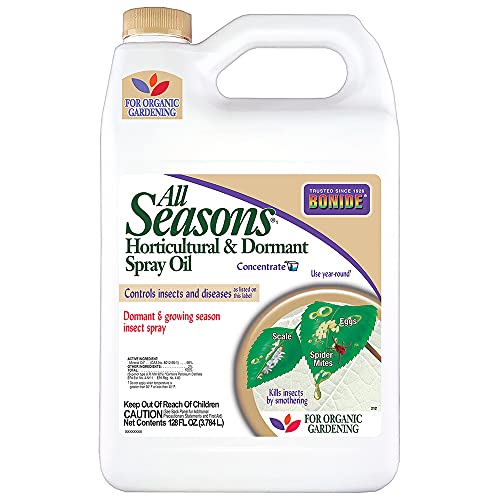
This larger-concentration formula provides a cost-efficient option for larger landscapes or multiple growing areas. The active ingredient, refined mineral oil, is approved for organic gardening and supports both dormant and growing-season applications. It helps prevent powdery mildew and other fungal diseases while helping manage mites and other listed pests. Follow label directions for dilution and coverage to ensure safe use on diverse crops, fruits, and ornamentals.
Garden Safe Brand Fungicide3, 32 fl oz

Garden Safe Fungicide3 combines multiple protective mechanisms by offering fungicidal and miticidal actions in one product. It includes neem oil extract, adding natural pest suppression properties. Suitable for organic gardening, it targets black spot, powdery mildew, and mites such as spider mites, providing a comprehensive approach for home gardens, roses, ornamentals, and edible crops. Use as directed on the label to avoid plant sensitivity and ensure safety for beneficial insects in certain settings.
Safer Brand 5192-6, 16 oz Horticultural & Dormant Spray Oil

Safer Brand offers a versatile oil concentrate suitable for both dormant and growing seasons. It controls mites, insects, and diseases by suffocating pests and limiting reproduction when used according to label directions. The product emphasizes broad crop compatibility, including fruits, vegetables, ornamental plants, and houseplants. It is designed to be effective against eggs and various life stages, aligning with rotating IPM strategies in gardens and landscapes.
Buying Guide: Key Purchase Considerations
- Seasonality: Choose products labeled for both dormant and growing seasons if you want year-round protection. Oils labeled for year-round use can simplify scheduling and reduce pest resurgence.
- Target pests: While all listed oils help with spider mites, some formulations emphasize broader pest control (aphids, scales, whiteflies). Match the product to your most persistent pests.
- Plant safety and organic suitability: Look for products explicitly approved for organic gardening if you grow edible crops or prefer non-synthetic inputs. Mineral oil-based products are common in organic programs, but always verify label guidance for edible plant systems.
- Volume and coverage: For large gardens, bulk concentrates or larger Ready-to-Spray options reduce frequency of purchases and application time. Ensure you have the appropriate sprayer to apply concentrated formulas safely.
- Compatibility with other IPM practices: Oils can be used with compatible beneficial insects and in rotation with other pesticides. Avoid tank-mixing with incompatible chemicals and observe waiting periods between treatments.
- Application timing and methods: Apply during calm, dry conditions to maximize coverage and minimize drift. Thoroughly coat the undersides of leaves where mites harbor, and avoid maxing out label-recommended temperatures or humidity ranges.
- Safety considerations: Use protective gear as recommended (gloves, eye protection). Keep away from pollinators when spraying blooming plants, and store products out of reach of children and pets.
In summary, horticultural oils offer a flexible, relatively low-toxicity option for managing spider mites across a variety of crops and garden configurations. Selecting a product with dormant-season and growing-season guidance, suitable for your plant list, and aligned with organic practices will help optimize results while supporting integrated pest management goals.