Horticultural oils offer a lightweight, low-toxicity way to manage scale and other pests without harsh chemicals. This guide reviews top options, focusing on oils that are effective, organic-friendly, and easy to use for home gardeners in the United States. The selections below balance broad insect and disease reach with safety for ornamentals, edibles, and pollinators when used as directed.
Summary of Selected Products
| Product | Active Type | Best For | Notes |
|---|---|---|---|
| Bonide All Seasons Horticultural & Dormant Spray Oil (128 oz) | Refined Mineral Oil | Year-round control, scale, powdery mildew | OC/organic gardening compliant; large-volume concentrate |
| Bonide All Season Horticultural & Dormant Spray Oil (32 oz) | Refined Mineral Oil | Organic gardening and disease prevention | Ready-to-use; versatile for many plants |
| Monterey Horticultural Oil (32 oz) | Horticultural oil | Aphids, mites, scales, whiteflies | OMRI-listed options available; reliable for multiple pests |
| Southern Ag Parafine Horticultural Oil (16 oz) | Paraffinic oil | Controls scale, whiteflies, mealybugs, spider mites | Affordably priced; easy-apply pint size |
| Southern Ag Parafine Horticultural Oil (32 oz) | Paraffinic oil | Scale and other common horticultural pests | Quarts provide more coverage; compatible with dormant/growing seasons |
Bonide All Seasons Horticultural & Dormant Spray Oil (128 oz)
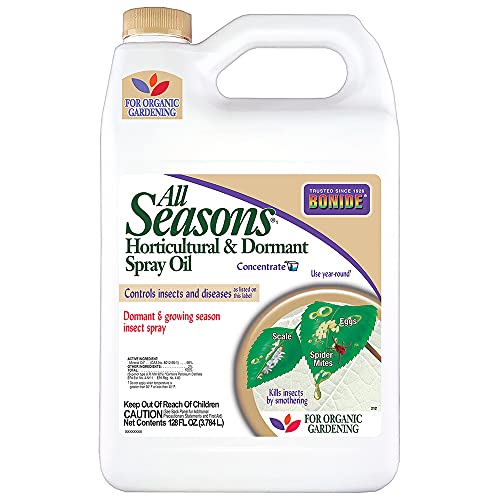
The Bonide All Seasons product line uses refined mineral oil as its active ingredient, designed to suppress a broad spectrum of insects and fungal diseases. This 128-ounce concentrate can be diluted for year-round use, including dormant periods, and is approved for organic gardening and organic produce production. It’s suitable for a wide array of crops—from fruits and vegetables to ornamentals—and can help prevent powdery mildew, leaf spot, and other common fungal threats when applied as directed. Proper coverage of lower leaf surfaces and thorough wetting are essential for best results, particularly on tough scales.
Key considerations include compatibility with irrigation systems and other sprays, the need for proper weather windows (avoid heat and direct sun during application), and adherence to labeled rates. Because it’s a concentrate, the product offers long shelf life and cost efficiency for larger gardens or greenhouses.
Bonide All Season Horticultural & Dormant Spray Oil (32 oz)
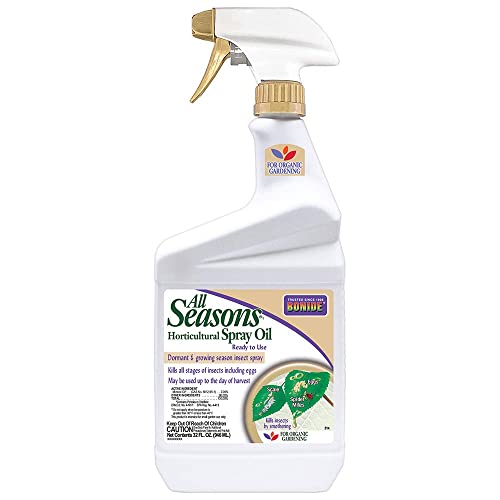
This ready-to-use spray oil provides convenient, year-round control for many common greenhouse and garden pests, including those on fruits, vegetables, nuts, and ornamentals. The active refined mineral oil is compatible with organic gardening guidelines, and the product can help prevent powdery mildew and leaf spots when used as part of a regular maintenance schedule. Users should apply when temperatures and weather allow for thorough leaf coverage, avoiding sun scorching or inefficacy due to high heat or drought conditions.
For gardeners seeking a simple, pre-mixed option, this 32-ounce bottle offers fast deployment with minimal preparation. Always read label directions for mixing ratios, spray timing, and any plant-specific cautions to ensure optimal results on scale-prone crops.
Monterey Horticultural Oil for Aphids, Mites, Scales (32 oz)

Monterey’s horticultural oil is a versatile choice for a range of pests, including aphids, mites, scale, whiteflies, and whiteflies-related issues. While this product is sold as a dedicated horticultural oil, it also functions as a protective measure against various fungal threats when used in conjunction with good cultural practices. The 32-ounce size is suitable for mid-sized gardens or greenhouse setups and can be integrated into rotational spray programs. The product’s effectiveness depends on thorough coverage and adherence to labeled seasonal use guidelines, including dormancy and growing-season spraying windows.
Monterey Horticultural Oil – Organic (15 oz)

Monterey’s 15-ounce oil is designed for both dormant and growing-season applications, with a clear emphasis on safety for a broad range of crops including apples, citrus, peaches, and avocados. The product targets common pests such as aphids, mites, scales, and whiteflies, and is suitable for use during transitions between dormant and active growth. While it’s effective against several insect pests, it may have limited impact on caterpillars and worm pests, and eggs of various insects may still require supplemental controls. As with all oils, thorough coverage is essential for efficacy.
Southern Ag Parafine Horticultural Oil (16 oz)
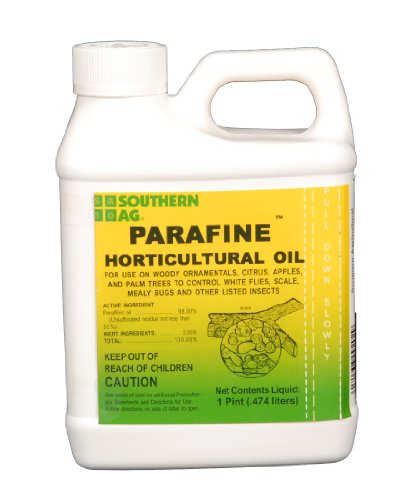
Southern Ag Parafine Horticultural Oil is a 98% paraffin oil with a 2% emulsifier, designed for use as both a horticultural oil and a dormant oil. It’s positioned to control scale, whiteflies, mealybugs, and spider mites across a variety of plant settings. The product is typically applied during dormant periods or throughout the growing season, depending on crop tolerance and pest pressure. It’s a cost-effective option for gardeners seeking reliable pest suppression with straightforward mixing and application. Always ensure proper weather conditions for oil applications to maximize coverage and prevent plant damage.
Southern Ag Parafine Horticultural Oil (32 oz)

This 32-ounce pint is a larger-volume option for maintainers and home gardens that regularly encounter scale and other soft-bodied pests. The high-purity paraffin oil acts as a suffocant for numerous pests when applied with adequate wetting, and it can be used in both dormant and growing seasons depending on crop tolerance and pest pressure. Users should follow labeled directions for dilution, spray intervals, and safe-use practices, particularly for plants sensitive to oils or in hot, arid climates where leaf burn risk increases.
Buying Guide: Key Purchase Considerations For Horticultural Oil
Selecting the right horticultural oil involves weighing pest targets, crop tolerance, application timing, and organic compliance. The following points cover multiple perspectives to help you choose the best option for scale control in your garden.
- Active ingredient and formulation: Refined mineral oil and paraffinic oil are common. Mineral oil products are often suitable for organic programs, while paraffinic oils can vary in purity and residue. Choose based on crop compatibility and label guidance.
- Seasonal timing: Some oils are optimized for dormant use, others for growing seasons. Dormant sprays can help smother scale eggs and overwintering pests, while growing-season applications protect new growth but require careful weather considerations.
- Coverage and spray quality: Oils require thorough wetting of the plant surface, including the undersides of leaves or twig zones where scale tends to hide. Poor coverage reduces effectiveness.
- Crop safety and plant sensitivity: Oil sprays can cause leaf burn or damage on certain plant species or during heat stress. Always test on a small area if you’re unsure about a new plant.
- OMRI and organic compliance: For organic landscapes, verify the product’s OMRI listing and confirm it aligns with your organic certification needs.
- Combining with other products: Some horticultural oils can be used with compatible pesticides, but others may cause phytotoxicity when mixed. Always follow label compatibility guides and avoid incompatible combinations.
- Storage and shelf-life: Concentrates generally offer long shelf life; ready-to-use formulations provide convenience but may require re-purchasing more often. Store in a cool, dry place away from direct sunlight.
- Budget and coverage: Larger-volume concentrates deliver cost-per-application savings, especially for home gardens or small farms with frequent scale issues. Weigh upfront cost against spray coverage per gallon to determine value.
In practice, a balanced approach often yields the best outcomes: use a dormant spray to reduce overwintering scale populations and a growing-season oil during pest pressure peaks. Regularly monitor plant health, apply under favorable weather, and rotate products to minimize pest resistance and environmental impact. By selecting a compatible oil with proven performance against scale and related pests, homeowners can protect ornamental and edible crops with minimal disruption to beneficial insects when used as directed.