Answer: For most homes, countertop and compact indoor compost bins are the easiest way to start composting kitchen scraps. The top picks below are chosen for durability, odor control, and ease of use. They suit apartment dwellers seeking odor-free options, small households wanting quick, simple bins, and those who prefer electric, odorless processes. The following table summarizes the five recommended products.
| Product | Best For | Capacity | ||
|---|---|---|---|---|
| Utopia Countertop Compost Bin (1.3 gal) | Small kitchens, odor-conscious users | 1.3 gal | Countertop | Charcoal filter helps control smells |
| Epica Countertop Compost Bin (1.3 gal) | Compact spaces, stylish design | 1.3 gal | Countertop | Airtight with replaceable carbon filter |
| Barnyard Designs Compost Bin (1.2 gal) | Budget-friendly, easy cleaning | 1.2 gal | Countertop | Extra odor-absorbing filters |
| Ouaken 4L Electric Composter | Hands-off, odorless operation | 4 L | Electric | Low noise, significantly reduces waste |
| Reencle Prime Electric Composter (14L) | High-capacity, odor-free indoor use | 14 L | Electric | Fast decomposition with carbon filter |
Utopia Countertop Compost Bin Kitchen With Charcoal Filter

The Utopia Countertop Compost Bin is designed for small kitchens and quick weekly waste collection. It holds 1.3 gallons and is crafted from stainless steel, offering durability and a clean look on any counter. The included charcoal filters help trap odors, making it suitable for visible placement in kitchens. Best for: households needing a compact, odor-minimizing bin on the counter. Limitation: The 1.3-gallon capacity may require more frequent emptying in busy kitchens.
EPICA Countertop Compost Bin Kitchen

The Epica Countertop Bin blends compact size with odor control. It uses an airtight lid and a replaceable activated-charcoal filter to minimize kitchen odors. The one-piece molded design resists rust and leaks, promising easy cleaning and long-term durability. Best for: users who want a stylish, odor-controlled bin that’s easy to maintain. Limitation: The filter replacement adds a recurring maintenance consideration.
Barnyard Designs Compost Bin for Kitchen Counter
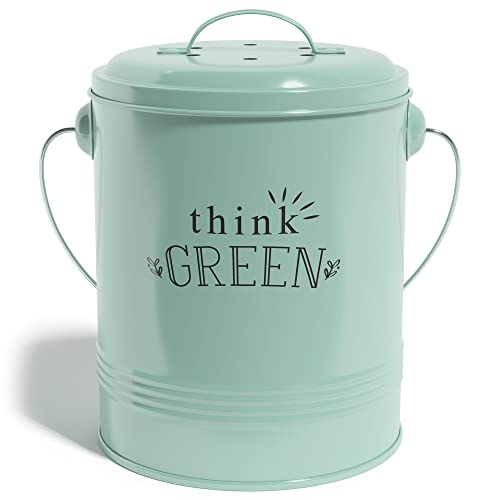
The Barnyard Designs bin offers a slightly larger 1.2-gallon capacity with extra odor-absorbing filters for enhanced odor control. The outer bin is rust-proof and easy to clean, while the inner bucket is dishwasher safe for simple maintenance. Best for: households wanting extra odor protection and straightforward cleaning. Limitation: It requires regular emptying as part of routine cleaning and liner use is recommended for easier cleanup.
Ouaken 4L Electric Composter

The Ouaken electric model turns kitchen waste into compost with a 4-liter capacity, offering low-noise operation and odor control via a carbon filter. It reduces waste significantly and can operate during off-peak hours due to its quiet performance. Best for: households seeking a hands-off, odor-free way to convert scraps into compost. Limitation: Electric operation requires access to an outlet and incurs energy use compared to passive bins.
Reencle Prime Electric Composter

The Reencle Prime Electric Composter processes up to 2.2 pounds of food waste daily in a 14-liter capacity, offering rapid decomposition and an odor-free indoor experience. It uses a carbon filter and includes starter materials for quick setup. Best for: larger families or those who want faster results and a higher-capacity indoor composter. Limitation: Electric units require more space and ongoing filter maintenance to sustain odor control.
Buying Guide: Key Considerations For Choosing A Home Compost Bin
What size do you need? Countertop bins range from about 1.2 to 1.3 gallons, which fits most small kitchens but requires more frequent emptying. For higher capacity without an outdoor area, consider 4L electric options or larger 14L models that process more waste daily.
Do you want a hands-off experience? Manual bins are simple and affordable, while electric composters offer faster decomposition and odor control but require electricity and more upkeep. Choose this based on how much waste you generate and how quickly you want finished compost.
How important is odor control? Bins with charcoal filters or airtight lids minimize kitchen smells. If you cook a lot of aromatic foods, a stronger filter or sealed design is advantageous. Odor control is a practical signal of overall bin quality and maintenance needs.
What about cleaning and maintenance? Look for dishwasher-safe inner buckets, rust-proof exteriors, and filter replacement cycles. Easy cleaning reduces the risk of lingering odors and makes daily use more pleasant.
Is portability a factor? Small, lightweight bins are easy to move to a compost pile or bin under the sink. For apartments, a compact model that sits on the counter or a discreet unit is typically preferred.
What feature signals reliability? Durable materials like stainless steel, solid seals, and high-quality carbon filters indicate longevity and consistent odor control. Consider product lifecycle and replacement costs when evaluating value.
Frequently Asked Questions
- What size compost bin is best for a small kitchen? A bin around 1.2–1.3 gallons is typically ideal for limited counter space, balancing capacity with manageable frequency of emptying.
- Do countertop bins really control odors? Yes, bins with airtight lids and replaceable carbon filters reduce kitchen odors by trapping volatile compounds from food waste.
- Are electric composters worth it for beginners? They can be convenient and fast, especially for busy households, but require electricity, more maintenance, and a larger footprint.
- How often should I empty a countertop bin? Generally every 2–4 days, depending on waste volume and bin capacity, to prevent smells and overflow.
- Can I put meat or dairy in these bins? Most countertop bins are designed for fruit, vegetable scraps, and small amounts of dairy; for meat or dairy, follow the specific product guidelines to avoid odors and pests.
- What maintenance helps extend bin life? Regularly replace carbon filters, wash the inner bucket, and dry all surfaces to prevent rust and mold growth.