Growing microgreens at home for profit is a practical way to turn a small space into a steady, high-value harvest. This guide highlights five beginner-friendly kits and trays that support soil-free or soil-assisted setups, making it easier to sell fresh microgreens to local customers, restaurants, or farmers markets. Each option suits different skill levels, space constraints, and preferred growing methods. Read on to compare kits, find the best fit for your operation, and learn key buying tips to maximize yield and efficiency.
| Product | Best For | Key Benefit | Sizing |
|---|---|---|---|
| ZESTIGREENS Organic Self-Watering Kit | Small kitchen growers | No soil, water-efficient, hydroponic option | 12″x6″ tray + bamboo surround |
| RMBHM Microgreens Trays Kit | Moderate space, beginner to intermediate | Six trays with hemp fiber mats, compact kit | 15×11 inches per tray |
| LUVCOSY Sprouting Trays Kit | Compact setups, quick sprouts | 4-part kit with humidity domes for fast germination | 5.9″ x 5.9″ trays |
| SprintGy 4-Tier Sprouts Kit | Maximized vertical space | Stackable, hydroponic-friendly with drain system | Multiple tiers with blackout cover |
| HOME GROWN Sprouting Seeds Mix | Seed starter for predictable varieties | High-germination seed mix for quick harvests | 16 oz pack |
Best All-In-One Self-Watering Microgreens Kit
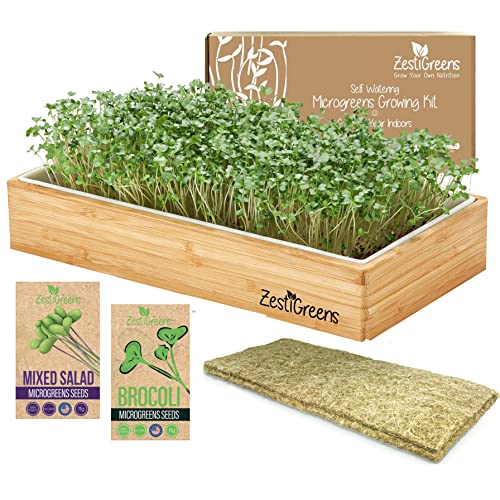
The ZESTIGREENS Organic Self-Watering Microgreens Kit is designed for countertop growers who want a clean, soil-free setup. This kit features a reusable 12″x6″ tray with a bamboo surround, a hydroponic insert, blackout lid, two hemp grow mats, and a mixed seed pack. It includes a 16-page illustrated grow guide, helping beginners move from seed to harvest in 7–10 days without daily misting. Best for those who want a tidy, repeatable process and the option to switch to soil later if desired.
- Best for small-space cooks who want weekly microgreens without soil.
- Option to grow with soil by removing the hydroponic insert.
- Limitations: All-seeded mix may require soil-based adjustments for larger crops like sunflowers.
RMBHM 6-Pack Microgreens Trays Kit

The RMBHM Microgreens Trays Kit includes six durable seed starter trays and 12 hemp fiber grow mats, designed specifically for indoor microgreens. Each tray provides 15 x 11 x 2.5 inches of space, balancing robust root development with compact indoor use. The hemp mats offer water retention and airflow to support soil-free growing. This kit is well-suited for growing multiple microgreen varieties in sequence for a steady harvest cycle.
- Best for scaling into a small business with multiple harvests per week.
- Better for growers who want a simple, mess-free soil-free setup.
- Limitations: No included lids or domes for humidity control; some users may want individual seed trays with domes for optimal germination at start.
LUVCOSY 4-Pack Sprouting Trays With Humidity Domes

The LUVCOSY Sprouting Trays Kit includes four 5.9″ x 5.9″ trays with four humidity domes. The seedling holes are 1.2 mm, and the set is made from food-grade PP, BPA-free materials. The bottom trays are dishwasher-safe, making post-harvest cleanup easier. This kit is best for hobbyists who want a compact, quick-to-market sprouting option and easy cleaning, though it might be less ideal for large-volume commercial runs without additional trays.
- Best for tiny kitchens or starter microgreens operations.
- Better for quick turnover crops like alfalfa, radish, and broccoli.
- Limitations: Small size may require frequent restocking and more batches to hit large profit margins.
SprintGy 4-Tier Sprouts Kit With Drainage

The 2026 Upgraded SprintGy Sprouts Growing Kit features a four-tier stackable design with an automatic drainage system. It uses a sloped base and a drainage outlet with a hose to rinse without disassembly, reducing maintenance while preventing standing water that can rot seeds. The kit emphasizes improved ventilation with clear visibility of rooting and germination, using high-quality, food-grade materials. Best for growers who want a time-efficient, scalable system with straightforward water management.
- Best for vertical space optimization in small rooms or garages.
- Better for consistent moisture and quick germination.
- Limitations: The setup may be more complex to assemble initially than single-tray kits.
HOME GROWN Premium Sprouting Seeds Mix
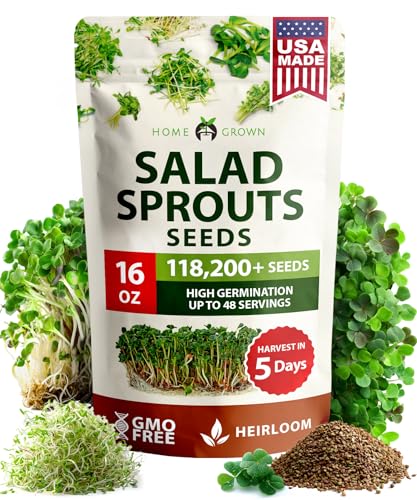
The HOME GROWN Premium Sprouting Seeds Mix contains 118,200+ premium seeds, including Alfalfa, Calabrese Broccoli, Champion Radish, and Crimson Clover. This non-GMO mix is designed for indoor sprouting and microgreens with high germination rates and a step-by-step guide. The mix is suitable for year-round indoor growing and pairs well with seed-sprouting kits or jars. Best for beginners who want reliable varieties with clear growing instructions.
- Best for gardeners seeking a diverse flavor profile for salads and juices.
- Better for learning germination timing across several varieties in one package.
- Limitations: Seed quality and ultimate yield depend on your growing conditions and care as with all seed kits.
Buying Guide: Key Purchase Considerations
- Growing method: Do you prefer soil-free hydroponics or soil-based setups? Self-watering kits offer tidy, low-mist operation, while soil-based trays can accommodate larger seed varieties.
- Space and scale: Consider countertop space, vertical options, and batch frequency. For profit, plan a harvest cycle that suits local demand (e.g., weekly microgreens for restaurants).
- Maintenance needs: Look for kits with easy cleanup, durable materials, and straightforward drainage or humidity features to minimize labor.
- Seed variety and germination: Start with diverse, high-germination seed mixes to ensure consistent harvests. Non-GMO seeds can appeal to health-conscious buyers.
- Quality and safety: Materials should be BPA-free and food-grade. Durable builds reduce replacement costs over time.
- Expansion potential: If demand grows, select kits that stack, add trays, or switch between hydroponic and soil methods to broaden product lines.
Frequently Asked Questions
- What is the quickest way to start profiting from microgreens at home?
– Choose a soil-free or low-mist kit with rapid turnover (about 7–10 days from seed to harvest) and target local buyers like restaurants or farmers markets. - Which microgreen varieties are best for beginners?
– Varieties like broccoli, kale, radish, and clover generally germinate easily and provide quick yields. - How many trays should a beginner start with for profit?
– Start with 2–4 trays in a single tier or a small stackable system; scale up as demand grows to maintain a steady workflow. - Is soil necessary for microgreens?
– Not always. Many kits use soil-free methods with hydroponic inserts, though some crops perform better in soil for certain varieties. - What maintenance reduces crop loss?
– Manage humidity, avoid standing water, and ensure consistent lighting and airflow. Clear drainage helps prevent root rot. - Are these kits suitable for selling to restaurants?
– Yes, especially compact kits that yield fresh greens in short cycles and maintain product quality with minimal handling.