Find the best fig tree varieties suited for pots, terraces, or compact yards. This guide highlights five sturdy options that are well-suited for American climates, with notes on sun, water, and space needs. Each choice targets different buyer types—from container gardeners to small-space growers—so you can pick the best fit for your balcony, patio, or sunlit garden. Use the quick comparison table below to narrow your picks before diving into each product’s details.
| Product | ||
|---|---|---|
| Fig Tree Variety Multipack – 4 Live Starter Plants | Container growers, modest spaces | Multiple plants for quicker harvests |
| Live Green Ischia Fig Tree (5-9″) | Urban patios and balconies | Bird-resistant fruit color and flavor |
| Violette de Bordeaux Fig Trees Live Plants | Small gardens, containers | High-yielding, rich red fruit |
| Chicago Hardy Fig Plant (4 Pack) | Cooler climates, outdoor spaces | Cold-hardy and drought-tolerant |
| Fig Tree Variety Pack – 3 Live Starter Plants | Patio and garden mix | Compact, ornamental and productive |
Fig Tree Variety Multipack – 4 Live Starter Plants

The Wekiva Foliage Fig Tree Variety Multipack includes four live starter plants designed for growers seeking a quick start toward harvest. This selection suits buyers who want multiple trees to diversify fruit flavor or to fill a small space with varied foliage. Best for gardeners who want a quick, layered planting plan and an early yield possible in warm seasons. Limitations include the need for consistent moisture and well-drained soil to maintain healthy growth.
Live Green Ischia Fig Tree (5-9″)

This Live Green Ischia Fig Tree (Verte) is a compact, container-friendly option with a pale green skin and deep red flesh. It’s noted for its berry-like, sweet strawberry jam flavor and its camouflage against birds, making it a good choice for urban patios where birds are a consideration. Choose this if you have limited space and want a visually attractive, fruit-bearing plant. A brief limitation: fruit color may attract attention from wildlife early in the season in some yards.
Violette de Bordeaux Fig Trees Live Plants – Set of 4
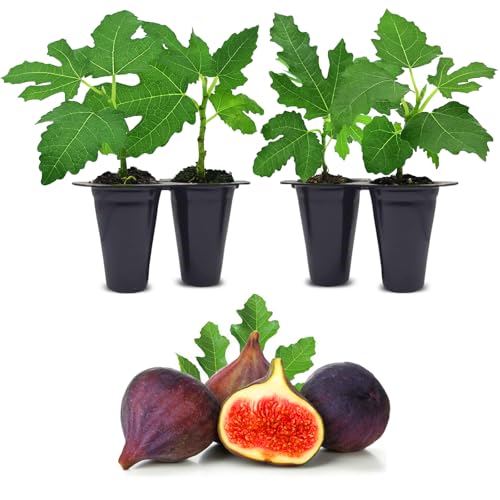
Violette de Bordeaux is a compact, high-yielding fig variety known for its rich, deep red flesh and gourmet flavor. This set of four starter plants is ideal for small gardens, terraces, or container planting, with a proven pattern of two harvests per year. Best for cooks and fruit lovers who want frequent fresh figs. A potential limitation is that it requires consistent sun and moisture to maintain peak yields.
Chicago Hardy Fig Plant (4 Pack)

Chicago Hardy is renowned for its cold tolerance and robust growth in cooler climates. The four-pack provides a productive option for gardeners seeking reliable fruiting in regions with frosty winters. Best for cooler zones and drought-tolerant landscapes. Use in sun-drenched spots; avoid overly soggy soil. A caveat is that fruiting can be slower in cold seasons, requiring patience during establishment.
Fig Tree Variety Pack – 3 Live Starter Plants

This 3-pack from Wekiva Foliage emphasizes ornamental value with deeply lobed leaves and dense canopy, paired with fruiting clusters across the growing season. Best for mixed-use spaces—shade and fruit in one plant. Choose this if you want a balanced landscape feature and edible harvest, but note that soil and sun exposure need to be well managed to maximize both form and fruit production.
Fig Tree Variety Pack – 2 Live Starter Plants
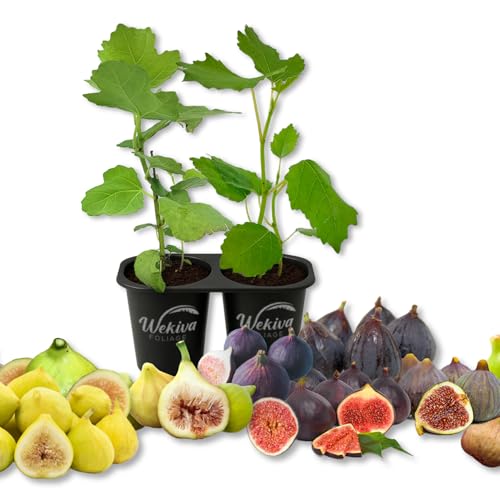
The 2-pack from Wekiva Foliage offers a compact option for smaller spaces, with similar leaf structure and growth habits as larger fig trees. Best for buyers who want a starter collection or want to dip their toes into fruiting without large upfront space. Caution: ensure you provide adequate sun and avoid overwatering to prevent root issues.
Buying Guide
- Container compatibility: If you’re growing in pots, prioritize compact or container-friendly varieties (Ischia, Violette de Bordeaux, or Chicago Hardy in a pot).
- Sunlight needs: Most figs demand full sun (6–8 hours daily) to maximize growth and fruiting.
- Climate considerations: Cold-hardy varieties like Chicago Hardy perform better in cooler regions, while Ischia and Violette de Bordeaux suit milder zones with good sun.
- Soil and watering: Use well-draining soil. Water deeply but allow partial drying between sessions during fruiting peaks.
- Pollination and flavor: Figs are generally self-pollinating for home gardeners; flavor varies by cultivar, with some offering deeper red flesh or green-bodied skins.
- Pest and wildlife: Some varieties have camouflaged fruit or thicker skins, which can deter birds and other wildlife.
- Maintenance: Regular pruning helps maintain shape and fruiting wood, particularly for ornamental-focused selections with lush foliage.
Frequently Asked Questions
- Q: Do fig trees need a lot of sun? A: Yes, most fig trees perform best with 6–8 hours of direct sunlight daily.
- Q: Can I grow fig trees in containers? A: Yes, several varieties are container-friendly when given adequate sun and drainage.
- Q: Are these figs suitable for cold climates? A: Some varieties like Chicago Hardy are cold-hardy and better for cooler regions; others may struggle with freezing temperatures.
- Q: How often should I water fig trees? A: Water deeply during active growing and fruiting periods, then allow the soil to partially dry between waterings.
- Q: Do fig trees produce fruit the first year? A: It depends on growing conditions; many figures require more than a year to establish and fruit reliably.
- Q: Is there a risk of birds eating the fruit? A: Some varieties have camouflage or green fruit that may reduce early predation, but birds can still impact ripening fruit depending on location.