For buyers seeking long-lasting, easy-to-apply nutrients for trees and shrubs, granular fertilizers are a reliable option. This guide highlights select granule formulas that support deep green foliage, robust root systems, and vibrant blooms. The picks below are suited for in-ground landscapes, container plantings, and acid-loving species. Each product is explained with ideal use, who it’s best for, and any practical limitations to consider.
Summary table of chosen products:
- Miracle-Gro Shake ‘N Feed Flowering Trees and Shrubs Plant Food (8 lb)
- Southern Ag All Purpose Granular Fertilizer 10-10-10 (5 lb)
- BioAdvanced 12 Month Tree and Shrub Protect and Feed, Granules (4 lb)
- Ironite Plus Shrubs, Trees Plant Food Bag Granular 12-10-10 (3 lb)
- Miracle-Gro Tree and Shrub Plant Food Spikes (12 count, 3 lb)
Miracle-Gro Shake ‘N Feed Flowering Trees and Shrubs Plant Food

Best for acid-loving flowering trees and shrubs in-ground or container plantings. This formula uses natural ingredients like kelp, earthworm castings, bone meal, and feather meal. It feeds for up to three months, promoting deep green foliage and colorful blooms throughout the season. Use this product when you want steady, long-lasting nutrition tailored for flowering varieties and acid-loving plants.
Best for: gardeners focusing on flowering trees and acid-loving ornamentals who want a gradual, extended feeding cycle. It’s well-suited for in-ground beds and container plantings that want to reduce frequent applications.
Caution: This product is formulated for flowering trees and shrubs and may not deliver the ideal nutrient balance for non-flowering species without adjustment. Always follow the feeding schedule to avoid over-fertilization.
Southern Ag All Purpose Granular Fertilizer 10-10-10
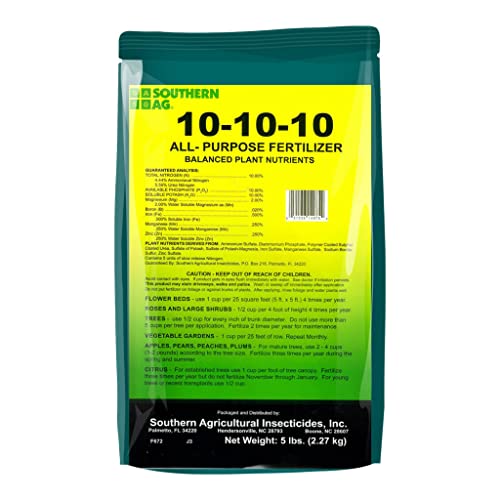
Best for a balanced, all-purpose nutrient boost. The 10-10-10 formulation provides equal parts nitrogen, phosphorus, and potassium with minor elements. It’s a versatile choice for mixed landscapes, ornamental shrubs, and fruit trees needing steady, broad-spectrum nutrition. The uniform granular mix helps with even distribution across beds and containers.
Better for: homeowners maintaining a diverse plant palette where a single formula must support multiple species. It’s easy to apply and integrates well with standard lawn and garden routines.
Limitation: It’s not specifically tailored to acid-loving plants or to slow-release long-term feeding beyond general maintenance. Avoid applying during peak heat to minimize nutrient leaching on delicate roots.
Ironite Plus Shrubs, Trees Plant Food Bag Granular 12-10-10

Best for greening and overall vigor with an iron boost. This granular formula includes 2% iron and essential secondary and micronutrients to support lush growth and deeper color. It’s particularly effective for trees and shrubs in soils that are iron-deficient or prone to chlorosis, helping to restore a vibrant, healthy canopy.
Better for: landscapes with iron-deficiency tendencies or soils requiring micronutrient supplementation.
Caution: Iron-based formulations can stain hard surfaces and should be applied carefully. Over-application may lead to imbalances in soil chemistry, so follow recommended rates.
Miracle-Gro Tree and Shrub Plant Food Spikes

Best for targeted root feeding with slow-release nutrients. The spikes are designed for trees and shrubs, including deciduous, flowering, and evergreen varieties, as well as acid-loving plants like hydrangeas and azaleas. Nutrients are delivered directly to the root zone, supporting steady growth and vibrant color over time.
Who it’s for: homeowners who prefer minimal maintenance with a simple application method. The spikes minimize surface mess and are convenient for established trees and shrubs in landscape beds.
Limitation: Spikes require careful placement around the root system to avoid shallow feeding. They may not be ideal for container plantings where roots are close to the surface or in very small pots.
Buying Guide
Choosing the right granular tree and shrub fertilizer involves matching product formulation to plant needs, soil conditions, and maintenance preferences. Consider the following factors to make a well-informed choice.
- Soil needs and plant type: Acid-loving plants (hydrangeas, azaleas, magnolias) may benefit from formulas with specific micronutrients or natural ingredients, while general landscapes can use balanced 10-10-10 blends.
- Release timing: Slow-release options reduce the risk of nutrient burn and require fewer applications. Quick-release blends provide faster results but may need more frequent applications.
- Application method: Granular blends are typically broadcast, while spikes offer targeted feeding. Containers and small landscapes may benefit from soluble or spike formats to avoid overfeeding.
- Longevity and maintenance: If you want year-long protection, look for products marketed as 12-month protect and feed or slow-release formulations designed for extended feeding cycles.
- Soil amendment considerations: Iron-containing formulas help address chlorosis, but test soil pH to ensure compatibility with nutrient availability for your trees and shrubs.
- Safety and staining: Iron-based or highly concentrated products can stain pathways and tools. Wear gloves and clean surfaces after application.
Practical tips for applying granular tree and shrub fertilizers
- Follow package directions for coverage area and application rates. Do not exceed recommended amounts.
- Water after application unless the product instructs otherwise. This helps move nutrients into the root zone.
- Apply during the active growing season and avoid extreme heat or drought conditions to reduce leaching.
- Split applications across several weeks or months when using slow-release formulas to maintain steady nutrition.
FAQ
- What is the difference between 10-10-10 and 12-12-12 fertilizers?
– 10-10-10 provides a balanced mix for general use, while 12-12-12 offers higher nutrient availability that can support more intense growth or stress recovery in some trees and shrubs. - Can I use these fertilizers on potted trees?
– Yes, many granular products work for containers, but choose formats suitable for pots, such as slow-release granules or spikes designed for container use. - Should I fertilize after planting new trees?
– It’s generally better to establish a root system with initial conditioning first, then apply fertilizers according to product directions as growth resumes. - Is iron necessary for all trees and shrubs?
– Iron is beneficial for greens and chlorophyll health, especially in iron-deficient soils. Only use iron-rich products if soil tests indicate a deficiency. - Are fertilizer spikes better than granular fertilizer?
– Spikes target roots directly and can be tidier, but granules offer more uniform coverage for larger areas or multiple plants. - How often should I fertilize per year?
– It depends on the product; many schedules range from early spring through mid-summer. Avoid year-round feeding to prevent nutrient buildup.
| Product | Best For | Form | |
|---|---|---|---|
| Miracle-Gro Shake ‘N Feed Flowering Trees and Shrubs | Acid-loving flowering trees and shrubs | Granular, long-lasting | Natural ingredients; up to 3 months feeding |
| Southern Ag All Purpose 10-10-10 | General landscape and shrubs | Granular | Balanced nutrient mix; versatile |
| BioAdvanced 12 Month Tree and Shrub Protect and Feed (4 lb) | Trees and shrubs needing insect protection and feeding | Granular | Insect killer included; slow-release |
| Ironite Plus Shrubs, Trees Plant Food | Iron-deficient soils, chlorosis-prone plants | Granular | 2% iron; micronutrients |
| Miracle-Gro Tree and Shrub Plant Food Spikes | Trees and shrubs needing targeted root feeding | Spikes | Slow-release direct-to-roots |