Gas powered sprinkler pumps offer portable, high-flow water transfer for irrigation, pool draining, flood cleanup, and emergency water movement. This guide highlights five strong options and clarifies who benefits most from each. Whether you’re a homeowner, small farm operator, or contractor, you’ll find clear choices based on flow, lift, and ease of use. A quick summary table below helps you compare key specs at a glance.
| Product | Best For | Flow (GPM) | Lift (ft) | |
|---|---|---|---|---|
| BILT HARD Semi Trash Pump | Job sites and irrigation with larger debris | 158 | – | Includes complete fittings; EPA compliant |
| Gas Powered Water Transfer Pump (1 inch) | Small-scale irrigation and pool changes | 8–10 m³/h (roughly 35–44 GPM) | 20 | Lightweight, compact; good fuel efficiency |
| 2-Inch Gas Water Pump (212cc) | Heavy-duty water movement and drainage | 132 | 92 | High lift and long run capability |
| DuroMax XP702HP 2-Inch | High-pressure transfer and pumping | 70 | – | Compact high-efficiency design |
| BILT HARD 3-Inch Trash Pump | Major drainage and larger volume transfers | 290 | 85 | Includes full fittings; sturdy build |
BILT HARD Semi Trash Pump 2″ Gas Powered Water Pump

The BILT HARD Semi Trash Pump is built for larger volumes with a 7HP, 212cc engine and a 158 GPM maximum delivery. It includes a 50 ft discharge hose and a 12 ft suction hose, plus a complete fittings kit and an EPA Phase III compliant engine. This option is best for job sites or irrigation tasks where faster water removal is needed and some debris may be present.
Best for: Contractors and property owners conducting irrigation, drainage, or pool drainage where higher flow is critical and fittings are ready to use out of the box. The compact engine and included hoses make setup straightforward on relatively flat ground.
Why selected: Combines robust flow with a comprehensive fittings package, reducing the need for extra purchases. The EPA compliant engine helps align with environmental standards on many sites.
Caution: Ensure proper sealing tapes when connecting hoses to prevent leaks, and verify that debris will not exceed the pump’s semi-trash capability for your specific application.
Gas Powered Water Transfer Pump, 1″ Semi Trash
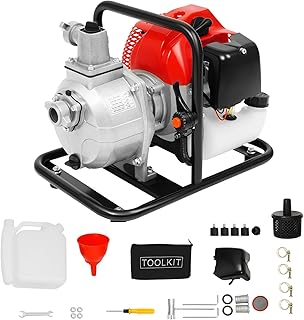
This 1-inch semi-trash pump uses a 1.25 kW (approximately 6500 rpm) engine and delivers fast water movement for smaller scale needs. It has a maximum head of 20 meters and a 0.32-gallon oil capacity that supports longer operation between refueling. Designed for agricultural irrigation and pool water changes, it’s a compact option for light-duty tasks.
Best for: Small farms, garden irrigation, or pool maintenance where portability and quick hookup are important, and where debris handling is minimal.
Why selected: Light in weight with a decent head while offering long-running capability between refuels, making it suitable for rapid, shorter jobs.
Caution: The 1″ size limits flow for large irrigation tasks; plan accordingly if you need higher throughput on big jobs or long-distance pumping.
2-Inch Gas Water Pump, 212cc 7HP

This 2-inch model pairs a robust 212cc, 7HP 4-stroke engine with a 132 GPM flow and a lift up to 92 ft, along with a 26 ft suction lift. It’s designed for demanding tasks such as field irrigation, pond transfers, or emergency drainage. The engine efficiency claims note a fuel use of about 1.2 L per hour, enhancing runtime between fills.
Best for: Farmers, construction crews, and emergency responders who require high lift and strong flow, especially when pumping from distant sources or deep basins.
Why selected: The high lift and strong GPM make it a versatile workhorse for challenging drainage and transfer scenarios, outperforming smaller units in heavy-duty contexts.
Caution: Fuel efficiency estimates are protocol-based; actual runtime depends on load and head height. Ensure you have reliable refueling options on site.
DuroMax XP702HP 2-Inch, 7HP Gas Pump

The XP702HP combines a 208cc air-cooled OHV gas engine with a portable design. It provides 70 GPM flow and is noted for a compact footprint with a basic run time claim of around 2.4 hours. The unit features a sturdy, isolating steel roll cage for field durability and transportability.
Best for: Small crew contractors and homeowners needing a compact, reliable pump for consistent, moderate-volume transfers where portability is essential.
Why selected: Its lighter duty profile makes it easier to handle while still delivering practical flow for day-to-day tasks.
Caution: Lower GPM than larger models means longer pumping times on big projects; plan accordingly for larger-scale drainage or irrigation.
BILT HARD 3-Inch Trash Pump

The BILT HARD 3-Inch Trash Pump uses a 7HP, 212cc engine to deliver up to 290 GPM, with a 3-inch inlet and outlet. It includes a 50 ft discharge hose and a 15 ft suction hose, plus complete fittings. The unit’s head lift reaches 85 feet with a 26-foot suction head, making it suitable for large yard drainage, flood water removal, and heavy-duty irrigation tasks.
Best for: Large property drainage, flood response, or commercial irrigation projects where high throughput is critical.
Why selected: Among the options, this model balances very high flow with solid lift, enabling rapid water movement from substantial depths or distances.
Caution: Higher flow requires careful handling and secure hose connections to prevent leaks and ensure safe operation in busy work zones.
Buying Guide
What should I consider before buying a gas powered sprinkler pump?
Select a pump with the right combination of flow (GPM) and lift (ft) for your typical tasks. For irrigation and drainage on larger properties, higher GPM and lift are advantageous. For smaller jobs, lighter units save weight and fuel.
How important are debris handling and fittings?
Trash pumps handle solids better than standard water pumps. Check if the unit is labeled semi-trash or trash capable, and review included fittings. A complete fittings kit reduces the need for separate purchases and speeds up setup.
What about fuel and runtime?
Gas engines run on gasoline with runtime depending on load. Look for engines with reasonable fuel efficiency and oil shutoff features. If you have long work hours, choose models with larger tanks or better fuel economy.
What size pump do I need for irrigation or drainage?
For irrigation lines or garden beds, 70–132 GPM is usually enough. For yard drainage or flood tasks, 158–290 GPM provides faster water movement. Lift height matters when pumping from deep ponds or distant sources.
Portability and durability considerations
Consider weight, wheel presence, and a roll cage or frame for transport on uneven terrain. A compact, sturdy design helps when you must carry or move the pump across job sites.
Maintenance and safety tips
Follow the engine’s manufacturer maintenance schedule, including oil changes and spark plug checks. Use sealing tape when connecting hoses to prevent leaks. Always run the pump at an appropriate load to avoid overheating and ensure ventilation in enclosed spaces.
FAQ
- Which gas powered pump is best for large drainage projects? The 3-Inch Trash Pump offers the highest flow (up to 290 GPM) and substantial lift, making it well-suited for large drainage tasks.
- Are smaller pumps adequate for pool water changes? Yes, smaller 1″ or 2″ models can efficiently move pool water, especially when portability and quick setup are priorities.
- Do these pumps require special maintenance beyond oil changes? Regularly inspect hoses and fittings, replace worn seals, and follow engine maintenance guidelines to prevent leaks and clogs.
- Is debris handling important for irrigation pumping? If your source has debris, a semi-trash or trash-capable pump is important to prevent clogs and downtime.
- Can I use these pumps for flood cleanup? Yes, especially models labeled trash pump with higher lift and robust flow; ensure safety with electrical and fuel handling on site.
- How do I choose between similar models? Compare GPM, lift, hose length, and included fittings. Choose based on your typical head height, distance, and desired pump mobility.