Discover top-rated kid-friendly gardening kits that blend science, creativity, and outdoor play. This guide highlights five engaging options that teach plant growth, nurture curiosity, and inspire responsible gardening habits for young learners.
The following table summarizes the five selected kits, highlighting brand, focus, and what makes each a strong educational choice.
| Product | Brand | What It Teaches | Key Benefit |
|---|---|---|---|
| DUYOYU Kids Plant Growing Kit | DUYOYU | Plant growth cycle, greenhouse concepts, irrigation | Hands-on cycle experience from planting to flowering |
| Root Viewer Kit for Kids | PLANTMEW | Root systems, stem and leaf growth, transparent planter experiments | Close-up science learning with visible roots |
| National Geographic Flower & Herb Gardening Kit | Blue Marble | Growing herbs and flowers, decorating pots, basic gardening tools | Complete kit for decorating and growing |
| Dan&Darci Root Viewer Kit for Kids | Dan&Darci | Transparent root viewing, seed-to-plant lifecycle | Educational rooting insights and STEM focus |
| Grenebo Kids Gardening Set | Grenebo | Essential tools for kids, safe design, durable | All-in-one starter toolset for budding gardeners |
DUYOYU Kids Plant Growing Kit

The DUYOYU kit offers a mini garden experience that guides children through building, planting, and observing plant growth. Its design emphasizes a complete growth cycle—from seed to flowering and fruiting—while introducing greenhouse concepts and an upgraded irrigation system. The kit serves as a practical, hands-on science activity that also teaches responsibility in plant care. Children manage watering schedules and ensure adequate sunlight, reinforcing daily routines and experimental observation. The integrated grow light feature helps optimize growth in indoor environments, making it a versatile option for curious kids year-round.
Root Viewer Kit for Kids by PLANTMEW

The Root Viewer Kit provides a transparent planter that reveals the underground journey of plant roots. With six seed varieties—kidney bean, pea, soya bean, radish, chili, and carrot—this kit turns growing into a series of mini experiments. Some seeds sprout quickly while others take longer, teaching patience and anticipation. The open design allows kids to observe root growth, stem development, and leaf formation, turning a simple pot into a real-time botany classroom at home. It’s an engaging way to spark investigative thinking and compare growth rates.
National Geographic Flower & Herb Gardening Kit
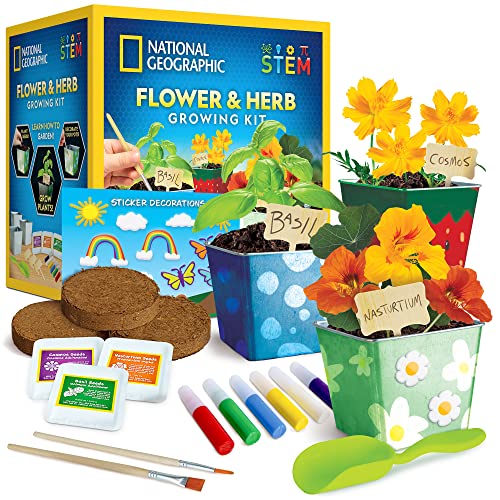
This National Geographic kit combines creativity with practical gardening. Kids decorate three stainless steel pots before planting cosmos, nasturtium, and basil seeds. The set includes pots, seeds, wooden labels, a small shovel, paint supplies, brushes, stickers, and a detailed learning guide. It blends art with science, encouraging artistic expression while teaching the basics of planting, care, and herb and flower growth. The durable materials and comprehensive contents make it suitable for classroom projects or family activities.
Dan&Darci Root Viewer Kit for Kids

The Dan&Darci Root Viewer Kit emphasizes a transparent window into plant growth. It includes a viewer box with lid, nutrient-rich soil, high-germination seeds (spring onion and cilantro), colorful stickers, and a straightforward instruction guide. The accompanying booklet explains botany concepts in clear terms, guiding young learners through steps from soil preparation to seed germination and plant care. This kit is well-suited for home science projects and classroom demonstrations, offering an accessible entry point into plant biology.
Grenebo Kids Gardening Set

Grenebo’s 9-piece gardening set is designed specifically for children, featuring lightweight, kid-friendly tools with easy-to-grip handles. The package includes a garden hat, apron, gloves, a tool organizer bag, trowel, transplanter, cultivator, watering can, and a durable construction to withstand enthusiastic use. The design emphasizes safety and practicality, making it an excellent starter kit for introducing kids to gardening basics and outdoor responsibility. The included storage and plan-making components also support organized, ongoing gardening projects.
Grenebo Alternative: Other Notable Kits
While Grenebo offers a comprehensive tool set, other kits in this guide provide broader educational value, such as transparent root viewing, plant growth cycles, and herb and flower gardening. When choosing, consider the child’s age, interest in science versus arts and crafts, and whether the project will be conducted indoors or outdoors. For schools or groups, multi-seed kits and those with durable materials are beneficial for repeated use and demonstrations. The best option balances engaging activities with clear educational outcomes and safe, durable components.
Buying Guide: Key Considerations For Selecting A Kids’ Gardening Kit
- Age appropriateness: Choose kits that match the child’s developmental level, attention span, and safety needs.
- Educational focus: Decide whether you want a science-centric experience (root viewing, growth cycles) or a craft-oriented activity (decorating pots, painting). Some kits blend both.
- Materials and durability: Look for kid-friendly, BPA-free, and rust-resistant tools with sturdy pots and reusable components for long-term use.
- Indoor vs. outdoor suitability: Kits with grow lights or compact designs are ideal for indoor setup; others work well on a sunny patio or garden bed.
- Observation opportunities: Transparent planters or visual aids help children observe roots, stems, and leaf development, enhancing scientific understanding.
- Growing variety: Seed variety and plant type influence engagement; multiple seed options sustain interest and provide comparative learning.
- Included instructional content: Clear guides, learning sheets, and age-appropriate explanations support independent exploration and guided activities.
- Safety features: Child-safe tools, soft edges, and non-toxic materials reduce risk during play and learning.
- Storage and organization: Kits with bags, organizers, or labeled components help families maintain an organized learning station.
- Value and longevity: Consider whether a kit includes reusable components (pots, tools) and whether it supports continued gardening beyond the initial project.
Across these options, parents and educators can tailor selections to align with goals—whether cultivating a curious mini-scientist, fostering a love for nature, or simply encouraging regular outdoor activity. Each kit offers a distinct approach to learning through gardening, so choosing one that matches the child’s interests will promote steady engagement and educational growth.