Protecting houseplants from fungus and other plant diseases is essential for thriving greenery. This guide highlights five effective, ready-to-use solutions that target common pests and fungal infections while supporting safe indoor gardening. Each product below includes practical usage notes, key benefits, and organism coverage to help you choose the right treatment for your plants.
| Product | Brand | Primary Use | Application Type |
|---|---|---|---|
| BioAdvanced Houseplant Insect & Mite Control | BioAdvanced | Fungus gnats, mites, aphids, whiteflies | Ready-to-use spray |
| Grower’s Ally Fungicide Spray for Plants | Grower’s Ally | Powdery mildew, fungal diseases | Ready-to-use spray |
| Mighty Mint Peppermint Plant Protection Spray | Mighty Mint | Insects, gnats, fungus, mites | Plant protection spray |
| Earth’s Ally Disease Control Concentrate | Earth’s Ally | Powdery mildew, blight, leaf Spot | Concentrate spray |
| Neudorff Indoor Plant Spray | Neudorff | Spider mites, scale, listed insects | Insecticide/miticide spray |
BioAdvanced Houseplant Insect & Mite Control
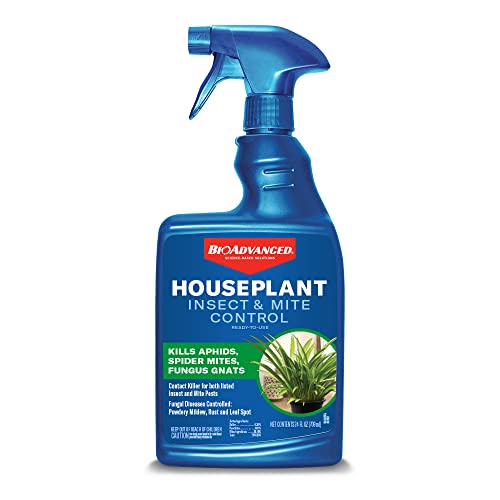
BioAdvanced offers a ready-to-use spray designed for indoor and outdoor use on houseplants, flowers, and herbs. It targets fungus gnats and listed insects and includes mites such as spider mites. To maximize efficacy, thoroughly spray all plant areas, with emphasis on new shoots and the undersides of leaves where pests commonly dwell. This product delivers contact kill action, helping control populations quickly and reduce visible damage on foliage.
Grower’s Ally Fungicide Spray for Plants

Grower’s Ally provides a natural fungicide and bactericide with an emphasis on powdery mildew and other common plant pathogens. The formula is formulated with food-grade citric acid and is FIFRA 25(b) exempt and OMRI Listed for organic gardening. It reduces bacterial growth and forms a protective surface barrier on leaves when used preventatively. The product is designed to be gentle on plant tissue while offering broad-spectrum protection against disease-causing organisms.
Mighty Mint Peppermint Plant Protection Spray

This plant protection spray from Mighty Mint emphasizes easy application and a plant-friendly formula. It is designed for use around people and pets when used as directed, offering a safe option for homes with children or animals. The product relies on plant-based ingredients to deter insects while aiding in disease prevention by reducing pest-related plant stress and tissue damage, contributing to overall plant health.
Earth’s Ally Disease Control Concentrate

Earth’s Ally Disease Control Concentrate is a citrus-acid-based fungicide designed to tackle powdery mildew, downy mildew, blight, and related plant diseases. As a safe, natural option, it is suitable for use on fruits, vegetables, ornamentals, and shrubs. The concentrate form allows you to mix according to need, enabling broad coverage while avoiding harsh chemical residues. Its approach emphasizes prevention and active disease suppression without compromising plant tissue health.
Neudorff Indoor Plant Spray

Neudorff’s Indoor Plant Spray is a broad-spectrum contact insecticide/miticide designed for houseplants and greenhouses. It targets a wide range of pests at all life stages, including eggs, which helps curb population rebound. The formulation supports organic gardening and can be used on edible plants as well as ornamentals. Its dual action as an insecticide and miticide makes it a versatile option for integrated pest management, especially when spider mites or scale are present.
Buying Guide: Key Purchase Considerations And Comparisons
- Target pests and diseases: Look for products that explicitly list the pests and diseases you’re dealing with, such as powdery mildew, spider mites, or fungus gnats. If you have multiple issues, a broad-spectrum option may be advantageous, but ensure it’s compatible with your plant types.
- Active ingredients and safety: Favor formulations with safe, plant-friendly active ingredients and those labeled for organic gardening when possible. Check FIFRA exemptions or OMRI listings if you prefer organic options.
- Indoor suitability: For houseplants, prioritize products safe for indoor use, with low odor and minimal residue. Verify whether the product is safe for use around pets and children, if applicable, and follow label directions for indoor environments.
- Application method: Ready-to-use sprays are convenient for quick treatment, while concentrates allow you to tailor dilution and coverage. Consider spray coverage, drift control, and whether the product requires multiple applications.
- Plant safety and tissue tolerance: Some plant species are more sensitive to fungicides and insecticides. Start with a test on a small leaf or plant and monitor for adverse reactions before broad application.
- Rotation and resistance management: To prevent pest resistance, rotate between products with different active ingredients or modes of action, following label guidelines and local agricultural recommendations.
- Integrated pest management: Combine chemical controls with cultural practices such as proper watering, air circulation, and sanitation to reduce pest pressure over time.
- Environmental impact: Consider products with safer environmental profiles, especially for homes with outdoor-adjacent plants or children’s play areas.
- Cost vs. coverage: Evaluate cost per use and coverage area. Some concentrated formulas offer longer-lasting protection, while ready-to-use sprays provide ease of use for quick interventions.
- Compatibility with beneficial organisms: If you use biological controls or beneficial insects, select products that minimize harm to non-target organisms and pollinators when applied outdoors.