When selecting freshwater aquarium plant food, aim for products that supply essential macro and micronutrients to support root and leaf development, color, and overall vigor. This guide highlights five top options that suit a range of tanks and plant types, from low-tech to high-tech setups. The choices below are organized to help beginners and seasoned aquarists identify the best fit for their aquarium goals.
Who should consider these products? Beginners often start with comprehensive water-column fertilizers to support a variety of plant species. Intermediate hobbyists may prefer root tabs or targeted supplements for stronger root systems, while advanced hobbyists often look for concentrated formulas that cover large tanks or high-demand plant species. The following products were selected for readability, utility, and compatibility with common planted tanks.
Product Comparison Quick Reference
| Product | Main Use | ||
|---|---|---|---|
| API Leaf Zone Freshwater Plant Fertilizer (18 oz) | Water-column fertilizer | Colorful, hardy leaf growth and prevention of yellowing | Follow label dosing for 16–60 gallon tanks |
| Seachem Flourish Freshwater Plant Supplement (500 ml) | Comprehensive micro- and macro-nutrient mix | Balanced nutrition for a wide range of plants | 1 capful per 60 US gallons, once or twice weekly |
| API ROOT TABS Freshwater Plant Fertilizer (0.4 oz, 10-count) | Root fertilizers (substrate) | Strong root development for lush plants | Insert in substrate near plant roots |
| Crystalpro Flora Multi Minerals All-in-One (4.2 oz) | All-in-one plant food with minerals | Color and healthy growth without phosphate | 5 mL per 30 gallons, 1–2 times weekly |
| Thrive Planted Aquarium Fertilizer (NilocG Aquatics, 500 ml pump) | Highly concentrated liquid fertilizer | High-tech or heavily planted tanks, large water volumes | One pump per 2,500 gallons (typical use) |
API Leaf Zone Freshwater Plant Fertilizer (18 oz)
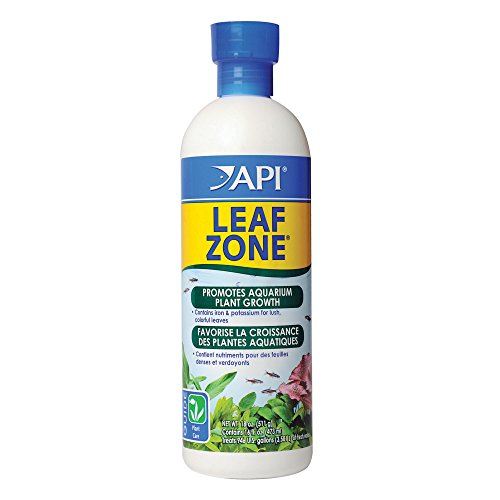
What it is: A broad-spectrum fertilizer designed to support leaf development and color. Content includes chelated iron and potassium alongside other essential nutrients.
Best for: Aquarists seeking a general water-column supplement to encourage vibrant and hardy leaves in a variety of freshwater plants. Suitable for community tanks with a mix of stem and foreground plants.
Why selected: It provides essential macro and micronutrients in a straightforward formula, helping prevent leaf yellowing and promoting stronger foliage without specialized dosing complexities.
Limitations: As with many water-column fertilizers, it is not a substitute for root nutrients in deeply rooted setups. Consider pairing with root tabs if you have heavy root feeders.
Seachem Flourish Freshwater Plant Supplement (500 ml)

What it is: A comprehensive supplement containing a rich mix of trace elements, micronutrients, and essential minerals (including potassium, calcium, magnesium, and iron) to support general plant health.
Best for: Planted tanks requiring balanced micro- and macro-nutrient supplementation, especially in systems with diverse plant species that demand a broad spectrum of elements.
Why selected: Its broad nutrient profile makes it a reliable all-around option, and the recommended dosing is clear for mid-sized tanks. Refrigeration after opening helps preserve freshness.
Caution: For smaller tanks, dose adjustments are important. Follow the cap measurement (approximately 1 mL) and avoid over-fertilization, which can promote algae growth if lighting and CO2 are not aligned.
API ROOT TABS Freshwater Plant Fertilizer (10-Count)

What it is: Root tabs designed to supply essential nutrients directly to plant roots, promoting robust root systems in substrate-based setups.
Best for: Tanks with rooted foreground plants or dense plant mats where root feeding is advantageous for overall plant health and anchoring in gravel or substrate.
Why selected: Root tabs deliver targeted nutrition where plants most readily absorb nutrients, complementing water-column fertilizers for a balanced approach.
Limitation: Root tabs provide limited benefits for floating or leaf-dependent species unless used in combination with a water-column feeder. Ensure proper placement to avoid disturbance of delicate roots during maintenance.
Crystalpro Flora Multi Minerals All-in-One

What it is: An all-in-one mineral supplement designed to support coloration and healthy growth in freshwater aquarium plants, with a mineral-rich profile that excludes phosphates and silicates.
Best for: Hobbyists seeking a simple, consolidated nutrient solution that covers multiple elements without adding phosphates or silicates, helpful in sensitive tank setups.
Why selected: It combines a broad mineral spectrum into a single product, simplifying dosing while delivering key elements like potassium, iron, magnesium, and calcium.
Warning: As with any all-in-one product, avoid combining with other supplements that add overlapping minerals to prevent potential overdosing. Follow dosing guidance for your tank size.
Thrive Planted Aquarium Fertilizer – NilocG Aquatics

What it is: A highly concentrated liquid fertilizer designed to feed both micro- and macro-nutrients. The product emphasizes suitability for a range of setups, from low-tech to high-tech tanks.
Best for: Heavily planted or high-demand aquariums where quick and broad nutrient supplementation is beneficial, especially in larger water volumes that require efficient dosing.
Why selected: The concentrate and pump delivery streamline feeding for large tanks and allow precise dosing. It supports robust plant growth and color development across species.
Limitation: High concentration means careful dosing is essential to avoid nutrient imbalances in smaller tanks or high-light, high-CO2 systems. Begin with smaller doses and adjust as needed.
Buying Guide: Key Purchase Considerations
- Tank size and plant load: Match product type to your tank’s needs. Large, heavily planted tanks benefit from concentrated fertilizers like Thrive, while smaller or less demanding setups may do well with water-column products like Leaf Zone or Flourish.
- Root vs. foliar feeding: Root tabs are ideal for rooted foreground plants, while water-column formulations nourish leaves and stems. A combination often yields the best overall growth.
- Macro vs. micro nutrients: Ensure the product includes essential micronutrients (iron, manganese, boron, zinc) in addition to macros like nitrogen, potassium, and phosphorus for balanced growth.
- Compatibility with tank science: If your aquarium uses high-tech CO2 or intense lighting, choose a fertilizer designed for high demand. For low-tech tanks, a simpler, slower-release approach can prevent algae blooms.
- Storage and freshness: Some products benefit from refrigeration after opening. Follow label guidance to preserve nutrient integrity.
Frequently Asked Questions
- What is the difference between root tabs and liquid fertilizers?
Root tabs feed plants from the substrate, promoting root development, while liquid fertilizers feed leaves and stems in the water column. - How often should I fertilize my freshwater aquarium?
Most guides suggest weekly to twice-weekly dosing, adjusted to tank size, plant density, and lighting. Always follow the product’s dosing instructions. - Can I mix multiple fertilizers together?
Yes, but avoid overdosing. Check for overlapping minerals and adjust dosing to prevent algae growth or nutrient imbalance. - Do I need to refrigerate any fertilizer?
Some products recommend refrigeration after opening to maintain freshness and efficacy. Follow the product’s storage instructions. - Which product is best for a beginner tank?
A straightforward water-column fertilizer such as API Leaf Zone or Seachem Flourish is typically a good starting point for a mixed-plant community. - What should I do if I notice algae after fertilizing?
Reassess dosing, ensure adequate CO2 if required, reduce light duration or intensity, and verify nutrient balance to avoid excess nutrients fueling algae.