Fertilizer spikes offer a convenient, low-muss option to feed fruit and citrus trees. They release nutrients slowly right at the root zone, helping promote steady growth, better foliage, and tastier fruit. This guide highlights top picks, explains how to use them, and compares options to help American gardeners choose with confidence.
| Product | Brand | Key Benefit | Form |
|---|---|---|---|
| Miracle-Gro Fruit & Citrus Plant Food Spikes | Miracle-Gro | Seasonal feeding with natural ingredients | Spikes |
| Jobe’s Garden Fertilizer Spikes (9 Count) | Jobe’s Organics | Low runoff, simple twice-yearly application | Spikes |
| Miracle-Gro Fertilizer Spikes for Fruit and Citrus Trees (12-Pack) | Miracle-Gro | Spring and fall feeding with tailored formulation | Spikes |
| SimplyGro Fertilizer Spikes for Citrus & Fruit Trees & Shrubs (12 Spikes) | SimplyGro | 8-4-8 formula designed for citrus and fruit crops | Spikes |
| Jobe’s Organics Garden Fertilizer Spikes (6 Count) | Jobe’s Organics | Organic, OMRI-listed, low runoff | Spikes |
Note: Each product below is evaluated for compatibility with common fruit and citrus trees, ease of use, and nutrient delivery. Always follow package directions for application timing and quantities to prevent over-fertilizing and to minimize environmental impact.
Miracle-Gro Fruit & Citrus Plant Food Spikes
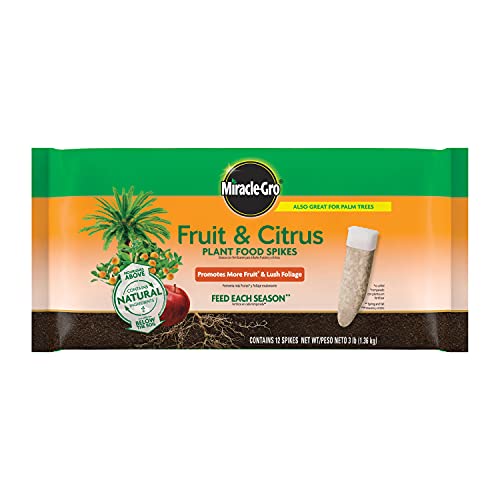
Miracle-Gro’s fruit and citrus spikes are designed to promote more fruit and lush foliage versus unfed trees. The formulation includes natural ingredients and is intended for seasonal feeding in spring and fall. Each spike targets the root zone, facilitating steady nutrient release while reducing the need for frequent liquid applications. This option is widely used for home orchards and backyard fruit trees, offering a familiar brand with scalable results for moderate-sized trees.
Jobe’s Garden Fertilizer Spikes, 9 Count

This set includes nine fertilizer spikes designed to minimize runoff, mess, and odors. The 8-11-11 NPK formulation supports fruit and citrus plants by delivering essential nutrients directly to the root zone. The approach is simple: insert spikes around the trees, then apply as directed twice a year—early spring and late fall—or as needed during the growing season. It’s a solid option for homeowners seeking an easy, no-fuss feeding routine.
Miracle-Gro Fertilizer Spikes for Fruit and Citrus Trees, 12-Pack
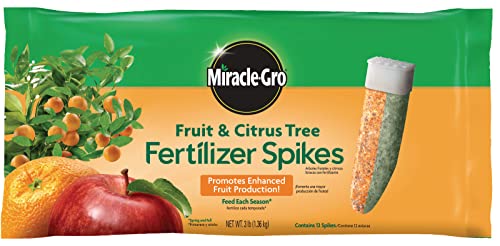
This 12-pack from Miracle-Gro is tailored for fruit and citrus trees, promoting lush foliage and enhanced fruit production. It is typically used in spring and again in fall, aligning with tree cycles for optimal nutrient uptake. The product is positioned as meeting the special needs of fruit and citrus trees, offering a reliable, repeatable feeding method for established trees and larger home orchards alike.
SimplyGro Fertilizer Spikes for Citrus & Fruit Trees & Shrubs

SimplyGro’s 12 spikes feature an 8-4-8 formula designed specifically for citrus and fruit trees and shrubs. The spikes are described as a “set it and forget it” solution, delivering nutrition for up to three months per spike. They’re recommended for twice-yearly applications in spring and fall. The formulation emphasizes steady root nourishment, reducing nutrient loss and minimizing environmental runoff, making it a responsible choice for eco-conscious gardeners.
Jobe’s Organics Garden Fertilizer Spikes, 6 Count

This 6-count option from Jobe’s Organics emphasizes organic feeding with an NPK ratio of 3-5-5. It’s designed to reduce runoff and smells while delivering nutrients directly to the root zone. Being OMRI-listed for organic gardening, this product appeals to gardeners who prefer organic inputs and want a straightforward, twice-yearly feeding schedule for fruit and citrus trees as well as other orchard crops.
Buying Guide: Key Purchase Considerations
- Form and release: Spikes provide slow, targeted release at the root zone. Consider how long each spike lasts and how many trees you’re feeding at once.
- NPK balance: Look for formulations tailored to fruit and citrus trees. Common profiles include balanced levels like 8-4-8 or 3-5-5, which support fruit production and foliage growth.
- Organic vs. synthetic: Organic spikes (e.g., OMRI-listed) are preferred by gardeners seeking environmentally friendly options, though may have slower nutrient release or higher cost.
- Application cadence: Most products recommend spring and fall feedings. Some require biannual use or seasonal adjustments based on tree size and vigor.
- Environmental impact: Choose spikes designed to minimize runoff and leaching. Pre-measured, contained formulations help reduce nutrient loss into waterways.
- Tree size and soil: For large trees or saline soils, you may need adjustments in placement depth or supplemental feeding beyond spikes.
- Brand and support: Established brands often provide clear instructions and customer support, helping ensure correct usage and best results.
Additional Perspectives and Practical Tips
- Placement matters: Insert spikes evenly around the dripline, not directly at the trunk, to ensure roots receive nutrients where they absorb water.
- Watering integration: After inserting spikes, water thoroughly to help dissolve nutrients and distribute them into the root zone.
- Seasonal timing: Align feeding with active growth periods. Avoid heavy fertilization during extreme heat or dormancy to prevent stress on trees.
- Safety and overfeeding: Follow package directions to avoid over-fertilization, which can harm roots and reduce fruit quality.
- Compatibility: Check compatibility with existing soils, mulch, and irrigation practices. Some spikes pair well with drip irrigation for automation.