Protecting goats from predators while keeping pastures efficiently fenced requires dependable chargers that suit varied terrains and weed conditions. This guide highlights five top-rated options, spanning AC-powered and solar-powered models to match different farming setups. Read on to compare performance, installation, and durability to choose the best fence charger for goats and small livestock.
Summary of chosen products
| Product | Type | Typical Range (miles) | Best For | Notes |
|---|---|---|---|---|
| Zareba 50 Mile AC-Powered (EAC50M-Z) | AC | Up to 50 (ideal); down to 6 (heavy weeds) | Large pastures; heavy weed conditions | High output for bigger setups |
| Zareba 10 Mile AC Powered (EAC10M-Z) | AC | Up to 10 (ideal); down to 1 (heavy weeds) | Medium-sized paddocks | Versatile for general use |
| Zareba ESP5M-Z Solar | Solar | Up to 5 (ideal); down to 2.5 (light weeds) | Rotational grazing; remote areas | Built-in mounting; USA-made |
| Gallagher S30 Solar | Solar | Typical 4 miles; up to 20 miles ideal | Small to mid-sized pastures | Rugged, portable; predator deterrence |
| FarmNix 30 Miles Solar | Solar | Up to 30 miles | Extensive rotational grazing | Adjustable output; 24/7 protection |
Zareba 50 Mile AC-Powered Low Impedance Charger

This AC-powered charger is designed for larger fence systems and heavy weed conditions. It energizes up to 50 miles in ideal conditions and up to 6 miles with heavy weeds. It supports all fence types, including high tensile, polywire, and polytape, making it versatile for goat pastures of varying layouts.
Zareba 10 Mile AC Powered Low Impedance Charger

Ideal for mid-sized goat paddocks, this 10-mile AC charger energizes up to 10 miles in ideal conditions and remains effective in light to heavy weed scenarios. Its broad compatibility with fence types makes it a flexible option for farms expanding their fencing networks.
Zareba ESP5M-Z Solar Powered Fence Charger

This solar-powered unit delivers up to 5 miles of coverage in ideal conditions, with up to 2.5 miles in light weeds. It supports built-in mounting for posts and is designed for livestock applications. A USA-made product with a 1-year limited warranty provides extra assurance for ongoing goat protection in sunny locations.
FarmNix 30 Miles Solar Electric Fence Charger
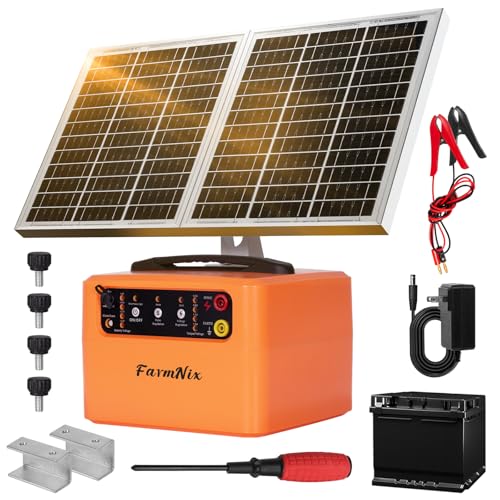
Designed for larger rotational grazing setups, FarmNix offers up to 30 miles of fence coverage with adjustable output. Its 15W solar panel, 12V battery, and 24-hour protection enable reliable goat containment across diverse weather and daylight conditions. It’s suitable for Swiss cheese pasture layouts where goats roam across multiple zones.
PLOWIC 10 Miles Solar Fence Charger

While listed here for reference, this option is a compact solar charger suitable for portable goat fencing needs. It provides up to 10 miles of coverage with an 8kV output and is designed to be lightweight, IP55-rated, and effective in remote locations. It’s a practical choice for temporary or moving goat enclosures.
Buying Guide: Key Purchase Considerations
- Pasture size and weed conditions: Larger properties with dense vegetation benefit from high-mileage, high-impedance units, while smaller pastures can rely on mid-range chargers.
- Power source: AC-powered chargers offer reliable performance for permanent fences; solar chargers excel in remote or sun-rich locations with easy maintenance.
- Fence type compatibility: Ensure the charger supports your fence types (high tensile, polywire, polytape) and your setup (single long run vs. multiple shorter runs).
- Maintenance and warranty: Look for units with durable housings, weather resistance, and warranties that cover lightning or power surges for lasting goat protection.
- Portability vs. permanence: Portable solar options suit rotational grazing and temporary paddocks, while robust AC units are better for fixed installations.
- Safety considerations: Use proper grounding and regular inspections to maintain animal safety and effective predator deterrence.
- Cost of ownership: Consider initial price, replacement parts, and expected battery life for solar models to gauge long-term value.
- Installation complexity: Some solar units include mounting brackets and ground leads; others may require additional hardware for optimal setup.
Selecting the right fence charger involves matching pasture size, weed pressure, and management goals to a charger type and rating. For goat-fenced properties with diverse terrains, a mix of high-mileage AC units for permanent paddocks and portable solar options for movable pastures often yields the best combination of reliability and flexibility.