Gardening and landscape projects rely on sturdy fabric pins to secure weed barriers, landscape fabrics, irrigation lines, and decorative edging. The following selections emphasize heavy-duty galvanization, thick gauges, and strong tips to resist bending and rust. Below are five top picks that balance value, durability, and ease of use for American yards and beds.
| Product | Brand | Gauge / Size | Pack Count |
|---|---|---|---|
| FEED GARDEN 6 Inch 50 Pack | FEED GARDEN | 11 Gauge • 6 inches | 50 |
| Zevlux Landscape Staples 4 Inch 50 Pack | Zevlux | 12 Gauge • 4 inches | 50 |
| FEED GARDEN 6 Inch 200 Pack | FEED GARDEN | 11 Gauge • 6 inches | 200 |
| GZBEVITAR 6 Inch 120 Pcs | GZBEVITAR | 8 Gauge • 6 inches | 120 |
| FEED GARDEN 6 Inch 500 Pack | FEED GARDEN | 11 Gauge • 6 inches | 500 |
FEED GARDEN 6 Inch 50 Pack Landscape Staples

The FEED GARDEN staples are 6 inches long with an 11 gauge, featuring a top width of 1 inch and a bottom width of 1.5 inches. This heavy-duty design supports fabric, mats, and other ground coverings. The metal is hot-dip galvanized for durability and reuse across seasons. Sharp ends promote easy penetration into sod, plastic sheeting, and heavy soil, enabling quick installation in gardens and landscapes alike. The 50-pack offers a practical balance of quantity and cost for multiple projects.
FEED GARDEN 6 Inch 200 Pack
This 200-pack from FEED GARDEN uses 11-gauge galvanized steel for robust performance across large areas. Each stake is 6 inches long, with the same 1 inch top and 1.5 inch bottom width, ensuring a strong anchor for weed barriers, fabric, and decorative ground covers. The material resists corrosion, supporting repeated outdoor use. Sharp tips make installation straightforward in turf, plastic sheeting, and heavy soils, while the generous pack size suits extensive landscaping or seasonal deployments.
GZBEVITAR 6 Inch 120 Pcs Landscape Pins
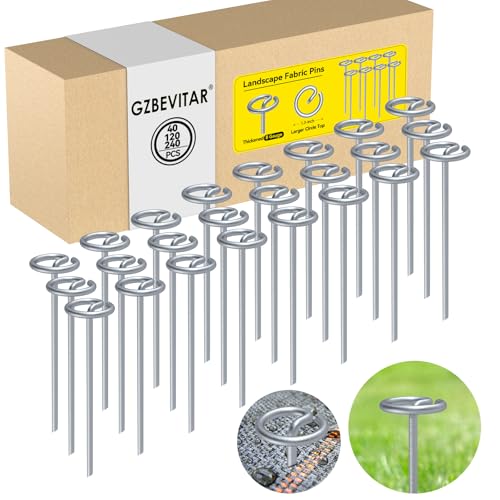
GZBEVITAR offers 6-inch galvanized landscape pins with an 8-gauge thickness, delivering substantial holding power. The circle top design and thicker gauge contribute to reduced bending and extended durability in varied soils. The set supports weed barriers, irrigation lines, and garden fabrics, with a construction that emphasizes anti-rust properties for long-term outdoor use.
FEED GARDEN 6 Inch 500 Pack
The 500-pack FEED GARDEN staples compress a large quantity of reliable, heavy-duty 11-gauge pins. Designed to hold weed barrier fabrics, landscape fabrics, and outdoor installations, these stakes are designed for repeated use and rust resistance. Sharp tips ease insertion into sod, heavy soil, and mats, making them a versatile choice for extensive garden beds, pathways, and yard projects.
Buying Guide: Key Considerations For Landscape Staples
Choosing the right fabric pins depends on project size, soil type, and the barrier material being secured. Here are essential factors to evaluate, along with practical guidance for American yards:
- Gauge and thickness: Heavier gauges (8–12) provide greater bending resistance in tough soils and when securing dense fabrics. Thicker pins are especially valuable for large-area installations or high-wind sites.
- Length and top width: Six-inch staples with a 1–1.5 inch base width offer solid anchoring for weed barriers and heavy fabrics. Shorter pins may suffice for light mats, while longer stakes are better for challenging ground.
- Material and coating: Galvanized steel resists rust and corrosion across seasons. Hot-dip galvanization offers added durability for outdoor use in humid or coastal climates.
- Tip design: Sharp tips enable easier penetration through turf, soil, and plastic films. Some designs include thicker tips to reduce skewing during insertion.
- Pack size and value: For large projects, higher pack counts (200–500) provide cost efficiency and fewer restocks. For smaller tasks, 50–100 counts may be more appropriate.
- Reusability and removal: Interlocking or thicker gauges may maintain integrity after extraction, enabling reuse across seasons.
- Compatibility: Confirm compatibility with weed barriers, irrigation lines, fence edging, and decorative fabrics to ensure the pins won’t kink or bend.
- Storage and handling: Consider packaging that protects tips during transport and storage to avoid accidental punctures or dulling.
Material and Usage Considerations From A Practical Perspective
For gardeners in regions with clay or dense soil, thicker 8–12 gauge pins offer stability against wind uplift and ground shifting. In sandy or looser soils, even standard 6-inch pins can anchor fabrics effectively if you use a few extra stakes per panel. Reusable galvanized pins are ideal for perennial installations, seasonal coverings, and recurring garden layouts. Choose packs that align with your typical project size to minimize waste and simplify maintenance over time.
Comparative Insights
When evaluating the five recommended products, consider gauge, pack size, and corrosion resistance as primary differentiators. FEED GARDEN products emphasize large pack sizes and robust 11-gauge stakes, suitable for substantial landscape projects and decorative uses. Zevlux and GZBEVITAR provide strong 12–8 gauge options with emphasis on anti-rust properties and easy insertion. The combination of pack size and gauge allows gardeners to tailor purchases to lawn beds, vegetable plots, and larger permanent installations alike.
Installation Tips For Best Results
Before installation, align the barrier or fabric along the intended edge. Place pins every 1–2 feet for weed barriers and about every 2–3 feet for decorative fabrics. Angle the pins slightly forward during insertion to resist lift from wind and ground movement. For stubborn soil, pre-puncture a pilot hole with a hammer or stake to reduce resistance and prevent bending the pin. When removing, use a hooked tool or pick to lift anchors safely without damaging the fabric.