Answering the common question, a tow-behind dethatcher is the best option for large lawns when you own a riding mower, tractor, or ATV. These attachments lift thatch, dead grass, and compacted soil to improve air, water, and nutrient flow to roots. They’re ideal for homeowners with expansive landscapes, property managers, and lawn-care enthusiasts who want to cover ground quickly without bending over or renting equipment. Below, five top picks are evaluated for efficiency, durability, and value.
Summary table of chosen products:
| Product | Working Width | Key Strength | Best For | Typical Limitation |
|---|---|---|---|---|
| BlumeTrec 40 Inch Tow Behind Dethatcher | 40 inches | Two rows of independent flex tines, 100 lb ballast tray | Large lawns, riding mower owners | May require ballast for deep penetration |
| YITAMOTOR 40 Inch Tow Behind Dethatcher | 40 inches | 20 heat-treated steel tines, safety bar | Medium-to-large properties | Heavier frame may affect maneuverability in tight spaces |
| AugFir 48-Inch Tow Behind Dethatcher | 48 inches | Longer width, 150 lb tray capacity | Very large yards, golf courses | Bulkier storage and transport |
| BlumeTrec 48 Inch Tow Behind Dethatcher | 48 inches | 24 spring tines, 100 lb ballast tray | Large yards needing fast coverage | Heavier to assemble |
| Agri-Fab 45-0295 48in Tow Behind Dethatcher | 48 inches | 24 durable spring tines, Made in USA | Reliability-focused buyers | Basic design, fewer deluxe features |
BlumeTrec 40 Inch Tow Behind Dethatcher

The BlumeTrec 40 Inch Tow Behind Dethatcher uses a heavy-duty carbon steel frame with 20 heat-treated, rust-proof spring tines. The two-row design helps lift thatch, dead grass, and compacted soil to improve lawn health. It pairs with riding mowers, tractors, ATVs, or UTVs via a universal pin-style hitch, and a ballast tray adds up to 100 lb for deeper penetration. This model is best for large lawns where speed matters.
Best for: Homeowners with large yards and a riding mower who want efficient dethatching in fewer passes. The wide 40-inch width reduces the number of passes while the ballast tray helps when deeper penetration is needed.
Limitations: Some users may need to adjust ballast for different soil conditions, and assembly may require careful following of instructions to align tines properly.
YITAMOTOR 40 Inch Tow Behind Dethatcher

The YITAMOTOR dethatcher offers 20 heat-treated steel tines across a 40-inch width with a reinforced steel frame and a 70 lb ballast tray. A safety bar reduces blade strikes, providing consistent, dependable dethatching across large properties. Height is adjustable via a simple lift handle for easy transitions between dethatching and transport modes.
Best for: Buyers seeking commercial-like durability and a robust ballast system for deeper penetration on bigger lawns. The safety bar also helps protect the mower in busy areas.
Limitation: Heavier construction can challenge maneuverability in tight spaces or along irregular borders.
AugFir 48-Inch Tow Behind Dethatcher

AugFir’s 48-inch dethatcher uses two independently flexing tine rows to cover more ground quickly. Its 150 lb ballast capacity enables deeper soil engagement for thorough thatch removal. The height-adjustable control handle helps tailor the dethatching depth, and an anti-slip stopper slot prevents unintended shifts during turns.
Best for: Large yards or commercial-like properties where rapid, aggressive dethatching is desired. The higher ballast capacity supports deeper soil penetration for uneven terrains.
Limitation: The wider footprint may be harder to store in compact spaces or garages.
BlumeTrec 48 Inch Tow Behind Dethatcher
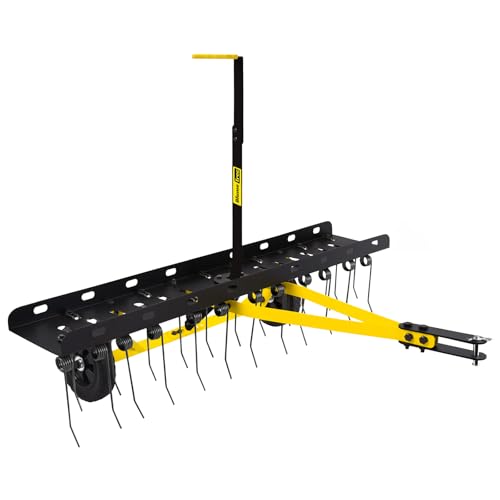
This model mirrors the BlumeTrec design with 24 spring tines on a 48-inch working width and a 100 lb ballast tray. The dual-row configuration increases thatch and debris removal, lifting soil to promote aeration. Like the 40-inch version, it uses a universal pin-style hitch for easy attachment to riding mowers or UTVs.
Best for: Large lawns where you want maximum surface coverage per pass. The extra width speeds up dethatching on expansive properties.
Limitation: Assembly may require more steps to secure all components correctly, especially aligning the hitch with the vehicle.
Agri-Fab 45-0295 48in Tow Behind Dethatcher
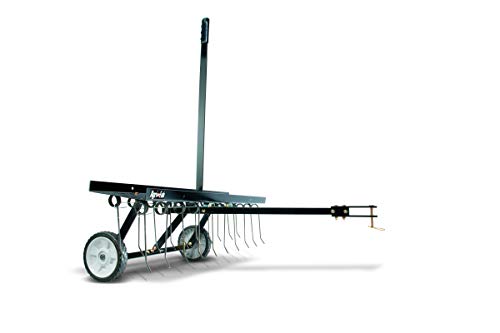
Agri-Fab’s 48-inch dethatcher features 24 durable spring tines designed to pull thatch and dry material from 48-inch swaths. Made in the USA, this model emphasizes reliability and straightforward design for durable performance behind lawn tractors and similar tow vehicles.
Best for: Buyers prioritizing a domestic-made, simple to use dethatcher with proven, consistent performance. It’s a solid choice for routine dethatching on mid-to-large lawns.
Limitation: Lacks some of the extra features found in premium models, such as advanced safety bars or elevated ballast systems.
Tow Behind Aerator With Dethatcher Design

This 40-inch dethatcher combines two rows of 20 steel tines with a lift handle for easy height adjustments. The design includes a transport position that raises the tines to clear obstacles and protect surfaces. It uses a standard hitch compatible with many riding mowers and UTVs, but buyers should confirm hitch compatibility prior to purchase.
Best for: Property owners who need a versatile tool that can switch between dethatching and transport without complex setup. It’s suitable for mixed landscapes with occasional obstacles.
Limitation: Some users may require additional accessories for optimal performance on very rocky or highly uneven grounds.
Buying Guide: How To Choose Your Tow-Behind Dethatcher
- Working width matters. Wider models cover more ground per pass but require a larger towing vehicle. Choose based on your lawn size and the turning radius of your mower or tractor.
- Ballast capacity influences depth. Heavier ballast helps the tines penetrate deeper, which is useful on dry or compacted soil. A higher ballast may demand more power and control from the tow vehicle.
- Tine quality and arrangement. Independent flex tines reduce snagging and wear. Two-row configurations increase thatch removal but may require more maintenance to keep tines aligned.
- Hitch compatibility and ease of attachment. Look for universal pin-style hitches and verify compatibility with your mower, tractor, ATV, or UTV. Quick-release or simple lift handles save time during work sessions.
- Durability and weather resistance. Powder-coated or rust-resistant frames extend life in varied climates. Consider models with robust bearings for smoother operation and longer life.
- Maintenance requirements. Regular cleaning after use, especially removing soil and debris, helps protect tines and frame from corrosion and wear.
Frequently Asked Questions
- What size dethatcher should I choose for my lawn? For large lawns, 40–60 inch widths offer efficient coverage. Bigger widths reduce passes but require a compatible tow vehicle.
- Do these need special maintenance? Yes. Clean debris after use, inspect tines for wear, and check ballast for safe operation. Lubricate moving parts as recommended by the manufacturer.
- Can I use a dethatcher behind any mower? Most are designed for riding mowers, tractors, ATVs, or UTVs with a pin-style hitch. Always verify hitch size and weight limits before attaching.
- Is more ballast always better? More ballast deepens tine penetration but can increase load and mowing effort. Start with recommended ballast and adjust as needed for soil conditions.
- Which model is best for beginners? A model with straightforward height adjustment, a safety bar, and simple hitching is best for new users. Features like ballast ease and durable tines help early success.
- Can dethatchers remove pine needles? Yes, some models are designed to pull thatch, leaves, and pine needles, but effectiveness depends on tine density and ballast.