Looking for a dethatcher attachment that can work with walk-behind mowers or similar ATV/tractor setups? This guide highlights top tow-behind dethatchers that pair well with large lawns, providing efficient thatch removal and lawn aeration. These options are best for homeowners with extensive lawns, property managers, and anyone needing to speed up dethatching across big areas. Each product is evaluated for coverage, build quality, ease of use, and potential limitations.
| Product | Working Width | Key Benefit | Best For |
|---|---|---|---|
| YITAMOTOR 40 Inch Tow Behind Dethatcher | 40 inches | Balanced 20 tines, lift handle, durable frame | Large lawns, riding mowers or ATVs |
| BlumeTrec 40 Inch Tow Behind Dethatcher | 40 inches | Two rows of flexing tines, 100 lb ballast tray | Large yards, fast coverage |
| Agri-Fab 45-0294 40in Tow Behind Dethatcher | 40 inches | Twenty durable spring tines, USA-made | Trusted performative dethatching |
| Vlaeng 40″ Tow Behind Lawn Dethatcher | 40 inches | 24 rust-proof tines, heavy tires, adjustable height | Thatch-rich or debris-heavy lawns |
| Yard Tuff Tine Dethatcher Attachment | 40 inches | Heat-treated tines, universal tow design | Versatile attachment for various machines |
Introduction: This selection focuses on 40-inch and similar-width dethatcher attachments that are popular for walk-behind mower setups via hitch or universal towing configurations. The products below are chosen for wide coverage, durable tines, and practical design features such as ballast trays and height adjustment. Each entry notes who should buy it and why, plus a small limitation to consider before purchase.
YITAMOTOR 40 Inch Tow Behind Dethatcher

The YITAMOTOR dethatcher uses 20 heat-treated spring tines to lift thatch, dead grass, and moss across a 40-inch width. A reinforced steel frame supports a 70 lb ballast tray to promote deeper engagement. It includes a safety bar to prevent mower blade strikes and provides quick lift handle transitions between dethatching and transport. Best for large properties where a balance of depth and speed is desired, especially when using a tractor, ATV, or compatible walk-behind setup. Limitations include the need for compatible hitch hardware and regular tine replacement when needed.
BlumeTrec 40 Inch Tow Behind Dethatcher

The BlumeTrec dethatcher features a heavy-duty carbon steel frame with 20 heat-treated, rust-proof tines that are replaceable. With a 40-inch working width and a universal pin-style hitch, it easily attaches to riding mowers, tractors, ATVs, or UTVs. A 100 lb ballast tray aids deep tine penetration for thorough thatch removal. This model is best for large lawns requiring efficient coverage and robust construction. A potential limitation is the need for periodic tine maintenance and proper cleaning after use to prevent residue buildup.
Agri-Fab 45-0294 40in Tow Behind Dethatcher
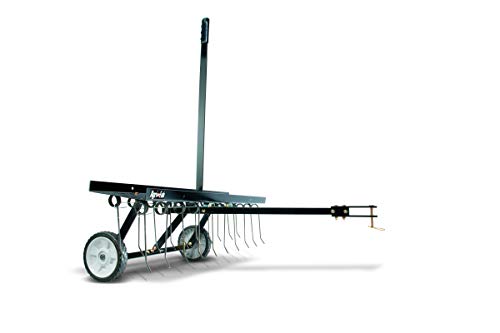
Agri-Fab’s 40-inch dethatcher uses twenty durable spring tines to uproot dead, matted grass and dislodge hard-packed soil. This USA-made design prioritizes reliability and straightforward performance for pulling behind lawn and garden tractors. Best for homeowners seeking a proven, widely available option with clear maintenance expectations. A limitation is that metal components may require rust prevention if stored outdoors long-term.
Vlaeng 40″ Tow Behind Lawn Dethatcher

The Vlaeng dethatcher combines 24 rust-proof tines with a 40-inch working width and heavy tires. An adjustable height feature lets users raise tines on hard surfaces and lower them to aerate soil, enhancing root growth. A 70 lb tray aids debris collection, boosting efficiency on large lawns. Best for properties with varied terrain, though users should note the importance of regular maintenance to prevent rust or wobble in wheels over time.
Yard Tuff Tine Dethatcher Attachment

The Yard Tuff attachment provides a broad 40-inch working width with 20 heat-treated steel tines for effective thatch removal and debris combing. It uses a universal tow-behind design that fits a wide range of lawn tractors, riding mowers, and ATVs with a standard pin-style hitch. This option is best for versatile use across different machines, offering straightforward installation. A potential limitation is adjudging tine clearance on uneven ground to avoid contact with obstacles.
Buying Guide
What to consider when choosing a dethatcher attachment for walk-behind or tow-behind setups
- Working width and lawn size: Larger areas benefit from 40 inches or more. Match width to your mowing pattern to minimize passes.
- Tine design and durability: Look for heat-treated steel tines and replaceable options to reduce long-term costs and downtime.
- Weight and ballast: A ballast tray or ballast weight helps achieve deeper dethatching. Consider your machine’s capacity and traction.
- Hitch compatibility: Universal pin-style hitches provide broad compatibility, but verify clearance with your mower or tractor model.
- Height adjustment: Adjustable tine height helps protect surfaces and tailor aeration intensity to soil conditions.
- Maintenance: Check for rust protection, easy cleaning, and simplicity of replacing worn parts.
- Attach-to-machine flexibility: Some models work better with ATVs, others with riding mowers or large tractors. Choose based on your primary machine.
- Safety features: A safety bar or blade-clearance mechanism can prevent damage during operation.
What is the best width for a dethatcher on a typical residential yard?
For standard residential lawns, a 40-inch width is a solid balance between coverage speed and maneuverability, though wider options can significantly reduce total dethatching time on large properties.
Are replaceable tines worth the extra cost?
Yes. Replaceable tines extend the life of the dethatcher, keep performance consistent, and reduce downtime due to worn components.
Can these dethatchers be used with walk-behind mowers?
Most listed models are designed for use with riding mowers, tractors, ATVs, or UTVs with universal hitch systems. Compatibility with a small walk-behind mower depends on the presence of a compatible hitch setup or pull-behind configuration.
How should I maintain a tow-behind dethatcher?
Clean off soil and vegetation after each use, inspect tines for wear, lubricate moving parts if needed, and store dry to prevent rust. Replace any bent or damaged tines promptly.
What are common limitations to expect?
Limitations include the need for compatible hitch hardware, the potential for soil resistance on very compacted soil, and occasional maintenance requirements for rust prevention and tine replacement.
Quick FAQ
- Q: Will these work on a walk-behind mower? A: They’re designed for hitch-compatible machines like tractors, ATVs, or riding mowers. For walk-behind mowers, verify hitch compatibility or consider a tow-behind configuration that matches your mower’s hitch.
- Q: How deep do the tines dethatch the lawn? A: Depth depends on tine height, ballast, and soil conditions; adjustable height helps tailor depth for general lawn health.
- Q: Are tines replaceable? A: Many models feature replaceable, heat-treated tines to extend life and performance.
- Q: Is a ballast tray necessary? A: Ballast trays aid deeper tine penetration and more thorough thatch removal, especially on thick thatch.
- Q: What maintenance is needed after use? A: Clean residue, inspect tines, and ensure moving parts are clear before storage.
- Q: Do these require professional installation? A: Most are designed for DIY setup with standard hitch hardware and basic tools.