Answering the need for productive, shade-tolerant deer plots, this guide highlights top seed blends that perform well with limited sunlight. Ideal buyers include woodland property owners, hunters with dense canopy plots, and landowners seeking low-maintenance, shade-tusty options. Below, each product is evaluated for shade suitability, deer appeal, and practical limitations. A quick buying table and guide follow to help you compare at-a-glance and make a confident choice.
| Product | Shade Suitability | Best For | Limitations |
|---|---|---|---|
| Hit List Seed Shade Food Plot Seeds | High (low sun friendly) | Beginners and experienced plot owners | Annual & Perennial mix may require replanting per season |
| Shady Patch Deer Food Plot Seed | Excellent (no till, shady spots) | Property owners with limited sunlight | Bulk seed mix may vary by season |
| Whitetail Institute Imperial Clover | Moderate to good (seasonal tolerance) | Spring or fall planting for long-term clover stands | Requires appropriate soil prep for best results |
| Whitetail Hill Bucks and Beards Mix | Shade-tolerant features | Two-species plot for deer and turkey attraction | Multiple ingredients may require soil readiness |
| Evolved Harvest 5 Card Draw | Good in varied light | High-protein, multi-season forage | Complex mix may need careful timing |
Hit List Seed Shade Food Plot Seeds for Deer

Products in this blend include Ladino Clover, Forage Brassica, and Annual Ryegrass. The mix is designed for low sun conditions and aims to produce nutrient-dense forage that deer actively browse. This seed combination is described as quick germinating, which helps establish a reliable food source early in the season. Best for buyers who want a simple, beginner-friendly shade plot that still delivers deer-attracting forage. A limitation is that the blend includes both annual and perennial components; depending on climate and season, you may need to replant or adjust management for perennial persistence.
Who it’s best for and why this selection
- Best for beginner to intermediate plotters who want a low-maintenance shade-friendly option.
- Good for deer seeking nutrient-dense forage in areas with limited sunlight.
Selected for shade tolerance, ease of planting, and strong deer appeal. Consider soil readiness and sun exposure to maximize germination and growth.
Shady Patch | All Year Deer Feeder

No-till food plot seeds designed specifically for shady spots. The mix combines Forage Brassica, Forage Rye, Forage White Clover, and Forage Rape to create an all-season deer feeder. It is positioned as an easy-to-use option that can attract deer year-round, even with limited direct sunlight. A potential limitation is that “no till” success still hinges on choosing the right shadeable patch and maintaining soil moisture and weed control in a hidden area.
Who it’s best for and why this selection
- Best for property owners with shade-dense, easily overlooked plots.
- Better for growers who want an all-season attraction without heavy soil preparation.
Choose this if you want a low-effort, year-round attractant. Avoid if your shade spot has extreme compacted soil or inconsistent moisture.
EvolvED Harvest 7 Card Stud

7 Card Stud blends triticale, oats, winter peas, clover, chicory, turnip, and radishes to offer a high-protein, mineral-rich forage that deer readily consume. It is adaptable to different regions and climates and is designed for full-season forage. This makes it a flexible option when shading varies across the plot. A noted limitation is that managing a diverse seed mix may require more attentive maintenance and timely planting windows to maximize benefits.
Who it’s best for and why this selection
- Best for landowners seeking a high-protein, mineral-rich forage that can span multiple seasons.
- Better for plots where you can invest in soil preparation and proper seeding timing to optimize germination of multiple species.
Use this when your goal is robust deer traffic through different seasons, and you can manage a slightly more complex seed bed.
Evolved Habitats Throw & Gro X-treme with Radish
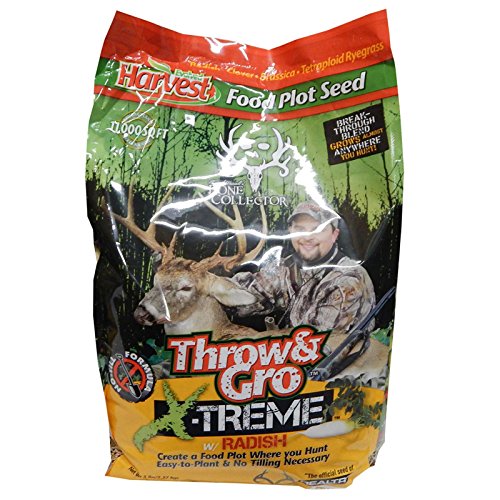
This no-till seed mix includes radish and other forage plants designed to be easy to plant and fast-growing in shade-friendly conditions. Made in the United States, the product focuses on producing quick forage that can hold deer in a plot while requiring minimal soil disturbance. A limitation is that the exact performance depends on local soil chemistry and moisture levels, as with any no-till seed mixture.
Who it’s best for and why this selection
- Best for quick establishment in shady plots where minimal soil disturbance is feasible.
- Better for hunters who want fast results in late summer to early fall.
Choose this if you need a fast-establishing option with simple planting steps. Avoid if your shade patch experiences frequent waterlogging or drought periods that could hinder germination.
Whitetail Institute Imperial Clover

Imperial Clover is a clover-focused seed for spring or fall planting. It is marketed as heat, cold, and drought tolerant, with an emphasis on antler-building protein. While clover is inherently shade-tolerant to some extent, performance improves with adequate soil nutrients and moisture management. Best for long-term, low-input plots that aim to provide consistent forage across seasons. A potential limitation is slower establishment in extremely dense shade without proper seed bed preparation.
Who it’s best for and why this selection
- Best for property owners seeking a persistent legume stand that supports late-season forage.
- Better for fields where soil quality is moderate to good and moisture can be maintained.
Adopt if your goal is a durable, lower-maintenance stand that deer will browse repeatedly. Avoid in areas with persistent shade that prevents even clover germination.
Whitetail Hill Bucks and Beards Mix

This mix targets deer and turkeys with a blend of clovers, chicory, and cereal grains designed for shade tolerance. The product is suitable for small plots and larger plots alike, with a focus on maximum attraction across seasons. A practical note is that achieving peak attraction may require adjusting sowing rates to match plot size and local deer activity patterns.
Who it’s best for and why this selection
- Best for mixed-species plots where both deer and turkeys use the area.
- Better for mid-to-large plots that can support clover, chicory, and grains under partial shade.
Use this when you want a diverse, multi-species attractant in a shade-friendly environment. Avoid if your plot receives very limited sunlight or if your site has poor drainage.
Buying Guide for Shade-Friendly Deer Food Plots
What should I look for in shade-tolerant seed blends?
- Shade tolerance: Prioritize mixes advertised for low sun or shade spots, with clover or brassica components that tolerate reduced light.
- Seasonality: Consider blends that provide forage across spring, summer, and fall to hold deer traffic year-round.
- Soil readiness: Check whether the product recommends no-till, minimal prep, or specific soil amendments for best germination.
How to choose based on deer behavior and plot size
- Deer traffic: For heavily wooded properties, select blends described as high-attraction and long-lasting, such as those with clover, brassica, and annual grasses.
- Plot size: Smaller plots may benefit from highly attractive, fast-establishing mixes; larger plots can support longer-term perennials.
Maintenance and timing considerations
- Watering: Shade plots can dry unevenly; maintain moisture to support germination in low sunlight.
- Mowing and weed control: Even under shade, occasional mowing helps reduce competition and improves plant vigor.
- Replenishment: Perennial-heavy mixes may require reapplication or overseeding to maintain density after several seasons.
Regional adaptability and risk factors
- Climate: Some blends are marketed as adaptable to multiple regions; verify suitability for your USDA zone and soil type.
- Drainage: Poor drainage in shade pockets can hinder germination; consider raised areas or improved soil structure if possible.
Quick comparison by scenario
- Best for beginners with a shady, no-till spot: Hit List Seed Shade Mix or Shady Patch.
- Best for long-term, low-maintenance clover stands: Imperial Clover.
- Best for small plots attracting both deer and turkeys: Bucks and Beards Mix.
- Best for rapid, multi-season forage in varied shade: Card Draw or Throw & Gro X-treme.
Frequently asked questions
- What is the easiest shade-friendly deer plot to establish? The no-till or minimal-prep blends, such as Shady Patch, are commonly cited as easy to establish in shady spots.
- Can these mixes attract deer year-round in shade? Yes, blends with year-round components (e.g., brassicas, clover, and radishes) can provide forage across multiple seasons, depending on climate.
- Will shade reduce deer forage quality? Shade can affect growth rate and density, but selective varieties designed for shade aim to maintain nutritional value with careful management.
- How often should I overseed a shade plot? Overseeding annual components each year or every other year helps maintain density and forage quality in shaded areas.
- Do I need special equipment for shade plots? No-till or light-till methods are often sufficient; hand tools or basic lawn spreaders work for many mixes.
- Which blend is best for small plots near bow stands? BowStand or similar small-plot blends designed for limited space are typically preferred for quick attraction.