Protecting vegetable gardens from pests, insects, and harsh weather is essential for maximizing yields. The right covers create a barrier while still allowing light, air, and water to reach plants. This guide highlights top covers designed for vegetable gardens, detailing what makes each option effective, how to use them, and how they compare for different growing setups—from raised beds to in-ground plots. Below is a quick snapshot of the best picks to consider.
| Product | ||
|---|---|---|
| Garden Netting, Jevrench Ultra Fine Netting | 4 ft x 25 ft | Durable barrier with fine mesh for broad protection |
| Garden Netting Kit for Raised Beds | 10×30 ft netting + 6 fiberglass hoops | Comprehensive kit for raised beds and row covers |
| Greenhouse Hoops Grow Tunnel Kit | 6 sets of 8 ft hoops | DIY grow tunnel for larger protection areas |
| Hiraliy Garden Netting for Raised Beds | 59 x 27.5 x 39 in | Pop-up, tool-free setup with elevated bottom |
| Garden Netting, 2 Pack 10×33 Ft | Two 10×33 ft sheets | Long, wide coverage for multiple beds or larger plots |
Choosing the right cover depends on bed type (raised vs. in-ground), climate, and garden size. The following sections examine five strong options, outlining how each fits typical vegetable garden needs, including installation tips and maintenance considerations. While prices vary, these selections emphasize durability, airflow, and ease of use to support healthy, productive gardens.
Ultra Fine Garden Netting From Jevrench

The Jevrench garden netting provides a substantial 4 x 25 ft coverage with an ultra-fine mesh of 0.8 mm by 1 mm. This construction forms a physical barrier that helps deter birds, insects, and larger animals while still permitting sunlight, air, and water to reach plants. Its transparent PE material offers durability against sun exposure, and the netting’s size supports larger beds or multiple rows in one setup. Gardeners can reuse it for several seasons when properly maintained, making it a practical long-term protection solution for vegetables, fruits, and flowers.
Garden Netting Kit for Raised Beds
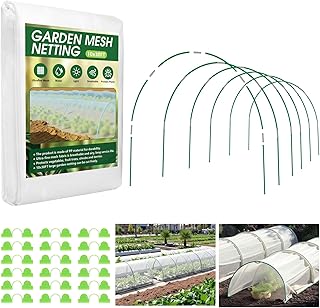
This raised-bed netting kit combines a 10×30 ft ultra-fine mesh with six 8 ft fiberglass hoops, creating a robust row-cover system. The kit enables gardeners to create a protective tunnel over raised beds, shielding crops from pests while maintaining airflow for healthy plant respiration. The included hoops provide the framework to hold the mesh, and the setup supports diverse crops—from leafy greens to fruiting vegetables. The kit is flexible for seasonal adjustments and can be scaled for larger garden configurations by adding more hoops or extending the netting as needed.
Greenhouse Hoops Grow Tunnel Kit

Designed as a DIY grow tunnel, this kit includes 36 large-diameter hooped frames across six sets, with connectors and clips. The hoops enable quick construction of a protective tunnel over a garden bed or a greenhouse-like structure using row covers or shade cloth. The system is adaptable for different bed widths and supports plant protection from frost, pests, and harsh weather while maintaining sufficient light transmission. It’s particularly suitable for gardeners who want a modular, customizable shelter that can expand with their beds and seasonal needs.
Hiraliy Garden Netting for Raised Beds

This Hiraliy pop-up netting offers tool-free setup and a tall, elevated bottom design. The thick, tear-resistant polyester cover provides reliable protection for raised beds, balconies, or patios. The setup unfolds quickly by one person, making it ideal for gardeners who want a temporary or seasonal shelter without a complex assembly. The elevated base helps improve air flow and reduce water stagnation around plants, potentially supporting healthier root systems and reduced disease pressure in protected beds.
Garden Netting, 2 Pack 10×33 Ft

This two-pack offers long, continuous coverage with 10×33 ft sheets featuring a 0.04 inch ultra-fine mesh. The design emphasizes high permeability to light, air, and water while remaining effective against insects, birds, and small animals. The product supports multiple beds in one installation and can be laid over rows or used as a broader protective sheet for larger plots. The mesh allows photosynthesis to proceed unimpeded, helping to sustain vigorous plant growth under cover.
Buying Guide
Key considerations when selecting covers for vegetable gardens include mesh size, coverage area, durability, and ease of installation. Mesh size determines what pests are deterred and how much light and air reach crops. Larger beds or raised-bed systems benefit from longer rolls or modular hoop kits that can accommodate edge-to-edge protection. Durable materials such as reinforced PE or heavy-duty polyester extend the lifespan under sun exposure and wind. Look for products with easy setup, especially for pop-up nets or hoop-based shelters, to minimize maintenance time. Consider whether you need removable covers for seasonal changes or permanent installations for year-round crop protection. Finally, assess storage needs; compact, foldable nets and collapsible hoops save space when not in use.
For raised-bed gardens, kit-based solutions with hoops and anchoring features typically offer the best balance of protection and ease of use. If you have a larger outdoor space or plan to create a temporary greenhouse area, a grow tunnel with multiple hoops provides scalable coverage. Ultra-fine mesh options excel for protecting delicate crops such as leafy greens and fruiting vegetables without restricting essential light for photosynthesis. Reusability and simple cleaning are important for long-term value, especially in climates with variable pests and weather patterns.
In summary, the right cover setup hinges on your garden’s layout and your pest pressures. Evaluate your bed dimensions, preferred installation method (pop-up, hoop-driven, or fixed covers), and how easily you can remove or adjust the cover as plants grow. The options above offer dependable protection, straightforward installation, and practical longevity to support successful vegetable gardening across American yards and backyards.