Direct answer: the best kitchen compost bins for scraps balance odor control, ease of use, and cleanability. Ideal buyers include busy cooks needing compact daily-use bins, homeowners seeking low-maintenance odor control, and those who want simple under-sink options. This guide features five top-rated options that are practical for American kitchens, with clear reasons for each selection and practical cautions where relevant. A quick summary table highlights the standout points for fast comparison.
| Product | Why We Selected It |
|---|---|
| Epica Countertop Compost Bin | Best overall odor control in a stylish stainless steel body, reinforced lid, and replaceable carbon filters. |
| Utopia Countertop Compost Bin | Best value stainless option with sturdy build and natural charcoal filtration for odors. |
| PERFNIQUE 1.3 Gallon Bin | Best lid with carbon filters and inner liner system for convenient daily use and odor control. |
| OXO Good Grips Easy-Clean | Best for easy cleaning and practical everyday kitchen use with innovative bag-tucked design. |
| D’Lifeful 1.3 Gallon Bin | Best odor-neutralizing setup with multiple charcoal filters and durable, rust-resistant construction. |
Epica Countertop Compost Bin Kitchen

Best for: cooks who want a compact, odor-controlled solution with a premium finish. Why selected: Epica’s 1.3-gallon bin uses an airtight lid and replaceable activated-charcoal filter to reduce kitchen odors naturally, with a one-piece molded design that resists leaks and rust and is easy to clean. It has been featured in Bon Appetit and Forbes, underscoring its mainstream appeal. Limitation: replacement filters are an ongoing cost and must be maintained for continued odor control.
Utopia Countertop Compost Bin with Charcoal Filter

Best for: budget-conscious kitchens that still want durable stainless steel and odor control. Why selected: The 1.3-gallon stainless steel body resists scratches and is easy to wipe clean. Charcoal filters help trap smells, enabling a clean counter presence. Caution: not all users find stainless steel completely odor-proof without filters, so ensure you replace filters when needed.
PERFNIQUE Kitchen Compost Bin

Best for: users who want an odor-control setup with a practical inner bucket. Why selected: Perfnique offers a 1.3-gallon capacity with an inner liner and 2 active carbon filters that help prevent leaks and smells, plus a lid that turns the bin into a decorative farmhouse piece when not in use. Caution: carbon filter replacement timing is important for maintaining odor control, typically every 4–6 months.
OXO Good Grips Easy-Clean Compost Bin
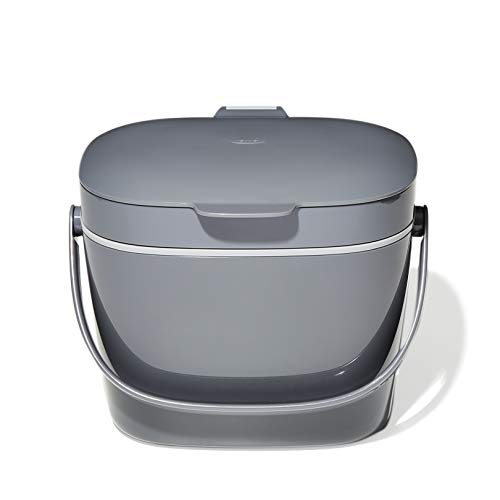
Best for: households needing a straightforward, easy-to-clean bin with smart design touches. Why selected: OXO’s 1.75-gallon model features a smooth interior for quick cleaning and a design that keeps bags tidy inside, reducing mess. Limitation: larger size may sit higher on the counter, and bag setup may require occasional adjustment to stay neat.
D’Lifeful Kitchen Compost Bin

Best for: users who want a robust odor-control solution with multiple charcoal filters. Why selected: This 1.3-gallon bin uses six charcoal filters to neutralize odors and a powder-coated galvanized steel body for rust resistance and durability. Caution: filters require periodic replacement to maintain odor control excellence, typically every few months depending on use.
Buying Guide
How to choose your kitchen compost bin
- Capacity: Most countertop bins range from 1.2 to 2.4 gallons. Choose based on how quickly your household generates scraps and how often you’re willing to empty and clean the bin.
- Odor control: Look for active carbon filters or charcoal filtration, especially if the bin sits on the counter. Consider bins with an airtight lid for best results in small kitchens.
- Material and durability: Stainless steel is durable and easy to wipe; powder-coated metal resists rust. Plastics are lightweight and often dishwasher-safe but can scratch or stain.
- Ease of cleaning: Removable inner buckets or smooth interiors help reduce odor and residue buildup. Dishwasher-safe options save time.
- Filter maintenance: Carbon filters require regular replacement. Check the estimated replacement interval and cost.
- Placement: Countertop bins should be compact enough not to obstruct prep areas. Under-sink or cabinet-hung options may appeal to minimalist setups or small spaces.
- Aesthetic considerations: If the bin is visible in the kitchen, consider a design that complements your decor (stainless steel, powder-coated metal, or clean whites/creams).
Frequently Asked Questions
- What size compost bin should I choose for a small kitchen?
Choose 1.0–1.5 gallon models for tight spaces and lighter daily use. - Do I need carbon filters for every kitchen compost bin?
Filters help control odors; many models include them or offer replacements. Replacement timing depends on usage. - Can a compost bin be kept under the sink?
Yes. Some models are designed for under-sink placement or hidden mounting and can save counter space. - How often should I empty and clean a kitchen compost bin?
Empty when full and wash the bin and inner liner regularly to prevent buildup and odors. - Are stainless steel bins more odor-proof than plastic?
Stainless steel with a good seal and filters typically offers better odor containment, though quality filtration matters. - Is it okay to compost fruit peels and coffee grounds together?
Yes. Most countertop bins are designed for common kitchen scraps, including fruit, vegetable scraps, coffee grounds, tea bags, and eggshells.