Discover kid-friendly compost bins that make green living engaging for young learners. This guide spotlights five reliable options that balance safety, odor control, and hands-on observation, turning everyday kitchen scraps into science in action. The included summary table helps you compare key details at a glance.
| Product | Brand |
|---|---|
| Educational Insights See-Through Compost Container | Educational Insights |
| Epica Countertop Compost Bin | Epica |
| Utopia Kitchen Indoor Compost Bin | Utopia Kitchen |
| OXO Good Grips Easy-Clean Compost Bin (0.75 GAL) | OXO |
| EKO Kitchen Compost Bin (7L / 1.85 Gal) | EKO |
Educational Insights See-Through Compost Container

The Educational Insights See-Through Compost Container is designed for observation and early science learning. It features three clear, aerated compartments that let kids watch decomposition progress and compare different materials side by side. This setup supports hands-on experiments with plant matter, paper, and food scraps, making it ideal for classrooms or homeschooling. The design encourages curiosity about ecology and natural cycles, aligning with STEM education goals for children as young as 4.
Epica Countertop Compost Bin Kitchen

Epica’s 1.3-gallon countertop compost bin is compact enough for kitchen countertops while delivering odor control through an airtight lid and replaceable activated charcoal filter. Its one-piece molded construction resists rust and leaks, making cleanup straightforward. The design suits a family-friendly kitchen where children can learn about waste reduction and composting without creating messes or strong smells, while still fitting in with modern kitchen aesthetics.
Utopia Kitchen Indoor Compost Bin

Designed for counter or under-sink placement, the Utopia Kitchen bin holds 1.3 gallons with a stainless steel body for durability. Its charcoal filters help control odors naturally, enabling convenient storage of kitchen scraps until they’re ready for composting. The stainless steel finish reduces scratching and chipping, and the bin is easy to clean—useful for busy households teaching kids about responsible waste management and routine cleaning habits.
OXO Good Grips Easy-Clean Compost Bin

The OXO Good Grips Easy-Clean compost bin offers a compact, user-friendly design with a flip-up lid for easy filling and a sealing flip-down to lock in odors. Its smooth interior walls prevent buildup of residues, making it simple for kids to participate in composting activities and for caregivers to keep the bin clean and hygienic. This option is well-suited for families seeking a smaller, low-maintenance bin with reliable odor control.
EKO Kitchen Compost Bin
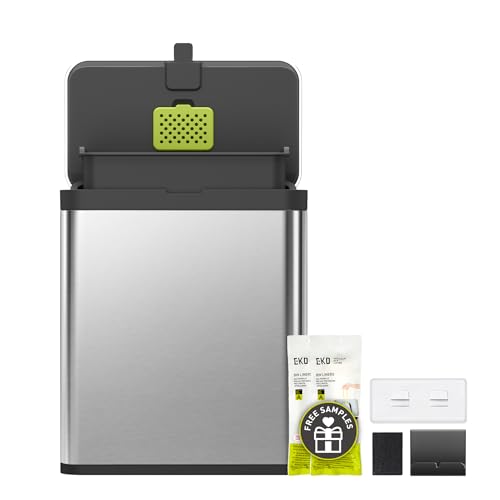
The EKO Kitchen Compost Bin features a 7-liter (about 1.85 gallons) capacity with a removable inner bucket and a deodorizer compartment. The 2-in-1 design supports versatile placement on countertops or as a compact waste caddy, with a lid that helps to keep odors contained. The blend of stainless steel and modern finish makes it a visually appealing option for family kitchens where kids can participate in a structured composting routine without sacrificing style.
Buying Guide
Key considerations when choosing a compost bin for kids include size and capacity, odor control, ease of cleaning, and safety. For younger learners, containers with clear compartments or visible indicators can help illustrate the decomposition process, while bins with odor-filtering lids reduce smells that might discourage participation. Materials matter: stainless steel and durable plastics resist staining and are easier to sanitize. Placement flexibility—countertop, under-sink, or wall-mounted—allows families to accommodate different kitchen layouts and encourage ongoing interaction with the composting activity.
Capacity should align with family meal sizes and kids’ activities. A smaller, easy-to-handle unit is ideal for beginners, while a larger bin may work for households with higher volumes of scraps. Odor-control features—such as charcoal filters or airtight lids—are especially important in homes with open living spaces or sensitive noses. Ease of cleaning is another practical factor, as bins with smooth interiors and removable inner buckets simplify routine maintenance.
Design considerations also include child safety and accessibility. Look for bins with perching lids that stay open during disposal, smooth edges, and simple, intuitive operations suitable for young children. Aesthetics matter as well; bins that blend with kitchen decor or classroom setups can sustain engagement over time. Finally, check for warranties or durable builds that withstand frequent use by curious kids who learn by doing.
In summary, the best choice balances hands-on learning with practical family needs: visible learning features for science exploration, reliable odor control for a pleasant kitchen environment, and durable construction to handle frequent use by kids. Selecting a bin that matches your space, your family’s routines, and your educational goals will help foster ongoing interest in composting and environmental stewardship.