When choosing composite outdoor decking, durability, maintenance, and installation ease matter most. This guide highlights five top options that balance performance, value, and versatility for American homeowners. Each product suits different buyers: homeowners seeking durable poolside tiles, renters needing easy installation, or those prioritizing low maintenance. Below is a quick comparison to help you decide which decking tiles fit your outdoor area.
| Product | Best For | Key Benefit | Limitations |
|---|---|---|---|
| ShunHong 9Pcs Deck Tiles (Coffee) | Backyards, patios, poolside | Thick, durable polymer composite; waterproof | Limited square footage per pack |
| Mondaria 9 Pack Deck Tiles (Brown) | Large patios, balconies | Anti-slip texture; easy drainage | May require cutting for irregular edges |
| ToLanbbt 9 Pack Deck Tiles (Dark Grey) | Renter-friendly spaces | Lightweight; tool-free interlock | Plastic construction; may feel less premium |
| Idzo 10-Pack Acacia Wood Tiles | Natural wood look on decks | Solid acacia surface; non-slip | Wood requires some maintenance over time |
| MinCHI257 36 sq. ft Tiles (Dark Grey) | Budget-friendly large areas | Bulk tiles; easy installation | Lower price may imply thinner material |
ShunHong Polymer Composite Interlocking Deck Tiles 9Pcs

Best for: Small to mid-size patios and poolside areas where durability and quick setup matter. These tiles use a high-density polyethylene (HDPE) and recycled wood fiber composite for a sturdy, waterproof surface. The thicker profile helps resist deformation in varied weather.
- Durable, sustainable materials designed to resist moisture, flame, and cracking.
- Interlocking design enables tool-free installation and easy customization for irregular areas.
- Low maintenance with simple sweeping or rinsing; gaps promote drainage to prevent water buildup.
Selected for buyers who want a robust, weather-resistant option with straightforward installation. Caution: 9-square-foot coverage per set means you may need multiple packs for larger spaces.
Mondaria Outdoor Decking Boards 9 Pack

Best for: Patios and pool areas where long-term outdoor exposure is common. The tiles are built from wood-plastic composite, offering durability and anti-corrosion properties for varied climates.
- Anti-slip, water-resistant surface with gap design to promote drainage.
- Versatile for patios, balconies, pool zones, or garden paths; can be cut to fit edges.
- Safe and stable underfoot, reducing slip risk in wet conditions.
Selected for buyers prioritizing drainage and safety in wet outdoor spaces. Caution: Some users may need to trim edges to fit irregular layouts.
ToLanbbt Interlocking Deck Tiles 9 Pack

Best for: Renters or homeowners who want quick, tool-free setup with lightweight tiles. The tiles use a plastic interlock system and offer straightforward layout options for patios and porches.
- Lightweight, sturdy plastic construction with reliable load-bearing capacity.
- 12″ x 12″ tiles make it easy to cover 9 square feet; open drainage design helps prevent water pooling.
- Easy to clean and maintain, with minimal warping risk on outdoor surfaces.
Selected for buyers who value easy removal or relocation. Caution: Plastic tiles may feel less premium than wood or polymer composites over time.
MinCHI257 36 Sq. Ft Deck Tiles 12×12
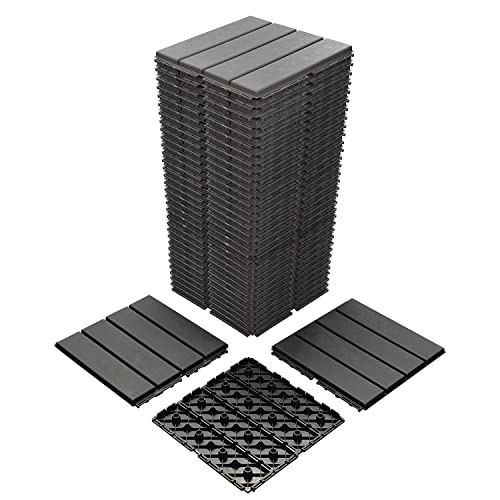
Best for: Larger outdoor spaces on a budget. The 36 sq ft pack provides substantial coverage with easy interlocking tiles designed for all-weather use.
- Standard 12″ x 12″ tiles with 0.75″ thickness suitable for patios and balconies.
- Click-tix interlock system for a stable, puzzle-like installation that stays in place.
- Thin profile keeps doors clear and reduces tripping risk; suitable for flat, even surfaces.
Selected for buyers seeking cost-effective bulk coverage without sacrificing basic durability. Caution: Data notes suggest a broad price range and potential variation in tile thickness across batches.
Buying Guide
Key considerations to choose the right composite outdoor decking tiles.
- Material composition: Polymer composites (HDPE+wood fibers) typically offer higher durability and water resistance than hollow plastic tiles.
- Installation style: Interlocking systems provide tool-free setup; snap-lock designs suit renters or frequent relocations.
- Drainage: Look for open drainage or gaps between tiles to prevent water pooling and maintain surface safety.
- Foot traffic and usage: Thicker, denser tiles handle heavy foot traffic and sun/moisture exposure better.
- Maintenance needs: Materials with hard outer shells resist staining and fading; consider whether annual refinishing is required for wood-look options.
- Area coverage: Calculate total square footage and consider packs needed to avoid under- or over-ordering.
- Aesthetic fit: Color and texture should align with outdoor furniture and home exterior for a cohesive look.
FAQ
- What is the best decking tile material for rain-prone climates?
– Polymer composite tiles with HDPE and recycled fibers offer superior water resistance and durability in wet conditions. - Are interlocking tiles easy to install without tools?
– Yes, many models feature snap or interlock designs that require no tools for setup. - Can decking tiles be cut to fit irregular spaces?
– Several options are easily cut with standard tools to match edges and curves. - Do decking tiles require ongoing maintenance?
– Most options are low maintenance; wood-look tiles may require periodic sealing or oiling, while composites are typically scrubbed with soap and water. - Which tile is best for renters?
– Lightweight, interlocking plastic or composite tiles that lock without tools are ideal for renters who may move or reconfigure spaces. - How many tiles do I need for a given area?
– Multiply the length by width of the space, divide by tile area, and add a small extra margin for cuts and waste.