If you’re seeking reliable, scalable hydroponic systems designed to maximize yield, these commercial-style indoor solutions are built for efficiency, space-saving design, and year-round growing. They’re suitable for serious home growers, small urban farms, or educational setups that demand productivity. Each option below emphasizes independent water management, full-spectrum lighting, and modular pod counts to fit your growing goals, whether herb production, leafy greens, or compact fruiting crops.
| Product | Pods / Capacity | Key Benefit |
|---|---|---|
| Growell Large Hydroponics Growing System Kit | 54 Pods | Space-saving, multi-tier design with independent pumps |
| Growell 90-Pod Hydroponics Growing System | 90 Pods | High-capacity vertical system for larger harvests |
| Ahopegarden Indoor Garden Hydroponics System Kit (66 Pods) | 66 Pods | Triple-layer, flexible zone planting with large water capacity |
| SUNCOZE 3-Tier Hydroponics System Kit | 36 Pods | Smart timer, full-spectrum lighting, easy water monitoring |
| AOONEG 42Pods Indoor Hydroponic System | 42 Pods | Extendable height and safety-focused materials |
Growell Large Hydroponics Growing System Kit
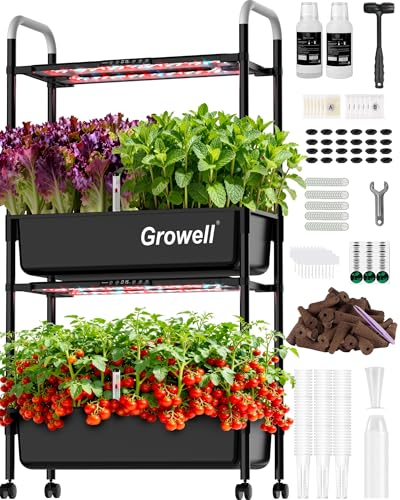
Brand: Growell. This 54-pod system is designed for efficient indoor vertical farming with a compact footprint. It features a 26W full-spectrum light per tier and independent water circulation for each level. Best for small-scale commercial-style operations looking to maximize plant variety within a controlled indoor environment. A single system can support herbs, leafy greens, and microgreens with predictable growth timelines. The independent water pumps reduce cross-contamination risk and simplify maintenance.
Who it’s best for: urban farmers, small shops, or educational labs that want a ready-to-use, scalable indoor garden with clear modularity. Why selected: reliable multi-tier design, independent pumps, and programmable light spectrum support faster growth while keeping maintenance straightforward. Caution: setup may require careful planning for seed selection and nutrient management to maintain consistent yields across tiers.
Growell 90-Pod Hydroponics Growing System

Brand: Growell. A high-capacity vertical system designed for serious indoor growers. It supports up to 90 plants with three full-spectrum grow lights, adjustable height, and a self-contained water circulation loop. Best for commercial-minded hobbyists or small-scale producers aiming to maximize annual harvests in a limited space. Selected for its large capacity and mature control features, which help you scale up while maintaining uniform lighting and nutrient delivery.
Who it’s best for: growing operations that require high plant counts with predictable cycles. Why selected: the triple-tier design with independent circuitry and a quiet pump arrangement enables better scheduling and harvest planning. Caution: higher upfront complexity and space requirements compared to smaller kits.
Ahopegarden Indoor Garden Hydroponics System Kit (66 Pods)
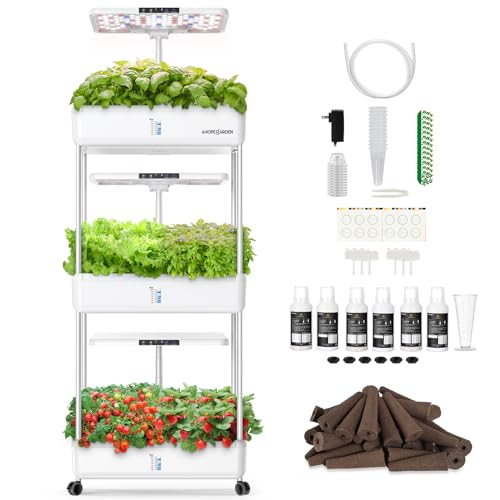
Brand: Ahopegarden. This triple-layer hydroponic hub holds 66 pods and 30L water capacity, with independent pumps per tier. It’s designed for vertical farming or a plant growth lab setup, enabling zone-specific nutrient management and scalable production. Best for education centers, co-ops, or home businesses that need a robust, multi-layer system with clear density control.
Who it’s best for: facilities prioritizing vertical space and modular growth zones. Why selected: strong emphasis on independent zones reduces cross-contamination and makes batch harvesting easier. Caution: assembly may require more time due to the three-layer configuration.
SUNCOZE 3-Tier Hydroponics System Kit

Brand: SUNCOZE. A three-tier indoor kit featuring 36 pods, smart LED grow lights with timers and dimming, and water-monitoring capabilities. It’s designed for steady, year-round production with a straightforward maintenance routine. Best for new commercial-style growers who want a balance of capacity, automation, and ease of use.
Who it’s best for: small businesses or educational programs starting a commercial-grade indoor garden. Why selected: integrated timer features and adjustable lighting help optimize day-length and spectrum for different crops. Caution: no pump noise considerations are listed; ensure quiet operation in noise-sensitive environments.
AOONEG 42Pods Indoor Hydroponic System

Brand: AOONEG. This 42-pod system offers an extendable height to support plants up to 23.6 inches tall, with six grow lights and adjustable light positioning. The water tank is PP5 food-grade plastic, prioritizing safety and durability. Best for cost-conscious buyers who still want a capability-rich system with vertical light positioning for full-plant coverage.
Who it’s best for: hobbyists expanding into larger crops or those who want to grow taller plants without upgrading to a full-size commercial unit. Why selected: strong safety features and adjustable lighting make it a flexible choice. Caution: inked data notes compatibility and seed availability may affect crop variety and yield expectations.
Buying Guide: Key Considerations For Choosing A Commercial-Style Hydroponic System
What size system fits your space and goals?
Assess the footprint and vertical capacity. If you intend to harvest many crops in a small area, a multi-tier design with independent water pumps helps you manage each zone separately. For larger outputs, a 60–90 pod system can deliver higher throughput without expanding your square footage.
How important is independent water management?
Independent pumps per tier minimize cross-contamination and simplify maintenance. They allow you to run different nutrient regimes per zone, which is useful when growing diverse crops such as leafy greens alongside fruiting plants.
What lighting features matter?
Full-spectrum grow lights that mimic natural sunlight accelerate growth. Look for systems with adjustable light height and timers to optimize day length and spectrum for various crops, from herbs to tomatoes.
What materials and safety features are essential?
Food-grade plastics and robust construction reduce health risks and extend the system’s life. PP5 or equivalent food-grade plastics are preferred for tanks. Consider quick-release components to simplify cleaning and prevent biofilm buildup.
What is the maintenance profile?
Systems with built-in water levels, alerts, and easy refilling reduce downtime. Consider whether the unit supports easy reservoir cleaning, filter access, and pump accessibility to keep operations consistent.
Who are these systems best for?
Urban farmers, small commercial operations, schools, and home businesses seeking reliable, scalable solutions with clear upgrade paths. Choose a system that aligns with your current production goals and provides room to grow as demand expands.
Food safety and long-term viability
Prioritize food-grade materials and simple nutrient management. A system with durable plastics and secure seals reduces risk of contamination, while programmable lighting supports steady crop cycles and predictable yields.
Frequently Asked Questions
- Can these systems grow tomatoes or peppers? Yes, many models support small to medium fruiting plants like cherry tomatoes and peppers, particularly ones with taller grow heights and adjustable lighting.
- Do these units need seeds to start? Most kits are designed for seeds or seedlings with the included pods and media; seeds are typically purchased separately.
- Is automatic watering common in these systems? Several models feature independent water pumps and built-in timers that automate circulation, reducing manual watering tasks.
- Which system is best for beginners? Look for kits with simple controls, clear indicators, and integrated timers. SUNCOZE and AOONEG products highlighted here offer approachable setups.
- Can these systems be used commercially? While primarily marketed for home and small business use, their scale and control features make them suitable for classroom labs, micro-farms, or boutique produce operations seeking consistent yields.
- What maintenance is required? Regular refills of nutrients and water, cleaning of tanks and growth media, and inspection of pumps and lights are standard practices to keep systems productive.