Coconut bark and coir-based substrates offer a renewable, breathable alternative to traditional potting soils. They improve aeration, moisture retention, and root health while staying lightweight and easy to store. This guide highlights five standout coconut bark and coir-based products, explaining how each supports different plant types—from houseplants to orchids—and what to consider when choosing the right medium for your green space.
| Product | Brand | Notes |
|---|---|---|
| Riare 2 Pack Coco Chips Substrate | Riare | Low EC, pH balanced; expands to ~7 quarts per brick |
| Legigo 1.1 LB Coco Husk Chips | Legigo | Compact bricks; versatile for soilless mixes |
| Gro-Med Coco Husk Chips 2s Brick | Gro-Med | High water retention; expands to 7+ quarts per brick |
| Organic Coco Coir 1 Pcs Brick | Miuwauer | Excellent aeration and water management |
| Riare 4 Pack Coco Chips Substrate | Riare | Larger quantity option; ideal for bigger setups |
Riare 2 Pack Coco Chips Substrate for Plants

The Riare coco chips bricks are designed as a ready-to-expand substrate option. Each brick is compressed into an 8 x 4 x 1.8 inch form, weighing about 1.1 lb. When soaked, a brick can expand to roughly 7 quarts, enabling quick setup for planting beds, pots, or hydroponic systems. The material is 100% natural and organic, offering low EC and balanced pH to support root oxygenation and nutrient uptake. Use alone or mix with perlite, charcoal, or soil to tailor your soil mix for a range of plants, from herbs to flowering ornamentals. Its breathable composition supports healthy root development and robust growth from the roots up.
Legigo 1.1 LB Coco Husk Chips For Plants

Legigo offers a compact 1.1 lb brick that expands to about 7 quarts after soaking. Made from 100% natural coconut fiber, it provides low EC and balanced pH, making it suitable for a wide range of plants. It can be used as a soilless growth medium or mixed with potting soil to customize a substrate. The chips promote aeration and moisture retention, supporting healthy root systems while enabling easy storage and long shelf life. This option is practical for indoor and outdoor setups, from container gardening to greenhouse pots.
Gro-Med Coco Husk Chips 2s Brick

Gro-Med’s Coco Husk Chips come in a two-brick pack, offering a robust substrate for mulching and root growth. Each brick expands rapidly to over 7 quarts when hydrated, delivering significant volume for larger planting projects. Notable for high water retention, Gro-Med provides a reliable moisture source during hot periods while maintaining adequate airflow to prevent root rot. This OMRI-certified option aligns with organic gardening goals and suits a broad spectrum of plants, including ornamentals and edibles.
Miuwauer Organic Coco Coir Brick

Miuwauer’s Organic Coco Coir Brick emphasizes water retention and aeration. The brick measures approximately 7.8 x 3.9 x 1.6 inches and weighs about 1.3 pounds. It is designed to retain moisture for longer, while enabling proper air circulation to the roots. This makes it a versatile base for seed starting, potting mixes, and garden beds. The sustainable coconut husk fiber provides a renewable, chemical-free substrate option, aligning with eco-friendly gardening practices and long-term plant health.
Riare 4 Pack Coco Chips Substrate for Plants
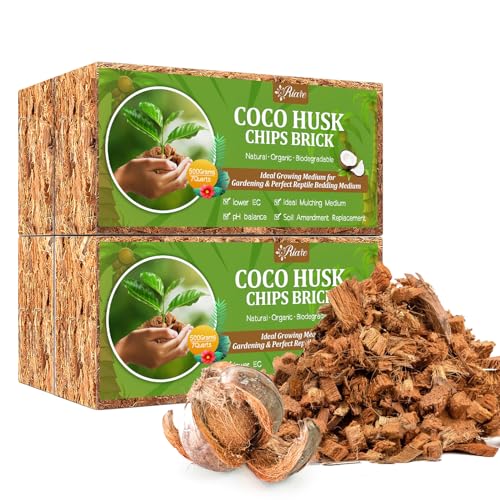
The four-pack option from Riare doubles the substrate quantity, offering greater value for larger setups or ongoing projects. Each brick remains consistent with the 8 x 4 x 1.8 inch size and 1.1 lb weight, expanding into about 7 quarts per brick. The low EC and balanced pH help maintain healthy root oxygenation while supporting nutrient uptake. This is a practical choice for greenhouse benches, community gardens, or multiple indoor pots where consistent substrate performance is desired.
Buying Guide
Choosing the right coconut bark or coco coir substrate involves balancing structure, moisture management, and plant needs. Consider these key purchase considerations:
- Expansion capacity: Most bricks expand to about 7 quarts when hydrated. If you have large pots or project-scale setups, multi-brick options or larger bricks may be more economical and convenient.
- EC and pH balance: Low EC and balanced pH support healthier root systems and nutrient uptake. Check product specifications to ensure compatibility with your plant types, especially sensitive orchids or tropicals.
- Storage and handling: Compressed bricks save space and ease transport. Ensure you have a container or tray to accommodate swelling bricks without creating a mess or waste.
- Air circulation vs. moisture retention: A substrate that provides good aeration reduces root rot risk, while adequate moisture retention helps reduce frequent watering—choose a blend that matches your climate and watering schedule.
- Compatibility with additives: Many users mix coco chips with perlite, charcoal, pumice, or soil to fine-tune drainage and aeration. Plan your mix based on plant needs—seedlings often benefit from lighter mixes, while larger plants may require more moisture retention.
- Organic and sustainable claims: If you prioritize organic gardening, verify certifications and OMRI listings where applicable. This can influence long-term soil health and crop quality in edible gardens.
In summary, coconut bark and coco coir substrates deliver a breathable, renewable option for diverse plants. For beginners, bricks that expand easily and offer balanced pH are a forgiving starting point. For experienced gardeners, blends and larger quantities offer flexibility to craft customized growing media suited to specific plant families, including tropicals, ornamentals, and edible crops. Always start with a small batch to observe how your plants respond before scaling up.