The best chemical weed killers quickly reduce unwanted growth around driveways, sidewalks, and garden beds. This guide compares five top options to help you choose based on safety, effectiveness, and where you plan to use them. Ideal buyers include homeowners tackling tough weeds, landscapers needing fast results, and those seeking products with pet- and family-safety claims. Below is a quick, buyer-friendly summary of the highlighted products.
| Product | Best For | Key Benefit |
|---|---|---|
| Natural Elements Weed Killer | Families and pet-friendly lawns | All-natural, vinegar-based and safe around kids/pets |
| Roundup Weed and Grass Killer₄ | Large areas, flower beds, and landscapes | Fast-acting, rainproof in 30 minutes |
| 41% Glyphosate Super Concentrate (VIVIPOOOL) | Driveways, sidewalks, and fences | High coverage; broad-spectrum systemic formula |
| Roundup Weed & Grass Killer₄ Refill | Large-volume maintenance | Same active ingredient, convenient refill |
| ECO Garden PRO Organic Vinegar Weed Killer | Vinegar-based, pet/kid-safe needs | Organic formula with fast results and safety focus |
Natural Elements Weed Killer | Pet Safe, Safe Around Children

Selected for homes seeking a safer, natural approach to broadleaf weeds and grasses around lawns, gardens, and landscape beds. The product is described as all-natural, with no synthetic herbicides, and derived from vinegar. It’s best for users prioritizing family and pet safety, though it will kill grass if applied directly to lawns. This makes it ideal for mulched areas, rock beds, and garden borders where weed suppression is needed without harsh chemical exposure.
Who it’s best for: Homeowners with children or pets who want a safer, non-synthetic option for weed control around ornamental beds and pathways.
Why selected: It aligns with safer-use expectations and provides broad weed coverage without synthetic chemical risk. Use caution around lawns to avoid damaging turf.
Limitation: Not suitable for direct lawn treatment if the goal is to kill grass; use on non-turf areas only.
Roundup Weed and Grass Killer₄ with Pump ‘N Go

Best for mixed landscape settings and garden beds where fast weed suppression is needed. This product targets tough broadleaf weeds and grasses to the root, delivering visible results within hours and offering rainproof performance in about 30 minutes. It’s suitable for planting after 1 to 30 days post-application, per the product booklet.
Who it’s best for: Home gardeners and landscapers tackling persistent weeds in beds, near trees, or along walkways who want rapid, convenient results.
Why selected: Provides quick, broad-spectrum control with a user-friendly pump sprayer format for spot-treating or larger areas.
Limitation: Might affect nearby desirable plants if misapplied; ensure accurate targeting and avoid drift onto desirable vegetation.
41% Glyphosate Super Concentrate Weed & Grass Killer (1 Gallon)
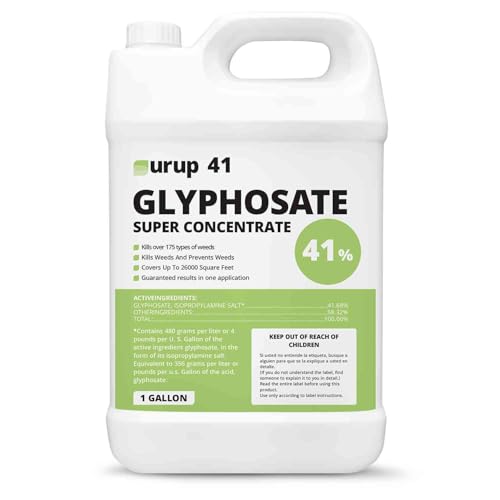
Recommended for large outdoor areas needing broad weed and grass control. This concentrate claims to kill a wide variety of weeds, reaching down to the roots to prevent regrowth. It covers substantial ground—up to 26,000 square feet. Effects typically begin to appear within 5-8 days, with complete die-off in 9-15 days.
Who it’s best for: Property owners managing expansive driveways, sidewalks, or fenced perimeters.
Why selected: High coverage and fast root-level action make it a practical choice for large, open spaces requiring thorough weed suppression.
Limitation: As a strong systemic herbicide, it is less suited for areas where there are many desirable plants nearby; use with careful placement.
Roundup Weed & Grass Killer₄ Refill

Best for ongoing weed control in multiple locations. This refill uses the same effective active ingredient as the spray version and allows for convenient, repeated application around flower beds, trees, driveways, and walkways. It shares the same rapid rainproofing and short-to-medium post-application timeframe as the original product.
Who it’s best for: Homeowners who already own a Roundup application system or want a simple way to maintain weed control across large hardscapes and plant borders.
Why selected: Compatibility with existing applicators makes it a practical continuation option for users who already rely on Roundup products.
Limitation: Like other glyphosate-based products, avoid treating desirable plants and be mindful of runoff into gardens or water features.
Spruce Weed Killer Spray

Best for targeted, spot-treat weed control around paths, driveways, and mulched beds. The product uses a water-based formula with essential oils and surfactants designed to dehydrate weed cells, leading to visible results within about one hour. It’s suitable for a variety of broadleaf and grassy weeds.
Who it’s best for: Gardeners and property managers seeking quick, site-specific weed control with a focused application method.
Why selected: The ready-to-use spray is effective for precise weed removal without the need for mixing concentrates.
Limitation: The formula relies on direct contact and may require repeat applications for deeply entrenched weeds.
ECO Garden PRO Organic Vinegar Weed Killer
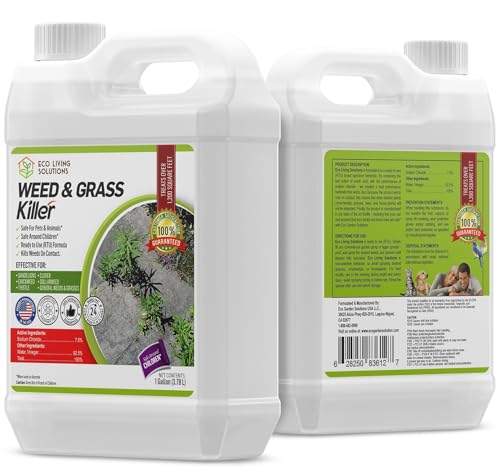
Chosen for buyers seeking an organic, vinegar-based option with safety emphasis. This RTU formula targets weeds and grasses, offering rapid results within 24 hours. It’s designed for residential, commercial, and industrial settings, including sidewalks, driveways, mulch beds, and parking lots. It notes safety for pets, children, bees, fish, and livestock when used as directed.
Who it’s best for: Property managers and homeowners who prefer an organic-looking solution with a focus on general safety and quick action.
Why selected: The organic formulation and explicit pet/kid safety angle provide a compelling choice for risk-conscious buyers.
Limitation: Vinegar-based products can be less systemic and slower to kill deeply rooted perennials compared with chemical herbicides.
Buying Guide
What to consider when choosing a weed killer:
- Safety priorities: If pet and child safety is paramount, weigh all-natural or organic options and read product labels for warnings and usage directions.
- Area coverage: Calculate the square footage to determine how much product you need and whether concentrates or ready-to-use formulas are best for your space.
- Target weeds: Some products are broad-spectrum and fast-acting, while others work best on specific weed types or are better for spot treatments.
- Application method: Sprayers, concentrates, and ready-to-use formulas differ in ease of use and precision. Choose based on your lawn layout and ability to apply accurately.
- Impact on desirable plants: If nearby ornamentals or turf are valued, select products with lower drift risk and plan applications away from those areas.
- Timing and regrowth: Expect weed yellowing or die-off timelines. Some products require reapplication for persistent weeds or seasonal regrowth.
- Environmental considerations: Evaluate runoff potential, stormwater considerations, and whether the product is labeled for your region and weather conditions.
Frequently Asked Questions
- What is the safest weed killer for pets and children?
- Can I spray weed killer on my lawn?
- How long does it take for weeds to die after application?
- Do I need to reapply after rain?
- Can I mix different weed killers?
- Is glyphosate safer than vinegar-based products?
The safest option depends on labeling and your use case. Look for products marketed as pet- and kid-safe, and follow all protective gear and application instructions. Consider organic or vinegar-based formulas for lower risk to household members and wildlife when used as directed.
Only if the label specifies lawn-use or selective lawn application. Many products are designed for pathways, drives, and beds and may kill grass if applied to lawns. Use targeted treatments to protect turf.
Most products show results within hours to days. Some herbicides begin yellowing in 5–8 days, with complete kill in 9–15 days or longer, depending on weed type and formulation.
Rainfast times vary by product. Some claim rainproof within 30 minutes, while others may require reapplication if heavy rainfall occurs before the product has set. Always follow product-specific instructions.
Mixing is generally not recommended unless explicitly stated by the manufacturer. Mixing can cause chemical interactions, reduce effectiveness, or create unsafe conditions.
Glyphosate-based products often provide stronger, longer-lasting control for tough weeds and larger areas, but they carry different safety considerations. Vinegar-based products tend to be safer for households but may require more frequent applications and have limited systemic action.