Looking for affordable, fast-growing privacy hedges that work in American lawns and gardens? This guide highlights five budget-friendly options that establish dense screens quickly, block noise, and add year-round cover. Each pick is suited for buyers seeking rapid privacy, wind protection, or a natural fence without high cost. Read on to see which hedge best fits your space, climate, and maintenance preferences.
| Product | Type | Best For |
|---|---|---|
| Green Wall Willow Privacy Tree Cuttings | Willow Cuttings | Fast privacy screen, beginners |
| Hybrid Willow Tree Plants | Austree Hybrid Willows | Dense privacy hedge, quick shade |
| Natural Privacy Fence – Willow Cuttings | Willow Cuttings | Long privacy screens, windbreaks |
| Leyland Cypress Trees (20 Pack) | Cypress Seedlings | Evergreen year-round privacy |
| Thuja Occidentalis Seeds | Arborvitae Seeds | Low-cost, scalable evergreen wall |
Green Wall Willow Privacy Tree Cuttings to Grow

Best for fast privacy screens and easy planting. Green Wall Willow cuttings root quickly and establish a dense barrier, ideal for homeowners wanting a natural wall that forms in a single growing season. It is suitable for beginners and experienced gardeners alike who prefer a straightforward, low-maintenance option. Plant cuttings 2-3 feet apart to build a continuous hedge with minimal effort.
Why selected: Ultra-fast growth, dense foliage, and simple soil integration make this a practical, budget-friendly hedging choice. It supports wind protection and noise reduction as the screen fills in. A potential limitation is that willow hedges can require regular maintenance to maintain a uniform shape, especially in harsh climates.
Hybrid Willow Tree Plants for Growing

Best for a fast-growing privacy hedge with a tall, dense silhouette. Austree Hybrid willows are advertised to reach about 12 feet per year, forming a natural barrier that can be trimmed to stay lower or kept tall for privacy. These trees offer good shade and air filtration, and they can be shaped as you please to fit your landscape. Slight caution: rapid growth may require pruning schedules to maintain desired width and prevent overgrowth near structures.
Why selected: They deliver impressive annual growth and a distinctive willow look, making them a standout privacy solution when space allows. Pick this if you want a dramatic hedge fast and are comfortable with occasional pruning to manage shape and height.
Natural Privacy Fence – 60 Ft Long Willow Hedge
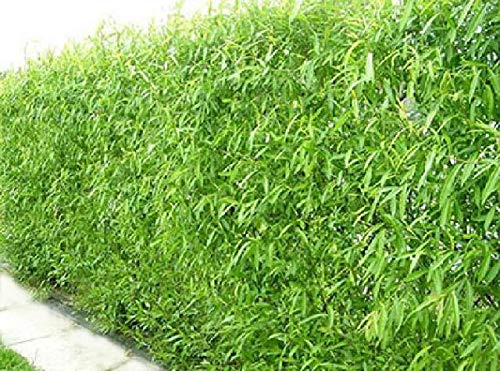
Best for a long, continuous privacy barrier. This product bundles 20 willow cuttings designed to create a 60-foot privacy fence, offering quick coverage for property borders, noise reduction, and screening. It’s a practical solution for larger yards or boundary lines, where buyers want a fast, cohesive screen rather than individual trees. Caution: coverage depends on planting density and proper spacing, so follow the included planting guidance for best results.
Why selected: The long-span design provides instant visual privacy for larger spaces, and willows generally adapt well to many soil types. Choose this if you need a rapid, expansive screen rather than multiple small clusters.
Fast Growing Privacy or Shade Trees — Hybrid Poplar Tree Cuttings

Best for very rapid privacy or shade expansion. Hybrid poplar cuttings are promoted as very fast-growing, suitable for windbreaks, privacy hedges, and landscaping. They can quickly transform a bare area into a tall, shielding screen. A practical limitation is that poplars can be prone to certain pests or environmental stress in extreme conditions, so ongoing care is advisable.
Why selected: If the goal is the fastest possible screen and you have space, choose poplar cuttings for rapid results. They are better for buyers who prioritize speed over a compact, low-maintenance hedge.
Leyland Cypress Trees — 6-12″ Tall, 20 Pack

Best for evergreen privacy with year-round coverage. Leyland Cypress seedlings offer rapid growth and dense, evergreen foliage, making them a classic hedge choice. They are suitable for all-season privacy screening and work well in colder or mixed climates. Limitation: early growth may be inconsistent in very challenging soils, requiring proper soil preparation and watering.
Why selected: A reliable evergreen option that provides consistent privacy across seasons. Choose Leyland Cypress if you want a traditional evergreen hedge with strong screening and straightforward maintenance.
Murray Cypress Trees — 6-12″ Tall

Best for dense privacy with a refined look. Murray Cypress trees provide dense, feathery evergreen foliage and rapid growth, forming an effective privacy screen that blocks neighbors and views. They are suited for moderate to larger landscapes and climate zones that support evergreen growth. Caution: spacing is important to avoid gaps as the hedge forms.
Why selected: If you want a refined, feathery texture in an evergreen hedge that grows quickly, these are a solid option. Choose this when you value foliage texture as part of your privacy barrier.
KVITER 50 Thuja Tree Seeds

Best for budget-conscious buyers who want scalable evergreen privacy. KVITER seeds offer a low-cost option to establish arborvitae trees, which, once mature, form tall, dense screens suitable for property borders and backyard privacy. They are versatile, tolerating full sun to partial shade and various soils. Limitation: seeds require patience and proper germination care to ensure strong establishment.
Why selected: If you want a cost-effective route to a long-term evergreen hedge, seeds let you grow a customized privacy wall over time. Choose this for a long-term, scalable project with budget control.
Buying Guide: Fast-Growing Privacy Hedge Essentials
What space and climate considerations matter?
Evaluate your available space, soil type, and local climate. Some species grow quickly but require ample room to spread, while others stay compact with proper pruning. Consider soil drainage, sunlight exposure, and winter hardiness to match the hedge to your region.
Which hedge type fits your maintenance preference?
For low maintenance, choose evergreen conifers like Leyland Cypress or arborvitae seed options that naturally hold their shape. If you’re open to pruning, willows and poplars offer dramatic early growth but may need regular shaping to maintain a neat hedge line.
Fast growth vs. long-term stability?
Fast-growing options deliver quick privacy, but some may require more frequent care and pruning. Slower-growing but stable evergreens can provide a durable screen with less ongoing trimming. Weigh initial speed against long-term maintenance needs when selecting.
Soil and watering requirements
Most willow and poplar options tolerate average garden soils, but good moisture and occasional feeding help establish strong roots. Leyland and arborvitae generally appreciate consistent moisture during establishment. Ensure good drainage to prevent root issues.
Planting density and layout tips
For hedges, spacing is critical. Willows and poplars can be placed closer for faster screen build but may become crowded. Leyland Cypress should be spaced to allow air circulation and reduce disease risk. Use stakes and string lines to maintain a straight hedge row during establishment.
Maintenance plan and pruning schedule
Set a seasonal pruning plan. Early spring trimming helps young hedges fill in, while late-summer shaping can refine the silhouette. Always follow local guidelines to avoid stress or disease.
FAQ: Quick Answers for Hedge Buyers
- Which hedge grows the fastest? Willow-type cuttings and hybrid poplars are among the fastest-growing options, with many claiming several feet per year under good conditions.
- Are these evergreens or deciduous? Leyland Cypress and arborvitae seeds produce evergreen hedges. Willows and poplars are typically deciduous or semi-evergreen depending on climate.
- Do I need to plant a hedge all at once? For continuous privacy, plant in a staggered line with consistent spacing and fill gaps as you go. Long screens can require more initial planning.
- Can I use these for noise reduction? Dense, closely planted hedges help dampen noise, especially when the screen is thick and continuous.
- What maintenance should I expect? Expect pruning in spring or early summer for fast-growing species, plus occasional mulching and irrigation during establishment.
- Are seeds a good option for hedges? Seeds are a cost-effective route but require patience for germination and establishment; seedlings can be quicker to establish in some climates.