Choosing the right soil amendment can improve drainage, aeration, and nutrient availability for a wide range of plants. Charcoal-based amendments, including biochar and horticultural charcoal, are designed to create light, porous substrates that reduce soil compaction and regulate moisture. The following selections focus on natural, activated, and OMRI-listed options that suit indoor pots, terrariums, bonsai, orchids, and succulent mixes. The list below highlights five products that balance performance with easy integration into common potting soils.
Summary of selected products
| Product | Brand | Typical Use | Key Benefit |
|---|---|---|---|
| Legigo 2 QT Horticultural Charcoal | Legigo | Indoor plants, terrariums, orchid and bonsai soils | Improved drainage and aeration; lightweight and easy to mix |
| Char Bliss (8 Qts) Biochar | PlantOnix | Potted plants, garden soils, mixes | Excellent nutrient retention and carbon sequestration |
| Legigo 4QT All Natural Charcoal | Legigo | Terrarium, bonsai, succulent mixes | Activated hardwood charcoal for soil conditioning |
| Harris Horticultural Charcoal 2qt | HARRIS | Terrariums, houseplants | Boosts soil carbon, nutrient retention, microbial life |
| Sukh Horticultural Charcoal 1Qt | Sukh | Indoor plants, potting soil | Temperature regulation, water and nutrient storage |
Legigo 2 Qt Horticultural Charcoal
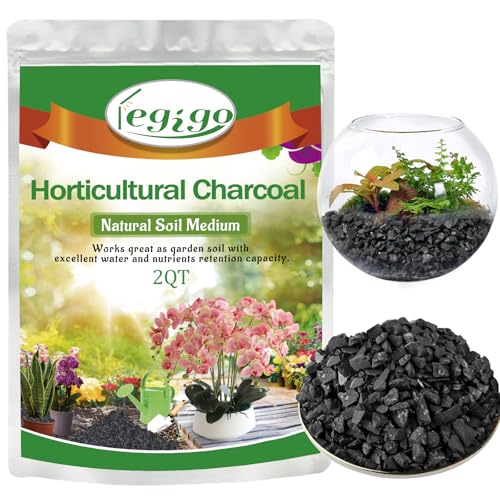
Legigo’s natural hardwood horticultural charcoal is designed as a lightweight soil amendment that enhances drainage and prevents soil compaction. It is suitable for orchid, bonsai, succulent, and general potted plant soils. The material is sieved into a 3-7 mm size range, offering a balance between porosity and structural support for roots. When mixed into soil, it helps keep the medium light, improving air flow around roots and supporting healthier root systems over time.
Key features include moisture drainage, easy mixing into existing potting mixes, and increased soil temperature regulation that can aid seed germination. It works well with perlite or other aeration media to create a well-draining substrate for a variety of houseplants. This product is especially helpful where compacted soils have limited root oxygen, such as dense orchid mixes or terrarium soils.
Char Bliss (8 Qts) Biochar For Plants

PlantOnix Char Bliss is an organic, OMRI-listed biochar soil conditioner derived from ethically sourced wood and tree trimmings. It offers enhanced nutrient availability, soil fertility, and water retention while supporting carbon sequestration. With high nutrient-holding capacity, the biochar acts as a long-term reservoir for essential elements, reducing the frequency of fertilizer applications for both indoor and outdoor plants.
The product’s nutrient retention helps prevent waterlogging and nutrient runoff, enabling more consistent plant uptake. It also contributes to sustainable gardening practices by returning carbon to the soil for decades. This option is suitable for potting soils, garden beds, and various soil mixes, particularly where moisture control and nutrient stability are priorities.
Char Bliss (16 Qts) Biochar For Plants

This larger Char Bliss batch from PlantOnix is another OMRI-listed biochar option, ideal for bigger pots, raised beds, or batch mixes for multiple containers. Like its smaller counterpart, it emphasizes nutrient retention and carbon sequestration, making it a practical choice for gardeners who regularly amend soils in several planters or larger container gardens. The extended surface area of the biochar enhances microbial habitat and helps stabilize soil structure, particularly in soils prone to compaction.
Harris Horticultural Charcoal, 2qt
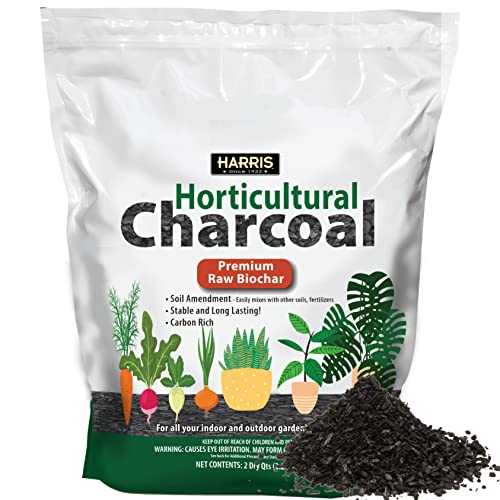
HARRIS offers a premium, plant-derived biochar designed to increase soil carbon, nutrient content, and moisture retention. The product is simple to use—blend one part biochar with nine parts potting soil to improve texture and water dynamics. It supports beneficial microbial life and can be particularly advantageous for terrariums and indoor plant setups where soil health and moisture balance are critical. The approach is straightforward and compatible with common potting mixes.
Sukh Horticultural Charcoal For Plants

Sukh’s 1-quart horticultural charcoal provides a compact, easy-to-mix option for indoor plants, succulents, and terrariums. It helps regulate soil temperature and enhances water and nutrient storage within the root zone. The charcoal’s porous structure also improves soil aeration, which supports healthy root respiration and reduces the risk of root rot in moisture-sensitive setups. This size is ideal for smaller potted plants or for trialing charcoal in a single planter before scaling up.
Buying Guide: Charcoal For Plant Soil
- Activation level: Activated charcoal offers stronger adsorption properties and improved longevity in soil compared to standard horticultural charcoal. For long-term soil conditioning, activated forms are often preferred.
- Origin and sustainability: Look for products derived from sustainable hardwoods or other natural materials. OMRI-listed biochar ensures suitability for organic gardening and reduces concerns about contaminants in edible or ornamental plants.
- Particle size: Smaller particles mix more readily with potting soil and compost, but overly fine material can affect drainage. A 3-7 mm range, as found in some products, tends to balance porosity with soil structure.
- Application rate: For indoor containers, start with a small percentage (about 5-15% of the total soil volume) and monitor moisture and plant health. Larger volumes work well in terrariums or larger pots where moisture regulation is critical.
- Moisture management: Charcoal holds both moisture and nutrients; thus, combining it with perlite, vermiculite, or sphagnum can tailor drainage and aeration to specific plant needs.
- Soil compatibility: Charcoal works across various substrates—orchid mixes, bonsai soils, cactus and succulent soils, and standard potting mixes. Evaluate plant type and container drainage when selecting a product.
- Environmental impact: Carbon-sequestering benefits are a consideration for sustainability-minded gardeners. Biochar contributes to long-term soil carbon storage, aligning with eco-friendly cultivation practices.
- Safety and labeling: For edible or medicinal plants, verify OMRI listing and any safety notes on usage. Avoid excessive application that could disrupt nutrient balance in sensitive crops.
In summary, charcoal soil amendments can enhance drainage, aeration, and nutrient retention, supporting healthier root systems across a range of houseplants, terrariums, and garden beds. The products listed above offer a spectrum of options from small trial-size to larger, ready-to-mix batches. When selecting, consider particle size, activation level, sustainability, and compatibility with your plant type to optimize outcomes without overhauling your entire soil mix.