This guide highlights top carbon fiber-informed tree climbing spikes and closely related high-performance options commonly used by arborists, fruit pickers, and outdoor enthusiasts. Each pick balances strength, comfort, and weight to help climbers move efficiently while maintaining safety. The selections emphasize models with carbon fiber or carbon-composite relevance, standout padding, secure straps, and robust load capacities suitable for diverse tasks from pruning to fruit harvesting.
| Product | Brand | Approx. Load Capacity | Notes |
|---|---|---|---|
| Notch Gecko Carbon Fiber Climbers | Notch | 350 lbs | Ultralight, quick-connect straps |
| VEVOR Tree Climbing Spikes Set | VEVOR | 350 lbs | Aluminum/steel combination with pads |
| Xeoca Tree Climbing Spikes | Xeoca | 350 lbs | Alloy steel, weather-resistant |
| Poakkus Tree Climbing Spikes | Poakkus | 350 lbs | Alloy structural steel, padding |
| FORESTER Climbing Spikes | FORESTER | Not specified (robust) | Aluminum frame, long gaffs |
Notch Gecko Carbon Fiber Climbers

The Notch Gecko Carbon Fiber Climbers deliver ultralight performance with a premium carbon fiber construction. Certified to meet safety standards, this model emphasizes a 350 lb weight capacity while keeping the overall weight at a minimum. The quick-connect lower straps and a 4-inch Velcro top strap enable rapid, secure fitting, which is valuable for professionals who need to adjust gear quickly during site work. Upper body ergonomics are complemented by an adjustable height range to fit a variety of leg lengths and boot sizes. This combination supports prolonged use with reduced leg fatigue.
Designed for practical arborist work, the Gecko system prioritizes ease of use and reliability. The lower straps allow fast attachment, while the overall form ensures stable footing during climbs. Built to withstand outdoor conditions, it balances strength with a lightweight feel, which can help improve climb efficiency without sacrificing safety. The carbon fiber focus also contributes to reduced fatigue on long sessions.
VEVOR Tree Climbing Spikes (Aluminum)

These VEVOR tree climbing spikes pair a light aluminum structure with a high load capacity of 350 lbs. ASTM-F887 certified, they resist corrosion and maintain their shape under stress. Comfort is enhanced by soft EVA padding that cushions the legs, helping reduce fatigue during extended climbs. The setup uses a dual-strap system with nylon fasteners on the upper part and TPU straps on the lower part, which improves security and durability through repeated use. Overall, the design emphasizes stability, grip, and long-term comfort for arborists and hobbyists alike.
In practice, the VEVOR kit offers a complete solution for tree work, including the necessary strap systems to secure the climber’s legs and attachments. The TPU straps resist abrasion and tearing, while the nylon components provide reliable adjustment. This combination balances safety with ease of use, making it suitable for fruit picking, hunting, or general tree maintenance where quick, secure attachment matters most.
VEVOR Tree Climbing Spikes Set
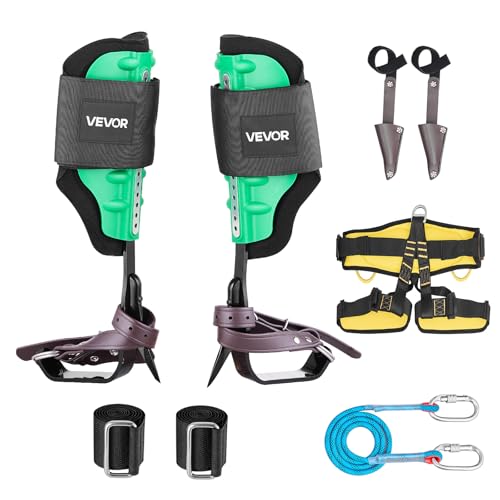
This VEVOR set provides a complete climbing solution with 42CRMO steel for the frame, delivering a sturdy 350 lb load capacity. It includes a security harness, a pair of climbing spikes, hook-and-loop straps, a utility rope, and two spike protectors for added safety during storage and transport. The padding remains soft with EVA material to cushion the legs, and molded thigh plates support longer climbs by distributing weight more evenly. It’s explicitly designed for positioning and utility work rather than primary fall protection, underscoring safe practice in arborist tasks.
Users value the integrated kit for its all-in-one practicality. The combination of protection gear with the spikes reduces the need to source separate items, while the heavy-duty materials ensure a durable setup for frequent climbs. The set aims to deliver stable performance for fruit picking, hunting, or general tree care, with a focus on comfort and consistent fit during movement.
Xeoca Tree Climbing Spikes

The Xeoca Tree Climbing Spikes emphasize heavy-duty alloy steel construction designed for 350 lb load capacity. The gear pairs corrosion resistance with a weather-resistant strap system, aiming to deliver reliable performance in varied outdoor conditions. Their design includes adjustable, TPU-backed straps that secure the ankles and legs, promoting a snug fit that remains secure through movement. Aimed at professional climbers, these spikes balance rigidity with comfort for longer work sessions.
What sets Xeoca apart is its straightforward, durable build that emphasizes structural strength. While not carbon fiber, its emphasis on solid steel construction and dependable padding supports a secure foothold during climbs. It suits fruit picking, tree maintenance, and other tasks where robust, repeatable performance is paramount.
Poakkus Tree Climbing Spikes Kit
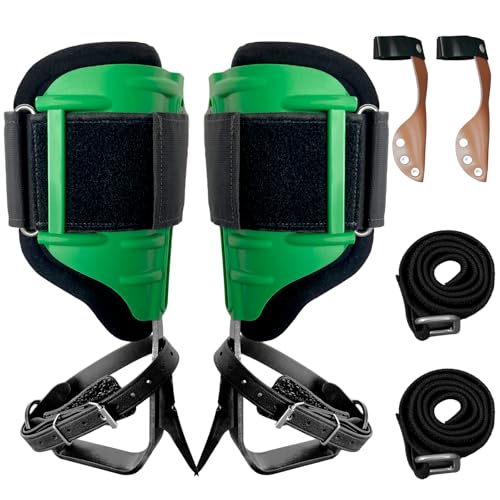
Poakkus offers a high-strength alloy structural steel spike system with a 350 lb load capacity and corrosion resistance. The kit includes upper-and-lower strap solutions with nylon fasteners and TPU components to bolster a secure fit. EVA padding provides shock absorption to reduce fatigue during extended climbs. The set’s design emphasizes a practical, all-in-one approach for climbers who need reliable gear for pruning, fruit harvesting, or utility work in trees.
Notable is the combination of steel construction with adjustable fit features, making it adaptable to different leg sizes and climbing styles. The included spike protectors help preserve the gear, while the padding and straps are designed for durability in varying climates and terrains.
FORESTER Climbing Spikes

FORESTER Climbing Spikes feature a lightweight aluminum frame paired with long gaffs for enhanced tree penetration. The kit includes adjustable straps to secure the gear to boots or shoes, providing a versatile solution for fruit picking, gardening, or climbing tasks. The one-size design aims to fit a wide range of climbers, promoting accessibility for both men and women climbers. The emphasis on ease of use makes it a practical option for casual users and professionals alike.
Users should note that, while aluminum offers weight savings, stiffness and padding quality influence comfort during longer climbs. Forester’s approach prioritizes portability and simple setup, making it suitable for shorter sessions or occasional tree work where quick readiness matters more than maximum load capacity.
Buying Guide
- Weight vs. strength: Carbon fiber-inspired designs emphasize lightness. If carbon fiber is central, confirm material specifics and real-world weight savings versus traditional metals.
- Load capacity: Most models list 350 lbs as a threshold. Consider your body weight plus gear, plus safety margins, especially for long climbs or awkward terrain.
- Strap system: Look for TPU straps for durability under wear, and nylon fasteners for secure fit. Ensure straps are adjustable to fit your leg size and boot type.
- Padded comfort: EVA padding helps reduce leg fatigue. For extended usage, prioritize models with thicker padding and well-shaped thigh plates.
- Safety and usage notes: Some kits are positioned for positioning and utility work, not primary fall protection. Always follow manufacturer guidelines and local safety regulations.
- Materials and corrosion resistance: Aluminum and steel variants offer different trade-offs in weight, rigidity, and longevity. Consider climate and frequency of use.
- Include accessories: Kits with spike protectors, harnesses, ropes, or extra straps provide a complete package and simplify setup.
In selecting tree climbing spikes, users should weigh the benefits of carbon fiber-like lightweight performance against the proven durability of alloy steels and aluminum. Buying choices often hinge on the balance between ease of use, long-term comfort, and safety features including secure strap systems and cushioning. Consider the typical climbing duration, tree type, and environmental conditions to identify the option that best aligns with your workload and comfort preferences.