Looking for an effective bug repellent that protects vegetable plants without harming your garden or family? This guide highlights pet- and family-friendly, plant-based options that work well on vegetables, herbs, and ornamentals. Each product is evaluated for indoor and outdoor use, handling common pests like aphids, gnats, spider mites, and more. Whether you’re a container gardener, raised-bed grower, or indoor plant enthusiast, these picks offer clear advantages and practical limitations.
The following table summarizes five top choices, focusing on plant-safe formulas, application ease, and pest coverage. Use it as a quick reference to compare what matters most to you—safety, convenience, or broad-spectrum control.
| Product | Best For | Why It Stands Out |
|---|---|---|
| Mighty Mint Peppermint Oil Insect Repellent Spray | Vegetable gardens, homes with pets | Strong peppermint-based formula; indoor/outdoor versatility; low fumes; plant-friendly when used as directed |
| NATRIA Insecticidal Soap for Plants | Houseplants and garden crops | Ready-to-use, targets aphids, mites, whiteflies; approved for organic gardening |
| BioAdvanced Organics Brand Insect Killer for Houseplants | Indoor plants and home gardens | OMRI-listed; quick knockdown of common indoor pests; suitable for organic setups |
| Kate’s Garden Plant Spray for Indoor Plants | Indoor plants and home gardens | Natural ingredients with peppermint and rosemary oils; non-toxic and pet-friendly |
| Glovv Natural Mosquito Repellent for Outdoor Patios | Outdoor patios and garden seating | Citronella-based for outdoor use; supports family-friendly outdoor time |
Mighty Mint Peppermint Oil Insect Repellent Spray
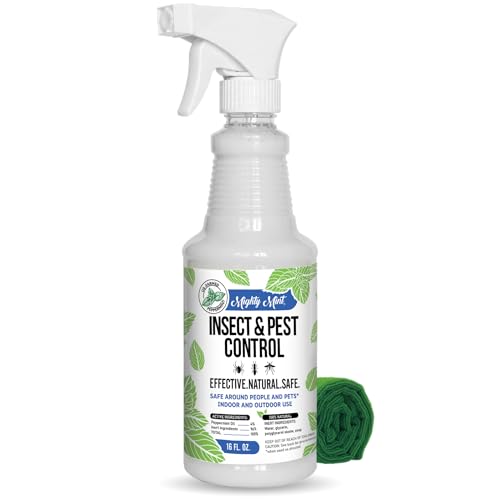
Mighty Mint uses an extra-concentrated peppermint oil formula designed for both indoor and outdoor use. The product claims a pet-friendly and family-safe composition when applied as directed, making it a practical choice for households with dogs, cats, and children. Best for gardeners seeking a natural repellent that deters common pests such as spiders, ants, and roaches without heavy chemical odors. A potential limitation is surface staining risk if misapplied near delicate finishes; follow prep instructions and test on inconspicuous surfaces first.
Who it’s best for: Homeowners who want a versatile, plant-safe spray for entryways, baseboards, patios, and garden borders. Why selected: strong plant-based deterrent with indoor/outdoor flexibility and low-to-no harsh fumes.
Note: Avoid spraying directly on edible plant surfaces without confirming label directions. Reapply as needed to maintain deterrence after rain or heavy dew.
NATRIA Insecticidal Soap for Plants

Natria Insecticidal Soap is a ready-to-use spray formulated for indoor and outdoor plants. It targets pests such as aphids, mealybugs, mites, and whiteflies by suffocation and surface disruption. The product is highlighted for organic gardening compatibility, allowing use up to harvest in some cases, depending on label directions. Best for: gardeners seeking an easy, spray-on solution that works on a range of pests with minimal residue. Limitation: efficacy may vary with heavy infestations; reapplication and mechanical control may be necessary for severe cases.
BioAdvanced Organics Brand Insect Killer for Houseplants

BioAdvanced Organics Brand Houseplant Insect Killer is an OMRI-listed option designed for organic gardening. It targets a broad spectrum of pests including aphids, mealybugs, scale, whiteflies, and spider mites. Best for: indoor garden setups or mixed indoor/outdoor plant collections where organic labeling is preferred. The product is positioned as a fast-acting solution, with users seeking quick control between plantings. Limitation: results may vary by pest type; follow directions for safe use around edible crops and avoid over-application near sensitive plants.
Kate’s Garden Plant Spray for Insects

Kate’s Garden Plant Spray emphasizes indoor use with ingredients featuring peppermint and rosemary oils. The formula aims to deter gnats, fungus gnats, and other common indoor pests. Best for: indoor houseplants or small-space gardens where natural, non-toxic options are prioritized. Why selected: a pet-safe, non-toxic approach that aligns with low-risk fungal and insect control. Caution: some sensitive plants or surfaces may show residue; apply sparingly and test on a small area first.
Glovv Natural Mosquito Repellent Outdoor Sticks

Glovv mosquito repellent sticks use citronella and other natural essential oils to create a protective outdoor zone around patios and gardens. Best for: outdoor gatherings or gardening sessions where enhanced mosquito deterrence is desired without synthetic repellents. Advantage: simple, low-odor outdoor protection. Limitation: burn time and efficacy can be influenced by wind, requiring several sticks to maintain consistent coverage.
Buying Guide
Key considerations help tailor a bug repellent strategy to your vegetable garden:
- Safety for edible plants: Look for labels that specify use around vegetables and herbs or are approved for organic gardening to avoid residues on edible crops.
- Indoor vs outdoor suitability: Choose products designed for the environment where your vegetables reside, as some formulas excel indoors but may be less effective outdoors.
- Active ingredients and pest targets: peppermint oil, insecticidal soaps, and plant essential oils differ in how they work—some deter, others kill on contact. Align with your pest profile for best results.
- Application method and frequency: Ready-to-use sprays are convenient, but heavy infestations may require more frequent applications or integration with physical controls like traps or pruning.
- Safety for pets and children: Prioritize formulas labeled pet-friendly or family-safe, following all directions to minimize exposure during and after spraying.
- Impact on beneficial insects: Consider integrated pest management by limiting broad-spectrum applications during flowering or near pollinators when possible.
How to use plant-based repellents effectively
- Test a small area first to check for phytotoxicity or residue on edible surfaces.
- Apply during cooler parts of the day to reduce evaporation and drift.
- Avoid spraying on blossoms if pollinators are active in your garden.
- Combine with mechanical controls, such as removing heavily infested leaves, to improve results.
- Reapply after rain or heavy dew as directed on the label.
FAQ
- Are plant-based repellents safe for edible vegetables? Yes, when used as directed; check label guidance for harvest intervals and application areas.
- Can I use these products indoors and outdoors? Many are designed for both settings, but verify each product’s intended use on the label.
- Will these kill all pests in my vegetable garden? Some are designed for deterrence and controlling soft-bodied pests; severe infestations may require additional methods.
- Do these products affect beneficial insects? Certain formulations can impact non-target insects; time applications to minimize disruption to pollinators.
- How often should I reapply? Reapplication intervals depend on the product; follow label directions and monitor pest activity.
- Are these products organic or pesticide-free? Some options are OMRI-listed or labeled for organic gardening; verify product claims on the label.