Gardens thrive when pollinators and beneficial insects have shelter and nesting sites. The following selection highlights durable, natural, and insect-friendly bug hotels designed to attract bees, butterflies, ladybugs, lacewings, and other garden allies. Each option emphasizes mulch, bamboo, pine cones, and wood materials that blend with outdoor spaces while supporting biodiversity. Explore five well-regarded picks to boost pollination, plant health, and natural pest control in American gardens.
| Product | Brand | Highlights |
|---|---|---|
| Lulu Home Wooden Insect House (Hanging) | Lulu Home | Versatile habitat for bees, butterflies, ladybirds; multiple entry points |
| Navaris Bug Hotel and Bee House Kit | Navaris | Large, easy-to-clean design; supports diverse insects; humane approach |
| Lulu Home Wooden Insect House With Stake | Lulu Home | Two mounting options; natural, weather-resistant finish; varied interiors |
| SparkJump Premium Bug Hotel Kit | SparkJump | DIY cedar construction; educational for kids; ready-to-hang |
| Wildlife Friend Insect Hotel | WILDLIFE FRIEND | All-year habitat; rain protection; natural wood with metal roof |
Lulu Home Wooden Insect House, Hanging Insect Hotel
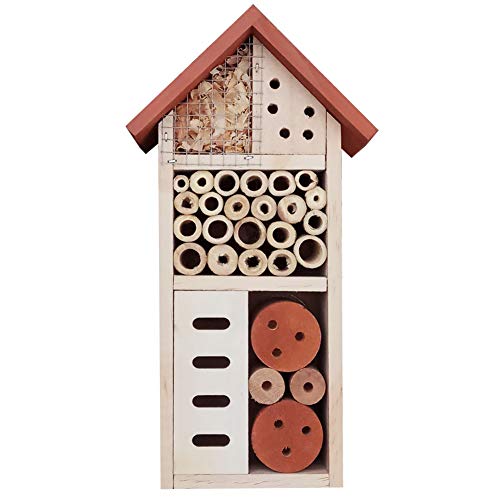
The Lulu Home hanging insect house provides shelter for bees, butterflies, ladybirds, and other beneficial insects. Its multi-chamber design uses varied materials to support diverse species, encouraging pollination and natural pest control. The unit helps insects survive seasonal changes and can serve as a nesting and wintering site in a garden habitat.
Navaris Bug Hotel And Bee House Kit

This larger Navaris insect house is designed to accommodate a wide variety of insects, offering efficient ecosystem support for gardens. It features doors and handles for easy cleaning and maintenance, promoting a flourishing habitat for pollinators and beneficial predators while reducing reliance on chemicals.
Lulu Home Wooden Insect House With Stake

This Lulu Home model offers both stake and hanging options, expanding placement flexibility in gardens, patios, or borders. Made from natural wood with a weather-resistant roof and non-toxic coating, it hosts varied compartments—attracting mason bees, solitary bees, butterflies, ladybugs, and lacewings for balanced garden ecology.
SparkJump Premium Bug Hotel Kit

This cedar wood DIY kit is designed for kids and families, promoting hands-on education about insects and habitats. The hanging kit supports bees, butterflies, and ladybugs, and provides shelter, nesting, and protection from the elements while teaching ecological responsibility.
Wildlife Friend Insect Hotel

Built with natural wood and a protective metal roof, this bug condo is designed for year-round use. It combines wood, wood wool, bamboo tubes, and pine cones to support bees, ladybugs, and butterflies, contributing to pollination and conservation efforts within residential landscapes.
Buying Guide: Key Considerations For Choosing A Garden Bug Hotel
Selecting the right bug hotel involves balancing materials, durability, placement, and the needs of local pollinators. Consider the following perspectives to make an informed choice:
- Materials: Look for natural, untreated wood, bamboo, pine cones, and small-diameter bamboo tubes. Avoid painted or chemically treated components that could deter insects or leach chemicals into soil.
- Weather Protection: Choose models with a weatherproof roof or metal protection to guard against rain. A sheltered interior with varied compartments helps attract different species across seasons.
- Habitat Diversity: Prioritize designs with multiple textures and filling materials. Different insects prefer different habitats—think bamboo tubes for mason bees, pine cones for lacewings, and wood sections for ladybugs.
- Placement: Install in a sunny, sheltered location facing a natural area (flower beds, hedges, or a lawn border). Elevate hanging units away from heavy shade and ensure stable mounting to avoid tipping.
- Maintenance: Some models are easier to clean than others. Choose those with accessible doors or removable components if you plan annual maintenance or seasonal inspections.
- Size And Scale: Larger units attract more insects and can host a wider range of species. For small gardens, compact models still provide meaningful habitat without crowding space.
- Educational Value: DIY or kit options offer learning opportunities for families and schools, encouraging ongoing engagement with garden biodiversity and insect appreciation.
- Environmental Impact: Prefer products that emphasize sustainable wood sources and long-term durability to minimize replacement frequency and ecological footprint.