Bagworms can defoliate trees and shrubs quickly, but Bacillus thuringiensis (Bt) sprays offer a targeted, organic solution. This article reviews top BT-based products and helps you choose the right one for bagworm management. Each option below is designed to kill caterpillars without harming birds, bees, or most beneficial insects when used as directed. The list focuses on ready-to-use and concentrate BT formulas suitable for home gardens and outdoor landscapes.
| Product | Size | Form | Key Benefit |
|---|---|---|---|
| Monterey BT | 16 oz | Concentrate | Effective against bagworms and other caterpillars; compatible with many plants |
| Monterey B.t. Bundle | 32 oz | Concentrate with Measuring Spoon | Larger volume for extended season; easy measurement |
| Monterey BT Ready To Spray | 31 oz | RTS | Quick application with no mixing required |
| Monterey B.t. Bundle (8 oz) | 8 oz | Concentrate with Measuring Spoon | Compact option for small gardens and containers |
| Bonide Captain Jack’s Thuricide BT | 128 oz | Ready-to-Use | Large-volume, versatile for multiple plants and pests |
Monterey BT — 16 Oz Concentrate

Monterey BT uses Bacillus thuringiensis subspecies morrisoni (Bt) to target caterpillars and worm-type pests. Its label emphasizes effectiveness against bagworms, cabbage looper, gypsy moth, and elm spanworm, among others. The product is designed for use on a broad range of plants including vegetables like broccoli and tomatoes, as well as ornamentals and shade trees. When applied as directed, Bt has no adverse effects on birds, earthworms, or beneficial insects such as honeybees and ladybugs. This makes it a suitable option for organic and low-impact pest control programs.
Monterey B.t. Bundle — 32 Oz

This Monterey Bt bundle provides a larger container for extended control across growing seasons. It targets caterpillars and worm pests such as bagworms and looper species, while remaining safe for earthworms, bees, and other beneficial organisms when used correctly. The included measuring spoon simplifies accurate dosing for consistent results across multiple applications in the garden or landscape. It’s suitable for organic setups and supports integrated pest management plans with a minimal environmental footprint.
Monterey BT Ready To Spray — 31 Oz

Ready-to-Spray BT offers a convenient, no-mess option for bagworm control. This package includes ready-to-use spray concentrate that eliminates the need for mixing. The product label confirms efficacy against caterpillars like cabbage looper and bagworms. It is designed to protect fruiting and ornamental plants and does not harm birds, earthworms, or beneficial insects when used as directed. The OMRI-listed status on other Monterey Bt products reflects a strong alignment with organic gardening standards and consumer trust in organic pest management.
Monterey B.t. Bundle — 8 Oz
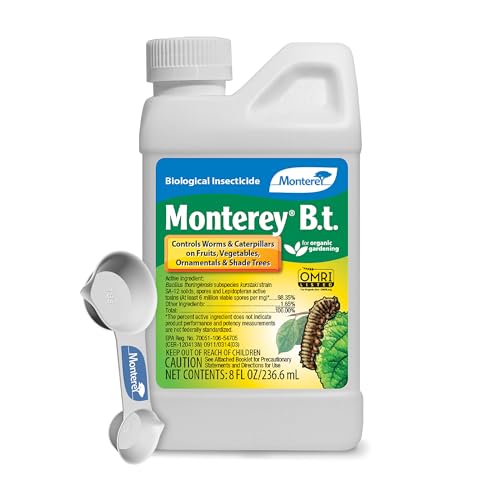
This 8-ounce bundle provides a compact Bt option ideal for smaller gardens, container plantings, or quick spot-treatment of bagworms on individual shrubs. It shares the same protection profile as larger Monterey Bt products, focusing on caterpillars while preserving beneficial insects. For users managing a limited landscape, this size supports targeted, timely applications without overcommitting product or resources.
Bonide Captain Jack’s Thuricide BT — 128 Oz

Bonide Captain Jack’s Thuricide BT is a ready-to-use Bt formulation designed for home garden use. It targets worms and caterpillars, including bagworms and tent caterpillars, with a fast-acting effect typically observed within a few days after application. The product is approved for organic gardening and can be safely applied to edible plants up to harvest. Its large 128-ounce volume makes it well-suited for extensive landscapes or frequent seasonal applications, providing a scalable option for pest management programs across multiple plant types.
Buying Guide: Key Purchase Considerations For BT Sprays
When selecting a Bt spray for bagworms, consider the following factors to align with garden size, plant variety, and organic goals:
- Target pests: Bt formulations primarily target caterpillars and leaf-eating pests. Confirm that bagworms are on the approved pest list for the product you choose, and verify life stage timing for best results.
- Form and application: Ready-to-spray products offer convenience, while concentrates require mixing. Consider how often you need to apply and whether you prefer quick, one-step solutions or the flexibility of concentrated formulas.
- Plant compatibility: Ensure the product label lists the crops or ornamentals you grow. Some Bt products are suitable for fruits, vegetables, and ornamental plants; others may have broader or narrower plant compatibility.
- Organic credentials: If pursuing an organic gardening approach, look for OMRI-listed items or those explicitly labeled as organic. Bt is widely used in organic programs when applied per label directions.
- Non-target safety: Bt targets caterpillars but is generally safe for birds, earthworms, and most beneficial insects when used as directed. Review label precautions for your local environment to protect pollinators during bloom.
- Volume and storage: Larger volumes suit bigger landscapes or multiple seasons, while smaller packs fit limited spaces. Store products as directed to preserve potency.
- Application timing: Apply Bt when caterpillars are young and actively feeding for optimal efficacy. Reapply according to label intervals if pest pressure remains high or after rain.
BT vs Other Insecticides: A Quick Comparison
- BT vs chemical insecticides: Bt offers targeted control with minimal impact on beneficial insects and the environment, making it a safer option for organic gardeners.
- Bt vs systemic insecticides: Bt acts locally on the gut of feeding caterpillars, reducing broader exposure risks for non-target species compared to systemic products.
- Bt vs Spinosad-based products: Spinosad is effective against a wider range of pests but can affect some beneficials; Bt provides a narrower, safer profile when bagworms are the primary threat.
In summary, Bt sprays present a viable, environmentally conscious option for bagworm management. Choose a product that matches your garden size, plant types, and organic goals, and follow label directions to maximize efficacy while protecting pollinators and other wildlife.