Finding the right box blade for a riding lawn mower can transform lawn care, helping you grade soil, move gravel, and smooth uneven patches with precision. Below are five highly compatible options designed for various mower sizes and tasks, with features that support durability, maneuverability, and easy attachment. Each pick is designed to work with common riding tractors and tractor-style attachments, making it easier to reference during a shopping trip or when comparing specs.
Summary of chosen products:
| Product | Working Width | Key Benefit | Materials |
|---|---|---|---|
| YITAMOTOR 42″ Tow Behind Box Scraper | 42 inches | Tow-behind versatility, adjustable angle | Steel with weight tray |
| HarmonyHealth 38″ Tow Behind Box Scraper | 38 inches | Compact, flexible 30-degree swings | Carbon steel with robust frame |
| KUAFU 39.75″ Box Scraper | 39.75 inches | Versatile, removable side panels | Powder-coated steel |
| HECASA 39-3/4″ Rear Blade Scrape | 39.75 inches | Heavy-duty steel, 30-degree adjustability | Powder-coated steel |
| King Kutter 72″ Box Blade | 72 inches | Large working width, durable construction | High-carbon steel, replaceable teeth |
YITAMOTOR 42″ Tow Behind Box Scraper Lawn Tractor Attachments

The YITAMOTOR 42″ Tow Behind Box Scraper is designed for tractors that pull a box blade behind the mower. It offers a wide 42-inch working width, which helps cover ground quickly while grading, leveling, and smoothing soil or gravel. A weight tray supports added ballast for tougher grading tasks, increasing stability when pushing heavy loads. The blade can be angled up to 30 degrees in either direction, enabling precise control over material flow and cutting angle. This model is suited for medium to large yards where a tow-behind setup fits the mower’s hitch compatibility and towing capacity.
HarmonyHealth 38″ Tow Behind Box Scraper

The HarmonyHealth 38″ Tow Behind Box Scraper focuses on maneuverability and versatility. Its heavy-duty construction uses a robust C-frame and carbon steel, providing durability for soil turning, gravel removal, and light snow tasks. The 38-inch width keeps it nimble in tighter spaces, making it a good fit for smaller yards or tight landscaping projects. A flexible design allows 30-degree left or right swings, and removable side panels and fenders offer a choice between pushing or pulling the scraper, allowing adjustments for different chores and terrain.
KUAFU 39.75″ Box Scraper For Lawn Tractors
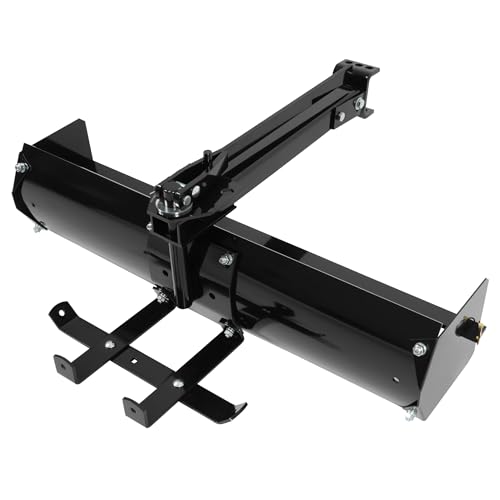
KUAFU’s 39.75″ Box Scraper is designed for broad coverage with compatibility for most UTVs, ATVs, and lawn tractors. The side panels and scarifier rod are removable, and the blade can be locked at 30 degrees in any direction for precise material control. A powder-coated steel construction provides durability and weather resistance. The wide width reduces the number of passes needed for leveling, backfilling, or moving material such as mud, snow, or gravel on larger jobs, while remaining manageable on mid-sized properties.
King Kutter Box Blade — 72in Model BB-72

The King Kutter BB-72 is a heavy-duty option featuring a 72-inch box blade with a self-cleaning moldboard. It includes two high-carbon steel reversing cutting edges and heavy-duty, heat-treated ripper shanks with replaceable teeth. This combination supports aggressive grading, leveling, and material manipulation across large lawns or fields. While longer and heavier, it provides substantial ground coverage and durability for demanding projects, making it a preferred choice for users with larger riding mowers and frequent grading tasks.
HECASA 39-3/4″ Rear Blade Scrape

The HECASA rear blade scrape is designed for universal tractor, ATV, and UTV applications with a 39.75-inch working width. It emphasizes sturdy construction with powder-coated steel to resist rust and wear. The blade offers 30-degree adjustable angles and 180-degree rotation options, enabling both pushing and pulling operations. This versatility helps users tackle smoothing, backfilling, and material transport with a single attachment, especially in mixed terrain yards or driveways.
Buying Guide
Key considerations when choosing a box blade for riding mowers include width, attachment compatibility, durability, and adjustability. Narrower blades provide greater maneuverability in tight spaces but require more passes for leveling large areas. Wider blades cover more ground, but may demand more powerful tractors and careful operation to maintain control. Look for powder-coated steel for rust resistance and a sturdy frame for long-term use. Consider whether you need removable side panels, adjustable angles up to 30 degrees, or both front and rear loading capabilities. If you frequently groom gravel or soil, blades with replaceable teeth and heavy-duty shanks offer extended service life. Lastly, verify hitch compatibility with your mower model and confirm that the unit is designed for tow-behind or rear-mount applications based on your setup.
Material and construction matter for longevity, especially in winter and wet climates. Powder coating protects against moisture and road salts, while heavy-gauge steel supports repeated grading passes without bending. If storage space is limited, a slightly smaller width with lightweight construction can be easier to manage and transport. For larger landscapes where a single pass should move significant material, higher curb weight and reinforced frames reduce the risk of bounce or sway during operation. Finally, consider the availability of replacement parts, such as blades, shanks, or wear plates, to minimize downtime and maintenance costs.
For installation, assess how the box blade attaches to your riding mower. Tow-behind options require a hitch and proper towing capacity, whereas rear-mount or sleeve-hitch configurations may integrate more cleanly with existing tractors and sleeves. Compatibility with common brands and models reduces adaptation time and ensures consistent performance across seasons. If you grade frequently on uneven surfaces, prioritize units with flexible angling and robust weight support to maintain blade angle and material flow throughout operation.