For blue-purple fruit and vibrant blooms, selecting the right plant food matters. This guide highlights five acid-loving fertilizers tailored for blueberries, azaleas, rhododendrons, and other plants that require low-pH soils. Each option supports soil acidification, essential micronutrients, and robust growth. Read on to compare formulas, application guidance, and how they align with different garden needs.
| Product | Brand | Key Benefit |
|---|---|---|
| Down To Earth All Natural Fertilizers Organic Acid Mix (4-3-6, 5 lb) | Down To Earth All Natural Fertilizers Store | Low-pH blend ideal for acid lovers and fruiting plants |
| Espoma Organic Berry-Tone 4-3-4 (4 lb, Pack of 2) | Espoma Store | Organic berry-specific formula with ready-to-use feeding |
| Blueberry Fertilizer – Liquid (8 oz) | TPS NUTRIENTS Store | Liquid option for quick uptake by acid-loving plants |
| 8-4-8 Acidic Fertilizer for Acid-Loving Plants (1/2 Quart) | GARDENWISE Store | Iron-rich acidifier to prevent chlorosis |
| Down To Earth All Natural Fertilizers Organic Acid Mix (4-3-6, 1 lb) | Down To Earth All Natural Fertilizers Store | Compact, acid-lean formula for small spaces or spot feeding |
Down To Earth All Natural Acid Mix For Acid-Loving Plants

This organic acid mix is specifically blended for plants that prefer lower pH soils, including blueberries, rhododendrons, azaleas, camellias, and hydrangeas. The 4-3-6 analysis supports vegetative growth in spring and fruiting as blooms appear. Fall applications aim to build root reserves and improve winter hardiness. The product emphasizes natural ingredients and soil acidity adjustment without sludges or harsh compounds.
Espoma Berry-Tone Organic Fertilizer For Berries

Berry-Tone is an organic fertilizer formulated for all berries, including blueberries. It carries a 4-3-4 analysis with added sulfur and Bio-tone beneficial microbes. The ready-to-use blend minimizes mixing and is suitable for planting or feeding established plants. It is designed for twice-a-year feeding in early and late spring, promoting a steady harvest while supporting soil biology in acid-loving soils.
Blueberry Fertilizer Liquid For Acid-Loving Plants

This liquid formula targets acid-loving edible plants, offering quick nutrient uptake for blueberry bushes and related acid-preferring species. Liquid delivery allows precise, fast feeding and is convenient for established plantings or containers where fast results are desired. The product emphasizes acidity compatibility and optimized nutrition for berry production.
8-4-8 Acidic Fertilizer For Azaleas And More

Designed for azaleas, camellias, hydrangeas, rhododendrons, blueberries, magnolias, and other acid-loving plants, this fertilizer blends magnesium, iron, and manganese to prevent chlorosis and enhance flowering. It also acts as a soil acidifier, crucial where soil pH needs lowering to meet plant needs. The product is supplemented by live microbial bio-solid components from wastewater treatment, intended to boost soil vitality and microbial life for robust growth.
Down To Earth Acid Mix For Blueberries And More (Small Quantities)
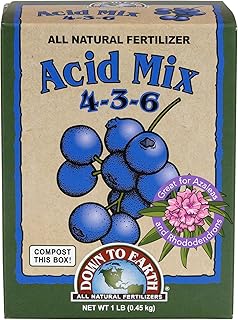
This smaller-pack version mirrors the larger 4-3-6 formula, tailored for blueberries, raspberries, azaleas, and other acid-loving plants. It supports early-spring vegetative growth and flowering, with fall applications helping root development and winter resilience. The blend emphasizes low pH suitability and plant-specific nutrient balance for ongoing health and production in acid soils.
Buying Guide
- Plant needs: Match fertilizer acidity with your soil pH. Blueberries and other acid-loving plants often perform best with nutrients designed to lower or stabilize soil acidity.
- Form and application: Choose a format that fits your garden—granular blends for slow-release feeding, or liquid formulas for quick uptake and container use.
- Nutrient balance: Look for options with nitrogen, phosphorus, potassium and micronutrients like iron and magnesium to prevent chlorosis and support fruiting.
- Soil biology: Some products include beneficial microbes that enrich soil life, potentially boosting nutrient availability and plant resilience.
- Seasonality: Consider spring and late-spring feeding for vegetative growth and fruiting, and fall applications to strengthen root systems for winter hardiness.
- Safety and sustainability: Prefer organic or natural blends when possible, and verify that the product is free from toxic sludges or heavy metals.
- Container vs. in-ground: For containers, liquids or ready-to-use granulars can provide easier control and faster results. In-ground beds may benefit from slow-release formulas that feed over the season.
- Soil test guidance: When in doubt, perform a soil test to determine pH and nutrient levels before choosing a fertilizer, ensuring you target specific deficiencies rather than broad coverage.