Protecting fruit trees from feathered raiders requires a balanced approach that deters without harming wildlife. The following handpicked products combine visual, sensory, and physical barriers to reduce bird damage around fruit trees, orchards, and home gardens. Each option is evaluated for effectiveness, ease of use, and suitability for American landscapes. Read on to compare methods and choose the right mix for your fruit harvest.
| Product | Type | Best For | Key Benefit |
|---|---|---|---|
| Bird B Gone Flash Tape | Visual deterrent | Fruit trees, gardens, patios | Reflective Mylar tapes create flashing visuals that scare birds away |
| TRILINK Bird Scare Tape 656ft | Reflective tape | Large yards, orchards, balconies | Long roll coverage with 4 rolls for big areas |
| Mopet 500 Ft Bird Scare Tape | Reflective tape | Orchards, vineyards, gardens | Thick holographic film, weather resistant, multi-season use |
| GRECOMEIN Bird Spikes 79 Inch | Physical spikes | Fruit trees, fences | High-density stainless steel spikes deter perching without harm |
| 2026 Solar Ultrasonic Woodpecker Deterrent | Ultrasonic + visual alarms | Large outdoor spaces, uneven terrain | Wide coverage with adjustable frequency and alarm features |
Bird B Gone Flash Tape Visual Bird Deterrent

Bird B Gone Flash Tape relies on reflective Mylar to deter birds from landing on fruit trees, vines, and garden structures. The tape unfurls in the breeze, catching sunlight and producing unpredictable flashes that birds learn to avoid. This method is nonviolent and suitable for seasonal fruit production, as it doesn’t harm birds or mammals. Installation is straightforward: wrap or suspend the tape along branches, trellises, or perimeters surrounding your fruit trees. It works best in sunny locations with steady winds that generate constant glinting reflections.
Consider this option if your trees are in open spaces or near buildings where ambient wind helps the tape’s motion. It is a low-cost, low-maintenance solution with no chemicals. For best results, pair with other deterrents during peak fruiting and migration periods. Limitations include reduced effectiveness in very calm conditions and the need for periodic adjustment after weather events.
TRILINK Bird Scare Tape 656ft
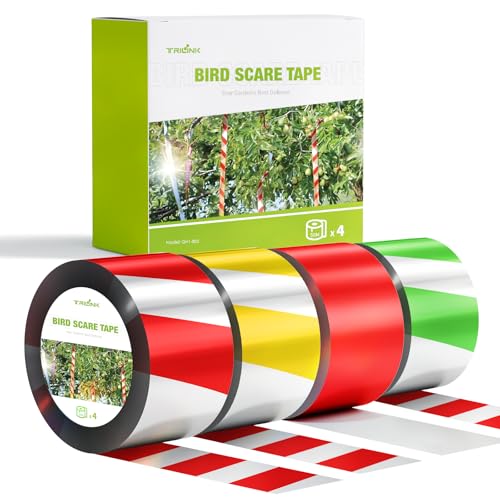
TRILINK’s scare tape offers an economical, scalable solution for large fruit-tree plantings. With four rolls totaling 656 feet, you can cover extensive canopy edges, hedgerows, or orchard perimeters. The tape’s reflective properties create flashes that birds associate with danger, discouraging landings near crops. It’s a humane, chemical-free method that requires simple installation—just cut to length and hang near fruit-bearing branches or protective netting boundaries.
In practice, TRILINK is effective when applied consistently around the orchard edge and rotated seasonally to prevent acclimation. It pairs well with visual deterrents that catch birds off guard from different angles. Potential drawbacks include wind sensitivity and the need for regular checks to ensure the tape remains taut and visible after storms or heavy dew.
Mopet 500 Ft Bird Scare Tape

This 500-foot roll of flash tape from Mopet is designed for extensive coverage with a robust holographic surface that shimmers in sunlight and rattles gently in the wind. The tape is engineered for durability in outdoor conditions, remaining effective across multiple seasons. It’s suited for protecting orchards, vineyards, and large garden beds around fruit trees. Installation is simple: cut to needed lengths and secure to trellises, stakes, or fences to create a perimeter deterrent around fruit crops.
Practical advantages include long-term value and minimal maintenance. A potential limitation is the need to monitor tape wear and ensure it remains correctly spaced to maximize glare. For best impact, combine with spikes or ultrasonic deterrents in high-risk zones, especially near early ripening varieties when birds are most active.
GRECOMEIN Bird Spikes 79 Inch

Bird spikes offer a physical barrier on branches or ledges where perching birds tend to land before pecking fruit. GRECOMEIN’s 79-inch stainless steel spikes are designed to deter pigeons, sparrows, and other small birds from resting on fruit trees or nearby structures. Durable 304 stainless steel and a four-row spike design enhance effectiveness compared with older two-row variants. The package typically includes mounting hardware and gloves for safer installation, aiding homeowners who prefer a more hands-on deterrent approach.
Use on problem perching sites such as branch tips, trellises, and fence lines adjacent to fruit trees. They are a long-lasting, non-toxic option that requires some initial setup. On very windy sites or with extremely vigorous growth, provide occasional checks to ensure spikes remain properly positioned and unobstructed by new growth.
2026 Solar Ultrasonic Woodpecker Deterrent

This solar-powered device combines ultrasonic waves with visual alarm indicators to deter woodpeckers and other birds from fruit trees, patios, and garden zones. It is designed for large outdoor areas, offering coverage up to 5000 square feet. The unit typically features adjustable ultrasonic frequency and sensitivity settings, allowing homeowners to tailor protection to varying bird populations and terrain. The solar panel minimizes maintenance by charging during the day for nighttime deterrence and alarms.
Advantages include broad coverage and tunable settings that accommodate different environments. A potential caveat is that ultrasonic effectiveness can vary with bird species and local acoustics. For best results, position the unit away from reflective surfaces and consistently combine with tape, spikes, or netting for layered protection around valuable harvests.
Buying Guide: Key Purchase Considerations
- Target species and behavior: Visual deterrents excel for pigeons and sparrows, while spikes deter perching. Ultrasonic devices can complement visuals by addressing nesting and roosting in larger spaces.
- Area and layout: For small yards, tapes and spikes provide focused protection. In larger orchards, long tapes and solar ultrasonic devices cover more ground but may require multiple units or strategic placement.
- Durability and climate: Stainless steel spikes resist corrosion; reflective tapes endure sun and rain but may require periodic replacement in severe weather. Choose products with weatherproof design for the local climate.
- Maintenance needs: Visual deterrents require periodic checks for wear, wind displacement, and debris. Physical barriers like spikes demand occasional alignment. Ultrasonic devices need battery or solar panel upkeep and occasional calibration.
- Non-target impact: All listed options are non-lethal. Assess how deterrents affect non-target wildlife and pets, especially in areas with diverse bird populations.
- Combination approach: Layer deterrents for stronger protection—pair visuals with physical barriers and, where appropriate, add ultrasonic devices for broad coverage and night-time deterrence.
In practice, an adaptable strategy that rotates deterrents seasonally — particularly during peak fruit ripening and bird migration — tends to yield the best outcomes. Prioritize non-toxic, humane methods that align with local wildlife rules and garden management goals. Always follow manufacturers’ installation instructions to maximize effectiveness and longevity of the deterrents around fruit trees.