Bees and other beneficial insects play a crucial role in garden health and harvests. The right bee house provides safe habitat, encouraging pollinators to nest, reproduce, and boost yields. Below are five well-regarded bee houses that suit American gardens, along with practical buying considerations to help you choose.
| Product | Brand | Key Benefit | Link |
|---|---|---|---|
| Nature’s Way PWH1-C Teal Bee House | Nature’s Way | Attracts solitary bees; pollination up to 20x that of honeybees | Product page |
| Nature’s Way PWH1-B Purple Bee House | Nature’s Way | Encourages biodiversity with varied hollow tubes | Product page |
| POLLIBEE Mason Bee House Wax Coated | POLLIBEE | Waterproof, durable mason bee habitat | Product page |
| Mason Bee House Native Bee Hive Hexagon | hewewor | Deluxe hexagon design with 90 nesting tubes | Product page |
| Lulu Home Wooden Insect House | Lulu Home | Habitat for multiple beneficial species | Product page |
These selections prioritize durable materials, multiple nesting options, and ease of installation—factors that support garden health year after year. Each option is designed to attract pollinators while providing a safe home that resists weather and pests. Read on for detailed product-specific insights and practical buying guidance.
Nature’s Way PWH1-C Teal Bee House

The teal bee house supports solitary pollinators that can significantly boost plant productivity. Its design focuses on hollow tubes of varying diameters to accommodate different bee species, enhancing biodiversity in your garden. Easy-mount hanging hardware provides straightforward installation on fences, walls, or posts, enabling flexible placement near flowering beds for maximum pollination impact. By hosting gentle pollinators, your garden’s blooms, berries, and fruit trees may experience improved yields and health.
Nature’s Way PWH1-B Purple Bee House

This purple-hued bee house emphasizes biodiversity by offering hollow tubes with different diameters, supporting mason bees, leafcutter bees, and other solitary pollinators. The bamboo-based construction provides a natural nesting site that blends with outdoor environments while remaining sturdy through seasonal changes. A sustainable choice for gardeners seeking a long-term habitat that helps plants—from fruit trees to ornamentals—receive robust pollination benefits.
POLLIBEE Mason Bee House Wax Coated

Waterproofing through wax coating extends durability in variable climates, helping mason bees thrive year after year. The assembled wooden shell creates a natural, inviting nesting site, with tubes designed to accommodate common mason bee species. It is a practical option for gardeners who want a ready-to-use habitat that supports efficient pollination in orchards, vegetable plots, and flower borders alike.
Mason Bee House Native Bee Hive Hexagon

This hexagon hive houses mason bees with a durable pine exterior and a robust interior designed to keep nesting tubes dry and accessible. Included: a hanging rope and metal wall buckle for secure mounting, plus about 90 nesting tubes. The hexagon design appeals to eco-conscious gardeners seeking an attractive yet functional habitat that supports native pollinators and enhances garden productivity.
Lulu Home Wooden Insect House
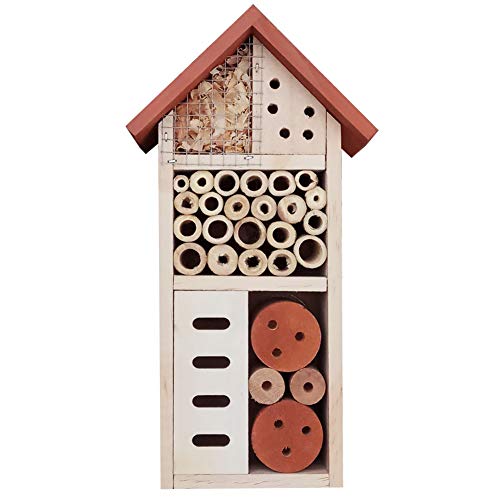
The Lulu Home insect house is designed to attract a variety of beneficial species, offering multiple compartments with different materials to host bees, butterflies, ladybirds, lacewings, and other helpers. Its wooden construction provides a natural look that blends with garden aesthetics while supporting biodiversity and natural pest control. This versatility makes it a practical choice for gardeners seeking a single habitat that benefits multiple beneficial insects.
Buying Guide: Key Considerations For Bee House Purchases
- Material and durability: Look for weather-resistant wood or bamboo, and consider coatings (like wax) that extend life without harming pollinators.
- Nesting options: A mix of tube diameters and multiple compartments supports a broader range of species, boosting biodiversity in your garden.
- Placement: Install in a sunny, dry area with morning sun if possible, away from heavy winds. Mount at a height that reaches flowering zones for easy pollinator access.
- Maintenance: Clean or replace nesting tubes annually to reduce disease risk and keep habitats inviting to new generations of pollinators.
- Species focus: If you primarily want mason bees, choose designs that emphasize uniform tubes and accessible entry points. For broader biodiversity, select products offering varied shelter types and materials.
- Safety and sustainability: Favor natural, untreated wood and non-toxic finishes. Avoid paints or sealants that may deter or harm pollinators.
- Aesthetics and garden integration: Consider color and design that complement your garden, as some bee houses can double as decorative features while remaining functional.
- Local climate fit: In colder regions, choose more robust, weatherproof builds. In humid climates, ensure good drainage and airflow to prevent mold.
- Size and installation options: Ensure the product dimensions fit your garden space and available mounting options—fences, posts, or walls.
When selecting bee houses for your garden, balance durability, accessibility for pollinators, and ease of maintenance. The five options above offer varied designs and materials to suit different climates, aesthetic preferences, and pollination goals, helping you cultivate a healthier, more productive garden ecosystem.