Answering your search for durable, inviting homes for pollinators, this guide highlights five bee and butterfly houses that are well-suited for American gardens. Each option supports beneficial insects like mason bees, solitary bees, butterflies, and ladybugs, helping pollination and natural pest control. Best for backyard gardeners, urban balconies, and yard-focused hobbyists who want low-maintenance habitats that blend with outdoor spaces.
| Product | Best For | Key Benefit |
|---|---|---|
| Wooden Insect House by GardeningProducts4Less | Beginners seeking simple, sturdy habitat | Multiple compartments for diverse insects |
| UUMENHA Insect Hotel & Mason Bee House | Pollinator enthusiasts and observation-friendly gardens | Multi-zone design with mason bee and butterfly appeal |
| KAWAHAYO Mason Bee House with Butterfly Extension | Collectors of pollinators and biodiversity | Integrated butterfly house with functional tubes |
| UUMENHA Bee House & Butterfly House with Stake | Larger setups and visible habitats | Combined bee, butterfly, and ladybird support |
| WILDLIFE FRIEND Insect Hotel XXL Standing | Big outdoor spaces needing year-round habitat | Weatherproof roof and six breeding chambers |
Wooden Insect House, Insect Hotel

This cedar wood insect house features a ground stake and multiple compartments sized for various beneficial insects. Best for gardeners who want a straightforward, durable habitat that blends with natural surroundings. It helps attract pollinators and provides breeding and settling spaces for bugs. A grounded stake keeps the unit stable in windier areas. Caution: natural cedar can weather over time; placing in a sheltered spot extends life.
Who it’s best for: new gardeners building a foundational pollinator habitat, and households wanting a single, easy-to-maintain unit. Why selected: robust cedar construction, clear multi-section design, and a simple setup that supports different beneficial species in one place.
UUMENHA Insect Hotel & Mason Bee House

Featuring a multi-zone design that integrates bee, ladybug, and butterfly habitats, this solid wood insect hotel is waterproof on the roof. It aims to attract mason bees and other pollinators while maintaining a chemical-free, safe environment. Best for: gardeners who value observing pollinators up close and want a compact, multi-species habitat. Caution: ensure proper drainage to prevent water pooling in tubes during heavy rain.
Why choose this: its all-in-one layout supports several beneficial insects in one unit, making it easier to manage biodiversity without buying multiple individual houses. Best for: small to medium gardens where observation and biodiversity are priorities.
KAWAHAYO Mason Bee House with Butterfly Extension
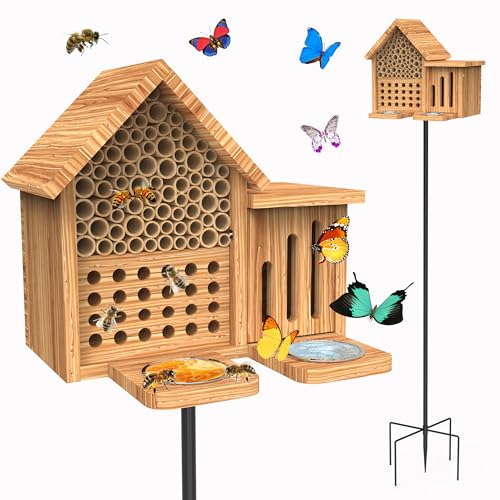
This wooden bee house combines mason bee tubes with an extra butterfly hotel on the side. It uses carbonized pine for durability and water resistance, delivering an elegant, weather-ready habitat. Best for: garden spaces that want a visually distinctive unit while boosting biodiversity. Caution: bamboo tubes and trays require periodic inspection to prevent debris buildup.
Why it’s chosen: the dual-purpose design expands pollinator options beyond bees to include butterflies, attracting a broader range of species. Choose this if you want both nesting sites and observation-worthy features in one installation.
Bee House Bug Hotel & Butterfly House by UUMENHA

This durable pine wood bug house is packed with natural materials like bamboo and cones to create a friendly habitat for bees, butterflies, and ladybirds. Best for: gardeners seeking a visually appealing, sturdy habitat that supports a thriving, balanced ecosystem. Caution: ensure the structure is mounted securely to resist wind loads in exposed spaces.
Why selected: strong materials and a focus on natural habitats promote healthy insect behavior and easier garden integration. Choose this if you want a robust, all-in-one habitat that supports multiple beneficial species in a single unit.
WILDLIFE FRIEND Insect Hotel XXL Standing

This XXL insect hotel stands tall with a weatherproof metal roof and six large breeding chambers. It works well in larger gardens or patios where a prominent habitat is desired. Best for: spaces that require year-round insect shelter and visible biodiversity. Caution: the size may be more conspicuous than needed for compact spaces.
Why it’s a good fit: the extended roof protects nesting sites from rain, and the spacious chambers accommodate multiple species simultaneously. Choose this if you want a high-capacity habitat that doubles as a garden feature in larger outdoor areas.
Buying Guide
What should I consider before buying?
- Size and space: Match the unit to your available outdoor area. Larger models support more species but require more mounting space.
- Materials: Look for untreated wood or cedar for durability and safety around pollinators. Waterproof roofs help extend life in wet climates.
- Habitat variety: Multi-zone designs attract a broader range of beneficial insects, improving pollination and pest control.
- Placement: Place in sun with some shade and protection from strong winds. A sheltered, sunny wall or fence is ideal.
- Maintenance: Check for debris build-up in tubes and replace materials as needed to maintain interior hygiene for insects.
Who should consider these products?
Home gardeners focusing on pollinator health, urban dwellers with limited garden space, and educational setups for kids or community gardens can benefit from these houses. Units with multiple compartments or butterfly extensions are best for observers who enjoy watching insect behavior up close.
How do these units impact garden health?
Beneficial insects support pollination and natural pest control. Mason bees, butterflies, and ladybugs help increase yields and reduce pests, contributing to a healthier overall ecosystem in your yard.
Installation tips
- Mount at a height that mimics natural nesting sites, typically 3–6 feet off the ground.
- Ensure drainage and avoid placing directly under drip lines to keep interiors dry.
- Secure with weather-resistant hardware to withstand wind and rain.
FAQ
- Are these safe for children? Yes, most are made from natural materials and provide educational observation opportunities, but supervision is recommended for younger children.
- Do I need to clean the insect hotel? It’s good practice to inspect and clear debris annually to prevent mold and pests from accumulating.
- Can I hang multiple units close together? Yes, grouping can attract more species, but ensure each has good airflow to prevent overcrowding.
- Will these attract bees that sting? Most houses target solitary bees and non-stinging species; always exercise caution around nesting populations.
- What climates are these suitable for? They are designed for typical North American climates, with protective roofs helping in wetter regions.
- How long do they last? Durable woods with protective designs can last several seasons; replace weathered parts as needed.