Answering the demand for easy-to-move, predator-friendly home for backyard birds, these coop kits cover mobile models, walk-in designs, and weatherproof options. Each choice is tailored for different flock sizes, terrain, and maintenance preferences. Ideal buyers include small-homestead owners seeking portability, families wanting simple cleaning, and urban-backyard keepers needing durable protection. Below, five top outdoor coop kits are evaluated for space, mobility, safety, and long-term usability.
Quick comparison
| Product | Best For | Key Benefit |
|---|---|---|
| MEDEHOO Mobile Chicken Coop | 4-6 hens, moveable pasture | Predator-proof nesting with wheels |
| HEYTOWN Large Metal Coop | Walk-in access, durability | Galvanized frame and enclosed run |
| KEWASHIGOODS 58″ Coop | Expandable, versatile setup | Dual nest boxes, multiple access doors |
| Aivituvin Mobile Coop | 4-6 birds, easy relocation | Two nest boxes, predator locks |
| Raysfung Walk-in Metal Coop | Durable metal run with canopy | Sturdy frame, weatherproof cover |
MEDEHOO Mobile Chicken Coop With Wheels
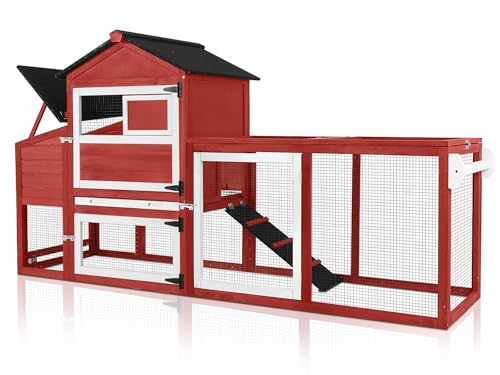
Best for gardeners who want to relocate poultry to fresh grass or shade, this 82.4″ long coop supports 4-6 hens with a spacious interior and a run. A built-in wheel system and handle let the unit glide across turf, enabling seasonal pasture rotation to reduce disease risk and parasite buildup. The nesting box features a predator-proof lock and an oversized guard under the box, helping deter raccoons and other nighttime threats. This model is particularly suited for owners who value mobility and easy access to clean nesting areas. A potential limitation is the need for level ground to roll smoothly and avoid tipping on uneven surfaces.
HEYTOWN Large Metal Coop With Run

Best for users seeking heavy-duty durability and straightforward access, this walk-in dome-style coop provides expansive interior space and a protected run. A galvanised steel frame offers rust resistance and long-term sturdiness, while the enclosed run with coated wire mesh allows safe outdoor activity with airflow. Choose this if you want a fixed, robust structure that keeps predators at bay even during busy cleaning routines. A limitation: the dome roof may require more careful navigation in tight spaces or under low-clearance eaves when moving around a yard.
KEWASHIGOODS 58″ Chicken Coop

Best for expanding setups, this 57.87″ L x 33.86″ W x 30.55″ H coop combines a waterproof shell with multiple nesting options and front ventilation. Dual doors facilitate interior access for egg collection and maintenance, while the 6-nest design supports larger flock arrangements. It’s a solid pick for backyard owners who want a larger footprint and reliable ventilation. A potential caveat is that the unit’s size requires a budget for secure anchoring and level ground to avoid wobble in windy conditions.
Aivituvin Mobile Chicken Coop

Best for flexible flock management, this 82.4″ long model provides two nesting boxes and a pull-out tray, plus a weather-resistant asphalt roof. Built-in wheels and a handle enable easy relocation to fresh forage or shade, supporting clean water and greens access. Predator-proof locking on the nesting area helps protect eggs and birds. Use this if you want true mobility with a relatively simple cleaning routine; consider surface roughness or uneven ground as a potential limit for rolling smoothly.
Raysfung Large Metal Coop With Run

Best for a long-term metal-run setup, this large walk-in cage features a waterproof canopy and a strong galvanized frame. The design supports safe outdoor housing with a weatherproof cover that helps block rain and debris, while the run area protects birds during sun and wind. It’s suited for owners who need a durable, all-weather refuge for multiple birds beyond just chickens. A caveat: assembly may require careful alignment of framework parts and secure anchoring for windy sites.
Buying Guide
Key questions to guide your purchase:
- What flock size and species will the coop support over time?
- Do you prefer mobility or a fixed, heavier-duty structure?
- How important is predator protection and nest security?
- Is weather resistance and ease of cleaning a priority?
- Do you need expandable space for future birds or different poultry?
- What ground conditions will the coop encounter (level lawn, mulch, gravel)?
Space, layout, and access
Look for coops with interior headroom and enough nesting space. Coops offering multiple doors simplify daily egg collection and cleaning. If you have 4-6 birds, prioritize models with at least two nesting boxes and a large run area for movement and foraging.
Mobility vs. permanence
Mobile coops are ideal for rotating pasture and reducing parasite loads, but ensure wheels are heavy-duty and the ground is suitable for rolling. Fixed coops typically deliver sturdier construction and larger, more secure runs, making them better for wind-prone yards or longer-term installations.
Security features
Predator-proof locks, secure nesting-box guards, and reinforced floors deter nocturnal threats. Choose models with sturdy latches and powder-coated or galvanized frames for rust resistance in humid climates.
Weather resistance and maintenance
Waterproof roofs and UV-resistant covers protect birds from sun, rain, and debris. Plan for easy cleaning: pull-out trays, smooth interior panels, and accessible doors help maintain hygiene with minimal effort.
Cost-to-benefit considerations
Higher upfront investment often correlates with longer lifespan, better materials, and easier maintenance. If you own more than a couple of birds, prioritize models with durable frames and secure runs to reduce ongoing repair costs.
Placement and setup tips
Place coops on level ground, away from predators, and near natural shade if possible. Secure the unit with ground stakes or anchors when winds are common. Regularly inspect hinges, locks, and mesh for wear and tear to maintain safety.
FAQ
- Are these coops suitable for ducks or rabbits as well as chickens?
Many models are marketed for multiple small animals, including ducks and rabbits. Check nesting box size and run dimensions to ensure adequate space and safety for non-chicken residents.
- What maintenance is required for a weatherproof roof?
Inspect for leaks after heavy rain, clean debris from roof surfaces, and ensure seals remain intact to prevent water intrusion.
- How often should I rotate a mobile coop?
Rotate as often as weekly or with seasonal pasture changes to balance grass quality, parasite management, and flock health.
- What ground condition affects mobility the most?
Even, level turf or compacted soil is best. Muddy or loose ground can hinder movement and increase tipping risk.
- Do these coops include a warranty?
Warranty details are not included in this guide. Check each product page for specific terms and conditions.